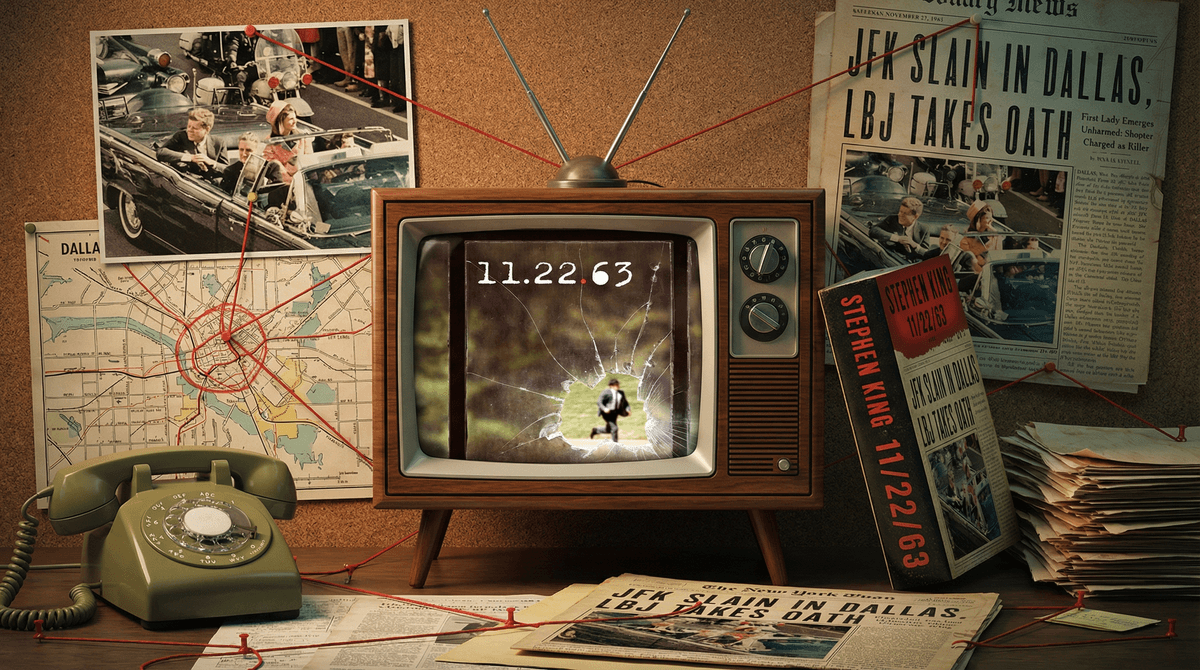
Most people hear "Stephen King" and immediately look for the nearest exit or a silver bullet. But if you’re expecting a clown in a sewer, you’re looking at the wrong book. This is King at his most disciplined. It’s a massive undertaking that feels less like a horror novel and more like a love letter to a version of America that was already disappearing when the story starts.
The "Jodie" pivot
If your teen is used to the breakneck speed of modern YA thrillers, they might hit a wall about a third of the way in. Once the protagonist, Jake, settles into the small town of Jodie, Texas, the "save the president" plot takes a back seat to a slow-burn romance and a portrait of 1950s life.
This isn't filler. It's the foundation. King is making you care about the world that Jake is potentially going to erase. If a reader can’t get through the high school theater rehearsals and the local gossip, they won’t feel the weight of the ending. It’s a great test of reading stamina. If they find this part boring, they might prefer a tighter political thriller, but if they stick with it, the payoff is one of the best King has ever written.
The past is obdurate
The central mechanic here is that the past doesn't want to be changed. It "harmonizes" and throws obstacles in the way. This is a brilliant narrative device because it turns the setting itself into the antagonist.
It also creates a fascinating moral conversation for a family. We often talk about "fixing" history, but King suggests that the universe has a certain inertia. If your kid is into the "Nexus Events" of the Marvel universe or the branching timelines of Back to the Future, this is the PhD-level version of those concepts. It asks a heavy question: Is it arrogant to think we know which thread to pull?
Navigating the adaptation
Because the book is such a massive time commitment, many teens might be tempted to just watch the miniseries instead. If they go that route, check out our 11.22.63 Parents Guide: Age Rating and Content Review to see how the visual version handles the book's darker moments.
The book is almost always the better choice here because of the internal monologue. You get to feel Jake’s growing paranoia and his struggle with the "yellow card man" in a way the screen can't quite capture. The 4.7 rating on Amazon isn't just hype; it reflects how well King sticks the landing, which, let’s be honest, isn't always his strong suit.
Why it sticks
This book is a gateway for teens who think history is just a list of dates. It frames the JFK assassination not as a dry event in a textbook, but as a hinge upon which the entire modern world swings. By the time they finish, they’ll likely be down a Wikipedia rabbit hole looking up Lee Harvey Oswald and the Texas School Book Depository. It’s rare to find a book that functions as both a propulsive thriller and a legitimate piece of historical fiction that respects the intelligence of its audience.