

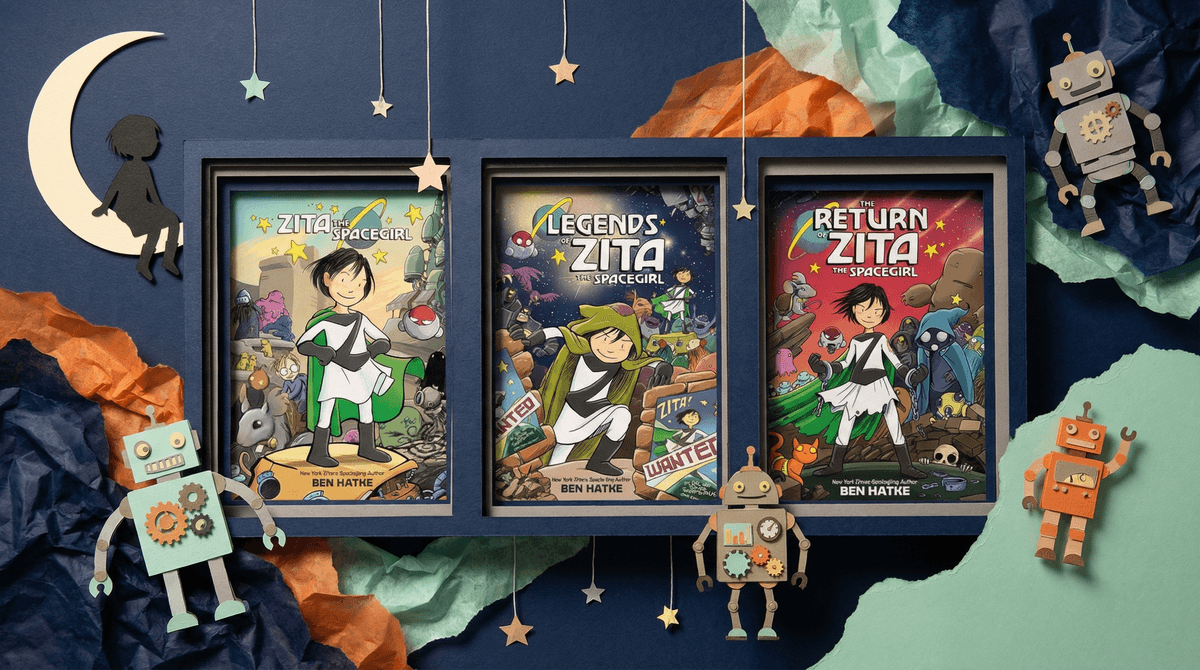
Zita the Spacegirl is a graphic novel trilogy by Ben Hatke that follows an ordinary girl who becomes an unlikely hero after her best friend gets sucked through a portal to another planet. What starts as a rescue mission becomes an epic space adventure full of robots, aliens, and impossible choices.
The series includes three books: Zita the Spacegirl, Legends of Zita the Spacegirl, and The Return of Zita the Spacegirl. Each book is around 200 pages of full-color illustrations with just enough text to keep the story moving fast. Think Amulet meets The Little Prince, with a main character who feels refreshingly real—she makes mistakes, gets scared, and doesn't always know what to do.
And here's the thing that makes parents quietly fist-pump: kids who say they "don't like reading" will devour these books. The graphic novel format makes them accessible for reluctant readers while still delivering genuine literary value—complex characters, moral dilemmas, and storytelling that doesn't talk down to kids.
Zita isn't a chosen one or a princess or someone with magical powers. She's just a kid who pressed a button she shouldn't have and now has to deal with the consequences. That relatability hooks kids immediately.
The world-building is incredible without being overwhelming. Each planet has its own ecosystem of bizarre creatures—battle robots who become friends, giant mice who pilot spaceships, blob-like aliens who communicate through color changes. It's weird in the best way, giving kids that same imaginative fuel they get from shows like Gravity Falls but in a format they control completely.
Ages 7-10 tend to love the adventure and visual storytelling. The pictures carry enough of the narrative that emerging readers can follow along without getting frustrated by dense text blocks.
Ages 10-13 appreciate the deeper themes—what makes someone a hero, the cost of fame, the importance of keeping promises even when it's hard. There's also a subtle thread about how Zita's celebrity status (she becomes famous across the galaxy) starts to change her, which resonates with kids growing up in our influencer culture.
This is one of those rare finds that checks multiple boxes at once:
Reading confidence builder. The graphic novel format reduces the intimidation factor for kids who struggle with traditional chapter books. Many parents report this series was the gateway that led to kids actually choosing to read for fun. Once they realize reading can feel this engaging, they're more willing to try other formats.
Screen-free entertainment that actually competes. These books have the visual stimulation kids are used to from screens but require them to set the pace, imagine the voices, and fill in the gaps between panels. It's active engagement versus passive consumption.
Genuine character development. Zita grows across the trilogy in ways that give kids a framework for thinking about their own choices. She learns about friendship, responsibility, and that being brave doesn't mean not being scared—it means doing the right thing even when you are scared.
Appropriate content. There's action and peril (characters in danger, some fighting) but nothing graphic or nightmare-inducing. No romance subplot, no bathroom humor, no content that will make you regret handing it to your kid. The scariest moments are more suspenseful than truly frightening.
Universal appeal. While Zita is a girl, the adventure transcends gender stereotypes. Boys read it, girls read it, kids who don't want to be categorized read it. The friendships are genuine and the problems feel real regardless of who's reading.
Ages 6-7: Probably best as a read-together. The concepts aren't too advanced, but there are moments of real peril that might be intense for sensitive kids. Reading together lets you gauge their reaction and talk through the scary parts.
Ages 8-10: Sweet spot. Most kids this age can read independently and will race through all three books in days. Don't be surprised if they immediately start over.
Ages 11-13: Still engaging for this age group, especially reluctant readers or kids who love graphic novels. The themes about identity and friendship have enough depth to satisfy middle schoolers, though advanced readers might find it a quick read.
Consider your kid's sensitivity level. There are scenes where characters appear to die (spoiler: it usually works out), moments of betrayal, and genuine tension. If your child gets anxious about characters in danger, this might be better as a shared reading experience regardless of age.
In a world where we're constantly trying to find alternatives to YouTube and Roblox, Zita the Spacegirl is that rare thing: entertainment kids genuinely want that parents can feel great about.
It builds reading skills, models problem-solving and ethical thinking, and gives kids something to be excited about that doesn't involve a screen. The whole trilogy costs less than a month of Minecraft Realms and provides hours of engagement plus re-read value.
If you're looking for something to compete with screen time that doesn't feel like punishment, this is it. Get the first book from your library or bookstore, hand it to your kid, and watch what happens. Chances are good you'll be back for books two and three within the week.
- Check your local library for the Zita the Spacegirl trilogy—graphic novels are usually in high demand, so place holds early
- If your kid loves these, try other Ben Hatke books like Little Robot or Mighty Jack
- Looking for similar graphic novels? Explore age-appropriate graphic novel recommendations

- Create a "reading counts as screen-free time" policy in your house—learn how other families structure this