

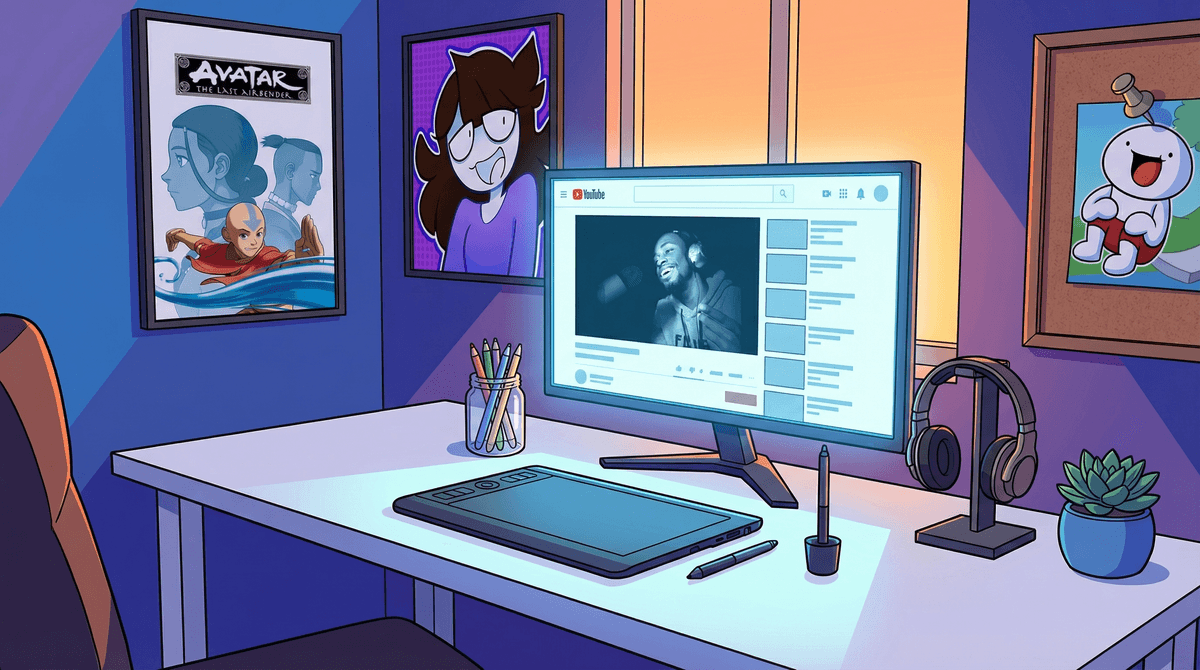
So your kid loves cartoons—great! But here's the thing: they're probably not just watching cartoons on Netflix or Disney+ anymore. They're deep in YouTube, watching channels about cartoons. We're talking animation analysis, fan theories, speedpaints, character redesigns, and people literally just talking about their favorite shows for 20 minutes straight.
These channels range from wholesome creators breaking down animation techniques to... well, some pretty weird corners of the internet where people make "dark theories" about Bluey. (Yes, really.)
The cartoon fan community on YouTube is massive and surprisingly diverse—from professional animators sharing their craft to teenagers making fan animations in their bedroom. Some channels are educational goldmines. Others are basically drama channels with a cartoon aesthetic. And some are just straight-up inappropriate content disguised with cartoon thumbnails.
Kids don't just want to watch cartoons anymore—they want to be part of the conversation. YouTube channels let them:
Go deeper into their favorite shows. That episode of Avatar: The Last Airbender they watched three times? There's a 40-minute video essay breaking down the symbolism they missed.
Learn to create. Animation tutorial channels show kids how cartoons are actually made. For artistic kids, this can be genuinely inspiring and educational.
Find their people. Comment sections become communities where kids connect with other fans who are just as obsessed with The Owl House as they are.
Stay current. New episodes drop, and YouTube is where the immediate reactions and discussions happen. It's the digital equivalent of talking about last night's episode at school.
The parasocial relationship factor is real here too. These YouTubers feel like friends, not distant celebrities. They're relatable, they respond to comments, they share behind-the-scenes glimpses of their lives.
The Good: Channels like TheOdd1sOut and Jaiden Animations create wholesome, funny story-time animations. Cartoon Universe does solid breakdowns of animation news and analysis. ToonrificTariq offers thoughtful commentary on representation in animation. These creators are generally appropriate for ages 8+ and actually add value.
For younger kids (ages 5-8), channels that do art tutorials or simple animation challenges can be great. They're watching and learning a skill.
The Sketchy Middle Ground: Then there are channels that aren't necessarily bad, but require some context. Theory channels can get dark—like, "here's why this kids' show is actually about death" dark. Some kids find this fascinating; others get genuinely freaked out.
Speedpaint channels often have chill vibes, but check what's playing in the background. Sometimes it's lo-fi beats, sometimes it's the creator discussing mature topics or drama with other YouTubers.
The Actually Problematic: Watch out for channels that use cartoon characters in thumbnails but create inappropriate content (sexual situations, graphic violence). YouTube's algorithm isn't perfect at catching this stuff, especially in the animation space.
Drama/commentary channels that happen to focus on cartoons can get mean, gossipy, and way too adult. Your 10-year-old doesn't need to know about animation studio workplace scandals or shipping wars that devolve into harassment.
And then there's the content mill problem—channels that churn out low-effort videos designed purely for clicks and ad revenue. They're not harmful, just... brain rot.
Ages 5-8: Stick with art tutorial channels and official cartoon network YouTube channels. Bluey has an official channel with clips and activities. PBS Kids posts full episodes. Keep it simple and supervised.
Ages 8-11: This age can handle more analysis and commentary, but you'll want to vet channels first. Watch a few videos yourself. Are they discussing themes in Gravity Falls thoughtfully, or are they making everything weirdly dark for shock value?
Set up their YouTube account properly—learn about YouTube vs. YouTube Kids if you haven't already. The algorithm matters here.
Ages 12+: Tweens and teens can probably handle most cartoon commentary channels, but stay aware of what they're watching. The issue isn't usually the cartoon content itself—it's the drama, the commentary on social issues they might not have context for, or the parasocial intensity.
The algorithm is doing its thing. Once your kid watches one cartoon theory video, YouTube will serve up hundreds more. Some great, some questionable. The autoplay feature is particularly aggressive in this space.
Check the comment sections. Seriously. Even on wholesome channels, comment sections can get toxic. Shipping wars, arguments about representation, spoilers for shows they haven't watched yet—it's a lot.
"Animation" doesn't always mean "for kids." Your teen might be watching channels that discuss shows like Arcane or Invincible—animated shows that are definitely not for children. Context matters.
Some channels are actually educational. If your kid is genuinely interested in animation as a craft, channels by professional animators can be incredible resources. This could be the start of a real passion or even career interest.
Watch for the merchandise pipeline. Popular animation YouTubers sell merch, run Patreons, promote products. Your kid will want the stuff. Set expectations early.
YouTube channels for cartoon fans aren't inherently good or bad—it's all about which specific channels and what age we're talking about. A 7-year-old watching art tutorials is very different from a 13-year-old deep in Steven Universe theory videos.
The best approach? Watch a few videos with your kid. Ask them what they like about specific channels. You'll quickly get a sense of whether this is wholesome fan content or something that needs guardrails.
And honestly? If your kid is watching thoughtful analysis of animation techniques or character development, that's not the worst thing. They're engaging critically with media, thinking about storytelling, maybe even learning to create their own content.
Just... maybe skip the "dark theory about Peppa Pig" rabbit hole.
Start with one channel together. Ask your kid to show you their favorite animation YouTuber and watch a video together. Use it as a conversation starter about what makes content good or just clickbait.
Set up proper parental controls. If you haven't already configured YouTube appropriately for your kid's age, check out this guide to YouTube safety settings.
Create a "approved channels" list. For younger kids especially, you can subscribe to specific channels and have them watch from that curated list rather than searching freely.
Talk about parasocial relationships. Help your kid understand that even though these YouTubers feel like friends, they don't actually know them. It's a one-way relationship, and that's okay—but it matters.
Consider the creative angle. If your kid is really into this content, maybe they'd enjoy making their own animations or art? There are great beginner-friendly apps and programs. Channel that consumption into creation.
Want to dig deeper into what your kid is actually watching? Find out about specific YouTube channels and get personalized guidance for your family.