

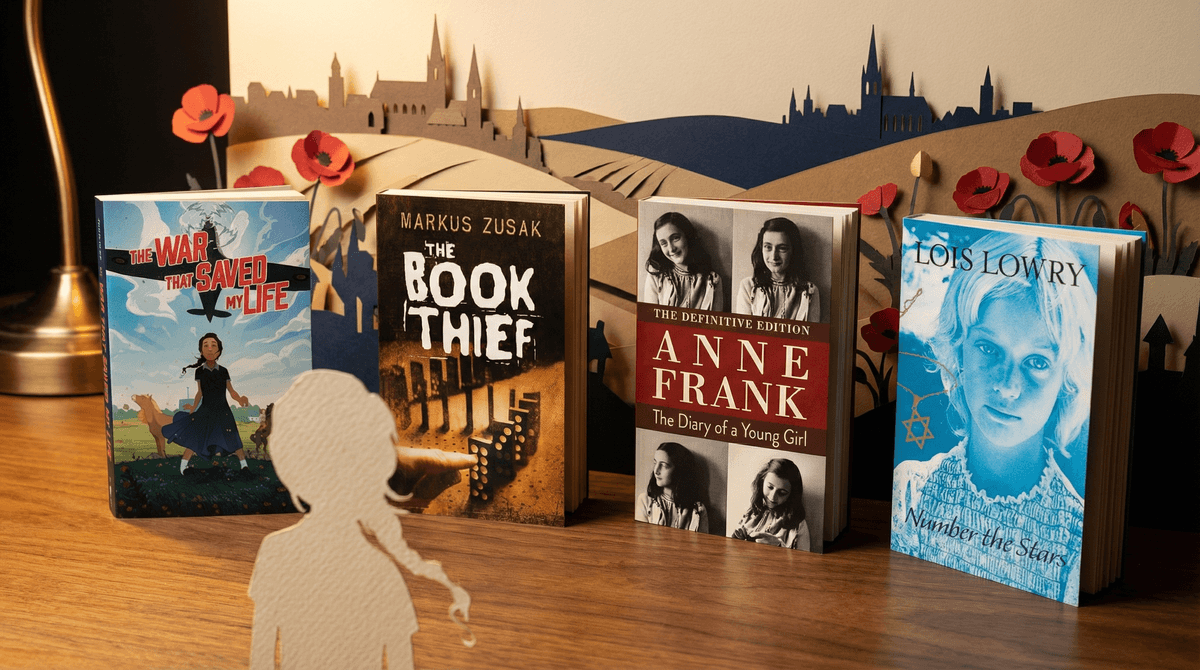
Look, at some point your kid is going to encounter World War II. Maybe it's a random YouTube video about tanks, maybe it's a TikTok about Anne Frank, maybe it's just that one kid at school who's obsessed with military history. And when that moment comes, you've got a choice: let the internet explain the Holocaust, or get ahead of it with actual, thoughtful books written by people who understand child development.
World War II books for kids aren't about sugarcoating history or pretending the worst thing that ever happened was actually fine. They're about introducing one of humanity's darkest chapters in a way that educates without traumatizing, that honors the gravity of what happened while still being developmentally appropriate for young minds.
The good news? There are incredible books out there that do this beautifully. The challenge? Figuring out which ones are right for YOUR kid at THEIR age with THEIR sensitivity level.
Here's what's happening: kids are encountering WWII content younger than ever before, often through completely unfiltered channels. A 9-year-old searches "WW2" on YouTube and suddenly they're three clicks away from actual combat footage or Holocaust denial conspiracy theories.
Books give you control over the narrative. They let you introduce these concepts in order, with context, at a pace your kid can handle. Plus, unlike a random video or game, you can read together, pause for questions, and process the heavy stuff in real time.
And let's be honest—this history matters. The rise of authoritarianism, the consequences of propaganda, the courage of ordinary people in extraordinary circumstances, the absolute horror of genocide—these aren't just historical facts. They're lessons that feel increasingly relevant in 2026.
Ages 6-8: Starting with Stories of Courage
At this age, skip anything directly about combat or the Holocaust. Instead, focus on stories of bravery, resilience, and hope set during the war era.
- The Butter Battle Book by Dr. Seuss isn't technically about WWII, but it's a brilliant allegory about conflict escalation that even young kids can grasp
- Number the Stars by Lois Lowry is technically for older kids, but the first few chapters work well as a read-aloud about friendship and courage
- The Librarian of Basra isn't WWII but teaches about protecting culture during war—a good entry point
At this age, you're planting seeds: war is real, people had to be brave, some people helped others when things were scary. That's enough.
Ages 9-11: Introducing the Real History
This is the sweet spot for most WWII books written for kids. They're old enough to understand that millions of people died, but the best books still focus on specific stories rather than overwhelming statistics.
- Number the Stars by Lois Lowry—now they can handle the whole thing. It's about the Danish resistance helping Jewish families escape to Sweden, and it's a masterclass in age-appropriate Holocaust education
- The War That Saved My Life by Kimberly Brubaker Bradley is phenomenal. It's about a girl with a clubfoot escaping an abusive mother during the London Blitz. The war is the backdrop, not the trauma
- Refugee by Alan Gratz weaves together three refugee stories across different eras, including a Jewish boy fleeing Nazi Germany. It's powerful and makes connections to current events
- Code Talker by Joseph Bruchac tells the story of Navajo code talkers in the Pacific theater—crucial for kids to understand this wasn't just a European war
Ages 12+: The Full Picture
Middle schoolers can handle more direct discussions of the Holocaust, combat, and moral complexity. They're ready for books that don't tie everything up neatly.
- The Book Thief by Markus Zusak is narrated by Death itself and set in Nazi Germany. It's beautiful and devastating and will wreck them in the best way
- Night by Elie Wiesel is the classic Holocaust memoir. It's brutal and necessary and should probably be read with adult support nearby
- The Diary of a Young Girl by Anne Frank—they've heard about it, now they can read it. The graphic novel adaptation is also excellent
- Between Shades of Gray by Ruta Sepetys covers Stalin's deportations—a part of WWII history that often gets skipped
Read them first, or at least skim them. I know you're busy. I know you have seventeen things on your to-do list. But you need to know what's in these books before your kid encounters them, especially anything dealing with the Holocaust. You need to be ready for the questions.
Your kid's sensitivity matters more than their age. A mature 10-year-old might be ready for The War That Saved My Life, while an anxious 12-year-old might need to wait on Night. You know your kid.
Historical fiction vs. memoir matters. Fiction gives kids a bit of emotional distance—they know it's a story, even if it's based on real events. Memoirs like Night hit different because this actually happened to this actual person. Both have value, but memoirs require more emotional readiness.
Talk about why you're reading these books. Frame it as "this is important history that helps us understand how to be better humans" not "here's some trauma porn about the worst thing that ever happened." Context matters.
Be ready for nightmares, anxiety, and big questions. Learning about genocide is heavy. Some kids will breeze through it and want to read everything. Others will need breaks. Both are normal. If your kid is showing signs of anxiety , don't push—circle back when they're ready.
"I Survived" series books about WWII—look, these are fine for reluctant readers who need high action, but they're basically disaster porn with a WWII skin. They're not teaching much beyond "war is scary." If your kid loves them, fine, but supplement with actual substance.
Random books that use WWII as a backdrop for romance—there are a shocking number of YA books that use concentration camps as a setting for love stories. Hard pass. The Holocaust is not a meet-cute.
Anything that centers the Nazi perspective without EXTREMELY clear moral framing—some books try to be "balanced" by showing "good Nazis." Unless it's specifically about resistance within the Nazi party (rare and complex), this is not the nuance your kid needs.
World War II books for kids exist because this history is too important to leave to chance encounters with unfiltered internet content. The right book at the right age can teach empathy, courage, critical thinking about propaganda and authoritarianism, and the importance of standing up when things go wrong.
Start younger than you think with age-appropriate stories about bravery and resilience. Build up to the harder truths as they're ready. Read together when possible. Be available for questions. And remember: you're not trying to traumatize them, but you're also not trying to hide the truth. You're trying to raise humans who understand that this happened, why it happened, and why it can never happen again.
If your kid is 9-11 and hasn't read anything about WWII yet: Start with Number the Stars or The War That Saved My Life. Read it together if you can.
If your kid is already into WWII history: Great! Make sure they're getting diverse perspectives—not just the European theater, not just the American experience. Add Code Talker or Between Shades of Gray to the mix.
If your kid is anxious about heavy topics: That's okay. You can wait. When they're ready, start with fiction rather than memoir, and books where the protagonist survives and finds hope.
If you want more recommendations: Check out our guide to historical fiction for kids or ask our chatbot about specific concerns.
This is hard stuff. You're doing a good job by thinking about it intentionally.