

Look, World War I isn't exactly light reading material. It's trench warfare, poison gas, and millions of deaths—not the stuff of bedtime stories. But here's the thing: kids are going to learn about WWI eventually, whether through school curriculum, a random YouTube rabbit hole, or that one kid at lunch who's weirdly into military history. The question isn't whether they'll encounter it, but how they'll first understand one of the most transformative conflicts in human history.
World War I books for kids range from picture books that introduce the concept of war and remembrance to middle-grade novels about kids on the home front, all the way up to young adult historical fiction that doesn't shy away from the brutality but contextualizes it in human stories. The good ones don't glorify war—they help kids understand the human cost, the complexity, and why we still talk about it over a century later.
Unlike World War II, which gets tons of kid-focused content (Anne Frank, Number the Stars, basically every other historical fiction novel), WWI is weirdly under-represented in children's literature. But it's actually a crucial piece of understanding the 20th century—and honestly, a lot of what's still happening today. The Middle East conflicts? The breakup of empires? The whole concept of "total war" and modern warfare? It all traces back to 1914-1918.
Plus, WWI offers something different from WWII narratives: it's more morally ambiguous. There's no clear "evil empire" storyline. It's messier, more about systems and alliances than individual villains, which can actually lead to more nuanced conversations with older kids about how wars start and why they're so hard to stop.
And let's be real: if your kid is the type who's already watching military history videos or playing war-themed games, giving them actual historical context through quality literature is way better than letting them form their understanding from random internet sources.
Ages 4-7: Introduction to Remembrance
At this age, you're not really teaching about the war itself—you're introducing the concept of remembrance and honoring those who served.
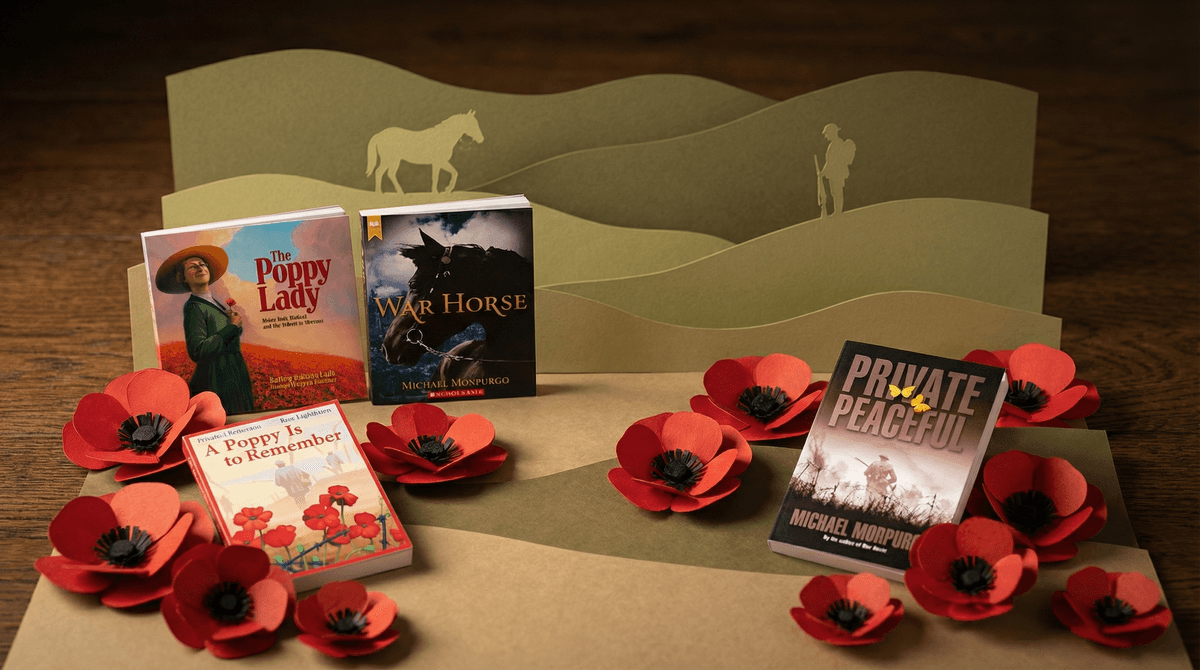
The Poppy Lady by Barbara Walsh is the gold standard here. It tells the story of Moina Belle Michael, who inspired the tradition of wearing poppies to honor veterans. It's gentle, focuses on one woman's mission to remember the fallen, and explains why we see poppies around Veterans Day/Remembrance Day without diving into battle details.
A Poppy Is to Remember by Heather Patterson is another solid choice—simple, respectful, and appropriate for very young kids who notice the symbols but aren't ready for the full story.
Ages 8-10: Home Front Stories
This is the sweet spot for introducing WWI through the eyes of kids who lived through it—but weren't in the trenches.
War Horse by Michael Morpurgo is technically about a horse, which somehow makes the horror of war more accessible for this age group. It's emotional (you will cry, your kid will cry), but it's not gratuitously violent. The perspective shift to an animal observer creates just enough distance while still conveying the tragedy.
Ada's Violin by Susan Hood isn't strictly a WWI book, but it's a great companion read about how music and hope survive war—good for kids who need the historical context but aren't ready for front-line stories.
Ages 10-13: Deeper Historical Fiction
Middle schoolers can handle more complexity and some carefully depicted hardship.
Private Peaceful by Michael Morpurgo (yes, him again—he's kind of the WWI kids' lit king) follows two brothers who enlist. It's honest about the class system, the brutality, and the injustice of military discipline, but it's told through memory and focuses on the human relationships. Fair warning: the ending is devastating but historically accurate.
My Brother's Shadow by Tom Avery is about a younger brother left at home while his older brother fights. It's great for kids who want to understand the war but aren't quite ready for trench warfare descriptions. The emotional impact is real without graphic violence.
Ellie's War by Emily Sharratt follows a British girl whose German governess suddenly becomes an enemy. It's excellent for discussing propaganda, prejudice, and how war changes communities—not just battlefields.
Ages 13+: Young Adult Historical Fiction
High schoolers can handle the real deal—books that don't sanitize but do humanize.
All Quiet on the Western Front by Erich Maria Remarque is the classic for a reason. Yes, it's brutal. Yes, it's from the German perspective, which is actually valuable for understanding that soldiers on all sides were mostly just scared kids. It's been assigned in schools for decades because it's genuinely anti-war without being preachy.
Riven by A.J. Betts is a more recent Australian YA novel that weaves together a modern teen's story with her great-grandfather's WWI letters. It's a good bridge for teens who need the historical context connected to present-day relevance.
The War I Finally Won by Kimberly Brubaker Bradley is technically WWII, but if your kid loved The War That Saved My Life, it's worth mentioning here as a gateway to understanding British war experiences across both conflicts.
The violence question: Most WWI books for kids under 13 focus on home front experiences or use animal perspectives to create distance from the worst violence. For teens, the better books include battle scenes but contextualize them within the psychological and emotional toll, not as action sequences.
The nationalism problem: Some older WWI books have dated language and unquestioned patriotism that feels... uncomfortable now. Look for books published in the last 20 years that take a more nuanced view. The best ones honor service and sacrifice without glorifying war itself.
Historical accuracy vs. readability: Some kids want every detail right (uniforms, weapons, tactics). Others just want a good story set during WWI. Both are valid. Know which type of reader you have and choose accordingly.
Connection to other conflicts: WWI is a great entry point for talking about how wars start, why they're hard to end, and how they reshape the world. If your kid is curious about current events, WWI provides historical context for understanding international relations, alliances, and why borders are where they are.
World War I books for kids aren't about making war palatable—they're about making history accessible. The best ones help kids understand that war is made up of individual human stories, not just dates and battle maps. They show courage and sacrifice without glorifying violence. They acknowledge complexity without overwhelming young readers.
Start where your kid is developmentally, not where the curriculum says they should be. A curious 9-year-old who devours historical fiction can handle more than a disinterested 13-year-old who's being forced to read for school. And if your kid isn't into WWI at all? That's fine too. Not every kid needs to be a history buff.
But if you've got a young reader who's asking questions about war, remembrance, or why we wear poppies—these books are a far better starting point than Wikipedia or YouTube. At least you'll know what they're learning and can talk through it together.
Want age-specific book recommendations for your actual kid? Tell us about your reader and get personalized suggestions .
.