

Why Kids Should Read Banned Books: A Parent's Guide to Controversial Literature
Look, I get it. You see a book on a banned list and your first instinct is probably "well, there must be a reason." And honestly? Sometimes there is—just not always a good one.
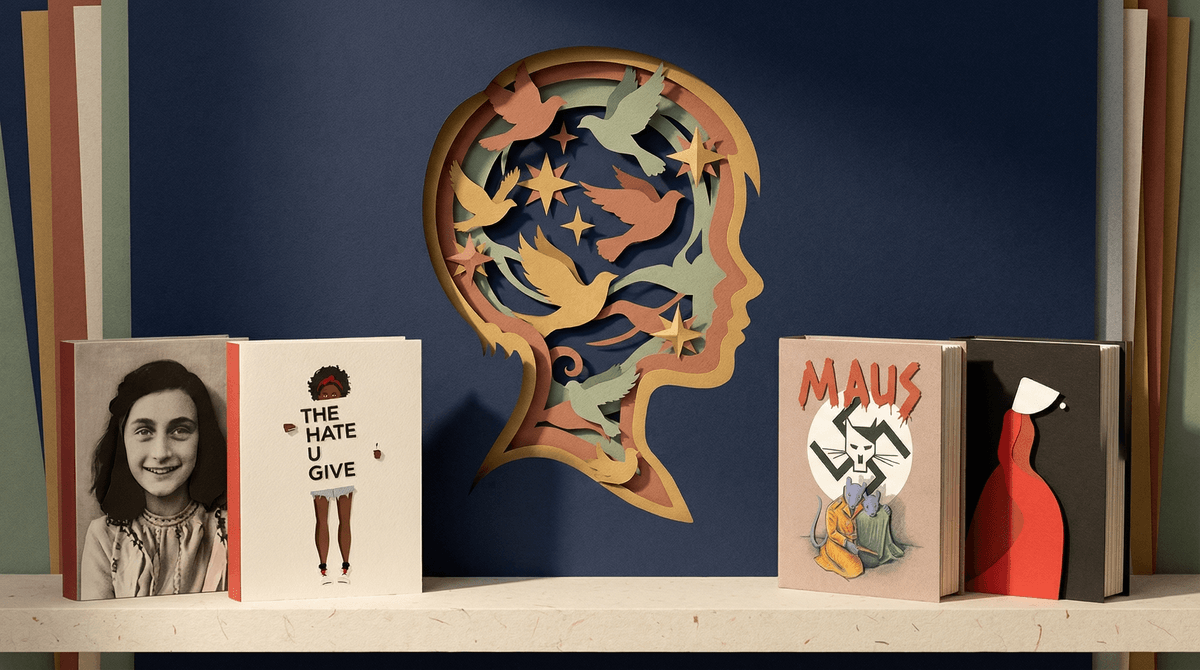
The thing is, book banning has become weirdly mainstream again. In 2023 alone, there were over 4,000 book challenges in U.S. schools and libraries—the highest number in decades. And we're not just talking about genuinely age-inappropriate content for elementary schoolers. We're talking about classics like The Hate U Give, The Handmaid's Tale, and even The Diary of Anne Frank being pulled from shelves.
So let's talk about why "controversial" books might actually be exactly what your kid needs to read—and how to navigate this without just throwing Maus at your 8-year-old and calling it parenting.
First, some clarity: most "banned books" aren't actually banned in the legal sense. They're challenged—meaning someone (usually a parent, sometimes a school board member) formally requests their removal from school libraries or curricula. Some get restricted to certain grades. Some get moved behind the desk. Some actually get removed entirely.
The reasons vary wildly:
- LGBTQ+ content (the most common reason right now)
- Racial themes and discussions of racism
- Sexual content (ranging from a single kiss to actual sex scenes)
- Profanity (even mild stuff)
- Violence or disturbing themes
- Religious viewpoints (or lack thereof)
- "Age-inappropriate" topics like death, mental health, or family dysfunction
Some of these concerns are legitimate—a graphic novel with explicit sexual content probably doesn't belong in a 3rd grade classroom library. But a lot of these challenges are about adults being uncomfortable with kids encountering ideas, identities, or realities that exist in the actual world.
Here's the thing about banned books: they're almost always banned because they make someone uncomfortable. And discomfort? That's often where the most important learning happens.
When kids read books that challenge their assumptions, they develop:
Critical thinking skills. They learn to grapple with complex ideas, question authority, and form their own opinions. They see that not everyone agrees about what's "appropriate" or "true"—and that's actually healthy.
Empathy and perspective-taking. Books about experiences different from their own—whether that's growing up Black in America, being LGBTQ+, surviving trauma, or navigating poverty—build understanding in ways that lectures never will.
Resilience and emotional literacy. Books that deal with hard topics (death, divorce, mental illness, discrimination) give kids language and frameworks for processing their own experiences or supporting friends going through tough stuff.
Media literacy. Understanding why a book was challenged teaches kids to think critically about who gets to control information and why. That's a crucial skill in our current media landscape.
Valid concern! Not every banned book is right for every kid at every age. The Bluest Eye by Toni Morrison is brilliant and important—and also contains sexual violence that most middle schoolers aren't ready for. Context matters.
Here's a framework:
Elementary (Ages 6-10): Focus on books that expand their world without traumatizing them. Think And Tango Makes Three (about penguin dads), The Lorax (environmental themes), or The Giving Tree (which somehow gets challenged for being "too sad").
Middle School (Ages 11-13): This is prime time for books that tackle identity, justice, and complex emotions. Wonder, The Giver, George (about a transgender girl), and Ghost Boys are all frequently challenged—and all developmentally appropriate for this age.
High School (Ages 14+): Now we're in territory where kids can handle pretty much anything with proper context. The Hate U Give, All Boys Aren't Blue, 1984, The Handmaid's Tale—these books ask hard questions about power, identity, sexuality, and justice. Your teen can handle them.
The real question isn't "is this book controversial?"—it's "is my kid ready for these specific themes?" And honestly? You know your kid better than any school board does.
You're allowed to preview. If your kid wants to read something that's been challenged and you're unsure, read it first or read a detailed parent review. Common Sense Media is solid for this. So is just... asking your kid's teacher or librarian what the actual content concerns are.
Context is everything. A book with a sex scene isn't automatically inappropriate—it depends on how it's handled, what the purpose is, and whether your kid is emotionally ready. Same with violence, profanity, or any other "objectionable" content.
Your family's values matter—but so does exposure to other perspectives. You don't have to agree with everything your kid reads. In fact, it's probably better if you don't. Learning to engage with ideas you disagree with is a core life skill.
Talk about it. The worst thing you can do is let your kid read a challenging book in isolation. Ask questions. Share your own reactions. Create space for them to process what they're reading.
Don't outsource this decision. Just because a book is on a banned list doesn't mean it's automatically good for your kid—but it also doesn't mean it's automatically bad. Make your own call based on your kid's maturity, interests, and needs.
When your kid comes home with a book that's been challenged (or asks to read one), try this:
"I see this book has been challenged because [reason]. What interests you about it?"
"Have you heard anything about what's in this book? What do you know about it?"
"I'm going to preview this first, but I'm open to you reading it if we can talk about it together."
Or, if you've decided it's a go: "This book deals with [theme]. If anything feels confusing or upsetting while you're reading, I want you to come talk to me."
The goal isn't to shield them from discomfort—it's to help them navigate it.
Banned books aren't dangerous because they contain difficult content. They're challenged because they ask readers to think critically, question norms, and empathize with people whose experiences are different from their own. That's not a bug—it's literally the feature.
Your job as a parent isn't to protect your kid from every uncomfortable idea. It's to help them build the skills to engage with those ideas thoughtfully, critically, and compassionately. And honestly? Books are one of the safest ways to do that.
So yeah—let your kid read the banned book. Just make sure you're ready to talk about it afterward.
- Check out the American Library Association's list of most challenged books
 to see what's being targeted and why
 - Preview books using Common Sense Media or by reading them yourself
- Talk to your kid's teacher or librarian about what's available and what's been challenged in your district
- Create a family reading culture where discussing difficult topics is normal and expected
And if you want help navigating specific titles or age-appropriate recommendations, Find age-appropriate banned books for your kid—we've got you.