

Why Kids Can't Stop Watching YouTube Shorts (And What You Can Actually Do About It)
Look, I know you've seen it. Your kid picks up their phone "just for a second" and suddenly 45 minutes have evaporated while they've watched 200 videos of people doing random dances, life hacks that don't work, and whatever "satisfying" content the algorithm decided to serve up today.
YouTube Shorts isn't just another thing kids are into—it's genuinely different from what came before, and understanding why it's so sticky is actually the key to helping your family navigate it.
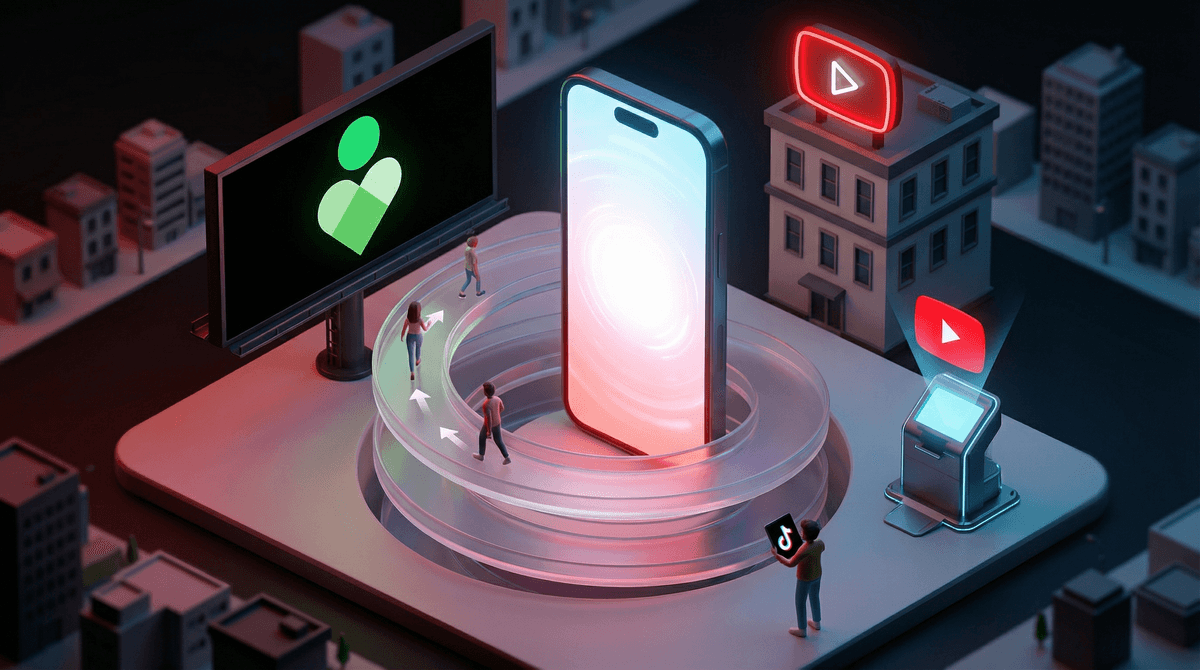
YouTube Shorts are vertical, short-form videos (60 seconds or less) that live inside the regular YouTube app. Think TikTok's format, but owned by Google. Kids swipe up to get the next video in an endless feed, and the algorithm learns what keeps them watching.
Shorts launched in 2021, and it's now absolutely everywhere. If your kid uses YouTube (and let's be real, they probably do—over 80% of kids ages 11-17 are on the platform), they're almost certainly watching Shorts. The format has exploded to over 50 billion daily views.
Here's what makes it tricky: Shorts live inside the same app as regular YouTube, so even if you've set up YouTube Kids for your younger children, once they graduate to regular YouTube (usually around ages 10-13), Shorts are just... there. Built right into the interface.
This isn't about willpower or your kid being "addicted to screens." YouTube Shorts is engineered by some of the smartest behavioral psychologists and engineers in the world to be as engaging as possible. Let's break down what's actually happening:
The dopamine hit is real. Every swipe up reveals something new—a tiny surprise. That unpredictability triggers dopamine release in the brain, the same neurotransmitter involved in reward-seeking behavior. It's not quite the same as substance addiction (despite what some headlines say), but it is activating the same reward pathways. Your kid's brain is literally getting a small chemical reward with each new video.
There's no natural stopping point. Remember when TV shows ended and you had to make an active choice to watch another one? Shorts has no episodes, no credits, no "are you still watching?" The feed is infinite. There's always one more video, and it takes conscious effort to stop—something that's developmentally harder for kids and teens whose prefrontal cortex (the part that handles impulse control) is still developing.
The algorithm is scary good. YouTube's recommendation algorithm learns incredibly fast. It knows your kid liked that one video about axolotls, so now they're getting 47 more axolotl videos, plus some about other weird animals, plus some satisfying slime videos because kids who like axolotls apparently also like slime content. Within minutes, the feed feels personalized and endlessly interesting.
It's genuinely entertaining. Let's not discount this—a lot of Shorts content is actually funny, creative, or interesting! Kids aren't watching garbage (well, not always). They're watching comedy sketches, impressive art, sports highlights, animal videos, and yes, some absolutely bizarre stuff that makes no sense to us but is hilarious to them.
Social currency matters. Especially for kids ages 10-16, knowing the latest memes, trends, and viral videos is social capital. Nobody wants to be the kid who doesn't get the reference at lunch. This pressure to stay culturally current is real and shouldn't be dismissed.
Here's where I need to share some less-fun information: Extended short-form video consumption does seem to affect attention span and the ability to engage with longer-form content. Recent research suggests that heavy TikTok and Shorts users show decreased performance on tasks requiring sustained attention.
But—and this is important—we don't have long-term longitudinal studies yet. We're all figuring this out in real-time. What we do know:
- Kids who spend 3+ hours daily on short-form video show more difficulty with homework completion
- The rapid content switching can make slower-paced activities (like reading or even watching a full TV show) feel boring by comparison
- Sleep disruption is common when kids watch Shorts before bed—the stimulation and blue light are a rough combo
The good news? These effects aren't permanent brain damage. They're more like habits that can be reshaped with intentional changes.
Ages 8-10: Honestly, Shorts probably isn't appropriate yet for most kids in this age range. If they're on YouTube, YouTube Kids is still the better option—it doesn't include Shorts at all. If they've already discovered it, very limited time (10-15 minutes max) with you nearby is the way to go.
Ages 11-13: This is when most kids transition to regular YouTube. Shorts will be part of their experience. Consider 20-30 minutes of Shorts as part of their overall daily screen time budget. Co-watching occasionally helps you understand what they're seeing and opens up conversations.
Ages 14-17: Teens will likely watch Shorts, and trying to ban it completely often backfires. Focus on helping them develop self-awareness about their usage. Can they notice when they've been scrolling for too long? Do they feel good or kind of gross after a long Shorts session?
1. Make the invisible visible. Most kids (and adults!) have no idea how much time they're actually spending. Use Screen Time (iOS) or Digital Wellbeing (Android) to look at YouTube usage together. Don't lecture—just observe together. "Whoa, 2 hours yesterday! Did that feel like 2 hours to you?"
2. Create friction. The easiest scroll is the one that's right there. Try moving YouTube to a folder on the second screen, or logging out after each use. These tiny barriers give the brain a moment to ask "do I actually want to do this?"
3. Replace, don't just restrict. If you take away Shorts without offering alternatives, you're just creating resentment. What else could fill that time? A different game? Texting with friends? Actually watching a show together? Check out some alternative activities that might work for your family.
4. Teach the "three video rule." After three Shorts, pause and check in. Do you want to keep watching or do something else? This builds the metacognition muscle—awareness of their own behavior and choices.
5. No Shorts before school or before bed. These are the times when the engagement is most likely to derail other important stuff. Make these zones Shorts-free and you'll avoid a lot of battles.
6. Talk about the algorithm. Kids are smart. Explain how YouTube makes money (keeping them watching so they see more ads) and how the algorithm works. Once they understand they're being manipulated, many kids feel differently about their usage. This isn't about making them paranoid—it's about digital literacy.
YouTube Shorts isn't inherently evil, but it is engineered to be maximally engaging in ways that can genuinely interfere with other parts of life. Your kid's struggle to stop watching isn't a character flaw—it's a design feature of the platform.
The goal isn't to raise kids who never watch Shorts. It's to raise kids who can recognize when they've been scrolling too long, who understand how algorithms work, and who have the tools to make intentional choices about their time.
Some families will decide Shorts isn't worth the hassle and will block it entirely. Others will integrate it into their media diet with clear boundaries. Both approaches are fine—what matters is that you're making an intentional choice based on your family's values and your individual kid's needs.
- Check your kid's Screen Time data for YouTube usage this week
- Have a judgment-free conversation about what they like watching on Shorts
- Learn more about how YouTube's algorithm works so you can explain it to your kid
- Try implementing one boundary this week (like no Shorts before school) and see how it goes
- Explore other short-form content platforms to understand the broader landscape
Remember: You don't need to have this all figured out today. Digital parenting is an ongoing conversation, not a one-time solution. You've got this.