

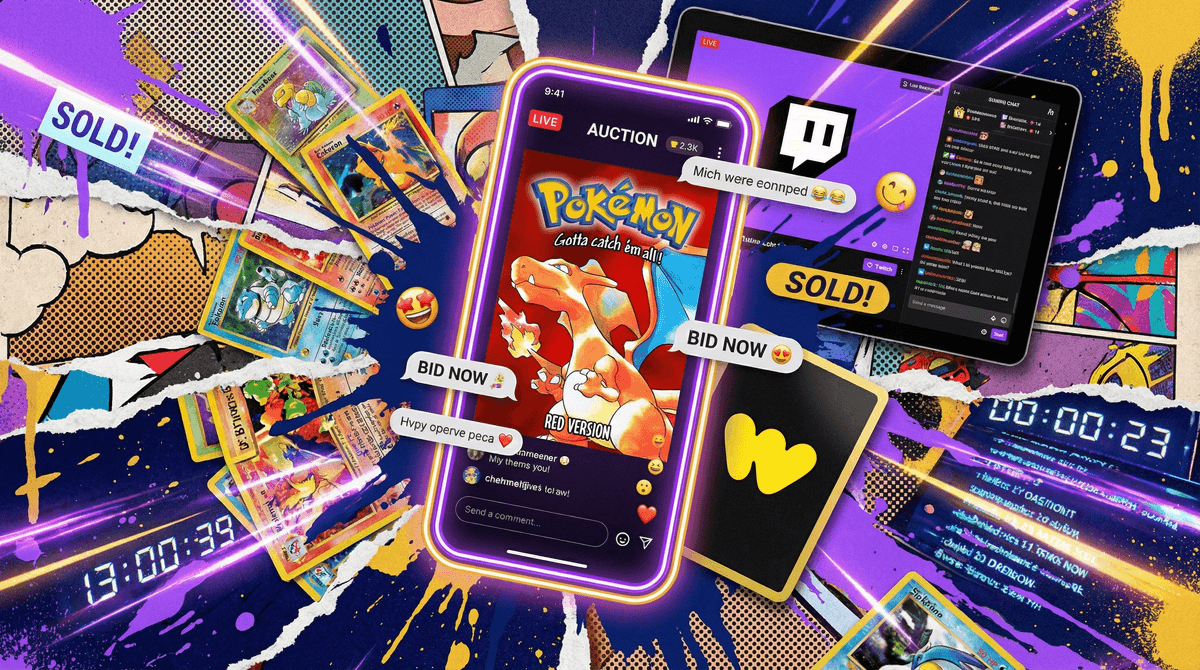
Whatnot is a live-streaming shopping app that's basically QVC meets Twitch meets your kid's entire allowance disappearing in 15 minutes. Sellers host live video streams where they auction off collectibles—Pokémon cards, sports cards, Funko Pops, vintage toys, you name it. Viewers bid in real-time, react with emojis, chat with other buyers, and experience the rush of winning an auction.
Here's where it gets tricky: Whatnot has something called "breaks" where sellers open packs of trading cards live on camera. Buyers purchase "spots" in these breaks—essentially paying for the chance to get whatever cards are pulled for their team or slot. You're paying money for an unknown outcome revealed in real-time with dramatic flair and community excitement.
Sound familiar? That's because it's structurally identical to gambling, just wrapped in the language of collectibles and community.
The app isn't technically designed for kids—you're supposed to be 18+ to make purchases. But here's the reality: kids are watching these streams, begging parents to "just buy one spot," or using parent accounts (sometimes with permission, sometimes without).
The psychological hooks are incredibly powerful:
- FOMO on steroids - Live streams create urgency. Miss this break and that rare card could be gone forever.
- The reveal moment - Watching cards get pulled live triggers the same dopamine hit as scratch-off lottery tickets.
- Community belonging - Chat rooms full of other collectors create social pressure and excitement.
- Gamification - Spinning wheels, mystery boxes, and "one more try" mentality.
- Influencer culture - Popular YouTube and TikTok creators host breaks, making it feel like entertainment rather than spending.
Kids who love Pokémon cards, sports cards, or Funko Pops are particularly vulnerable. The hobby they love has been turbocharged with casino mechanics.
Let's talk numbers. A single "spot" in a break can range from $5 to $100+. Kids (and let's be honest, adults too) often tell themselves "just one more" because this could be the break with the rare pull. Before you know it, you've spent $200 on digital pack openings with maybe $30 worth of cards to show for it.
But the financial cost isn't even the scariest part. We're teaching kids that spending money on random chance outcomes is entertainment. The neural pathways being formed here are the same ones that make gambling addictive for adults.
According to research on youth gambling, early exposure to gambling-like mechanics significantly increases the risk of developing gambling problems later in life. Learn more about how these mechanics work on young brains .
.
One parent in our Screenwise community shared: "My 11-year-old spent $300 of birthday money in three weeks on Whatnot breaks. He kept saying he was 'investing in his collection' but he was literally just chasing the high of a good pull."
This isn't about demonizing collecting. Physical trading cards, building a collection, learning about value and rarity—these can all be positive hobbies. The problem is when the acquisition process becomes randomized, monetized, and socially pressured in real-time.
Red flags to watch for:
- Asking to watch "just one more break" before bed
- Talking constantly about rare pulls and "hits"
- Requesting money specifically for breaks rather than buying cards directly
- Watching Whatnot streams for hours (yes, kids watch these like TV)
- Getting emotionally dysregulated when they can't participate in a break
- Using language like "I'm due for a good pull" or "I almost won"
Context from our community data: About 30% of families report their kids having some level of independent spending ability through apps or online platforms. Among those families, impulsive purchases on gaming and collectible platforms are a common concern.
Ages 8-11: Kids this age should not be participating in live auction breaks, period. The combination of real-time pressure, variable rewards, and social dynamics is too much. If they're interested in collecting, help them buy specific cards they want from local shops or reputable online retailers with fixed prices.
Ages 12-14: If your middle schooler is passionate about collecting, this is a teaching moment. You could allow them to watch breaks together and discuss what's happening: "Notice how the seller is creating urgency? Why do you think they spin that wheel?" Help them see the mechanics at play. Set a strict monthly budget for collecting that they manage themselves—but steer them toward fixed-price purchases rather than randomized breaks.
Ages 15+: Older teens can handle more independence, but they still need guardrails. If you're going to allow Whatnot participation, treat it like teaching responsible gambling: set hard limits, track spending, discuss odds and expected value. Make them calculate how much they've spent versus the actual value of cards received.
Don't lead with "Whatnot is basically gambling and you're banned from it forever." That just makes it forbidden fruit.
Instead, try something like:
"I've been learning about how Whatnot breaks work, and I want to talk about what's actually happening when you buy a spot. You're paying money for a random outcome—you might get something valuable, you might get nothing. That's the same structure as a slot machine or scratch-off ticket. I'm not saying you're a bad kid for being interested, but I want you to understand what these companies are doing to your brain."
Then get curious together:
- "How do you feel when you watch a break and don't get a good pull?"
- "Have you ever felt like you needed to buy just one more spot?"
- "What percentage of the time do you think people actually make money on these?"
Learn more about talking to kids about gambling mechanics in games and apps.
Whatnot isn't evil, and collecting isn't inherently problematic. But live auction breaks are introducing kids to gambling mechanics during a critical developmental window, and we need to be clear-eyed about that.
The good news? You can support your kid's interest in collecting while steering them away from the most predatory aspects. Buy them a Pokémon booster box for their birthday and let them open packs at home. Take them to local card shops. Help them learn to evaluate value and make smart purchasing decisions.
But watching live breaks where real money disappears in real-time for random outcomes? That's not collecting. That's gambling with extra steps.
This week:
- If your kid is watching Whatnot, watch a stream together and talk about what you notice
- Check your payment methods and app store settings—is your kid able to make purchases without your knowledge?
- Set up a conversation about your family's values around collecting, spending, and risk
Longer term:
- Consider using Screenwise to track and understand your family's overall relationship with apps that have purchasing mechanics
- If collecting is important to your kid, help them develop a budget and decision-making framework that emphasizes intentional purchases over random chance
- Stay curious about new platforms and mechanics—Whatnot won't be the last app to gamify spending for kids
Remember: our kids are growing up in a world where gambling mechanics are embedded in everything from Fortnite to FIFA to collectible apps. Our job isn't to shield them from all of it—it's to help them see it clearly and make informed choices.