

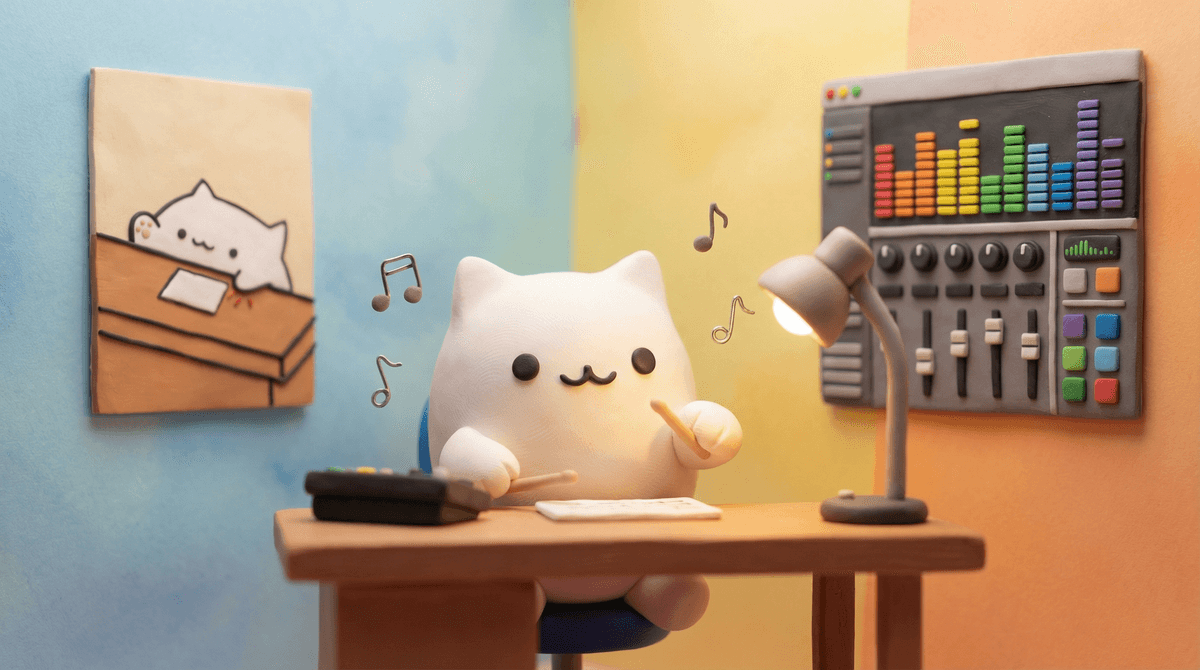
If you've heard your kid saying "I'm playing Bongo Cat!" and pictured some elaborate video game, let me stop you right there. Bongo Cat started as one of those beautifully simple internet moments: a Twitter user posted a GIF of a cute white cat blob smacking a table with its paws in 2018. That's it. That was the whole thing.
But here's where it gets interesting for parents: what started as a silly meme evolved into actual educational tools that music teachers are using in classrooms. The original bongo.cat website lets you tap your keyboard and watch the cat "play" along with you — creating bongo sounds that match your keypresses. It's mesmerizing, it's pointless, and kids absolutely love it.
The meme went viral because it tapped into that perfect internet sweet spot: cute animals + music + participatory creativity. People started making versions where Bongo Cat played piano, guitar, drums, you name it. And then, inevitably, someone made it into apps and games.
Here's the thing about Bongo Cat that actually matters: it's become a surprisingly useful rhythm and music tool. Music teachers are genuinely using it to teach basic rhythm concepts to elementary kids. There's something about that adorable cat bopping along to your tapping that makes rhythm practice feel less like work and more like play.
The Bongo Cat app on Google Play expanded the concept into a full musical instrument playground. Kids can play piano, marimba, harp, guitar, ukulele, or just hit those bongos. You can make actual songs or just mess around making cat sounds. It's basically GarageBand's baby cousin, but with a cat mascot.
And yes, there's even a Steam version that hit the top gaming charts, which is both hilarious and confusing because it barely qualifies as a "game." It's more of an interactive toy — which is exactly why kids gravitate toward it.
Before you panic about "another app," let's talk real numbers. In our Screenwise community data, we're seeing kids average about 4.2 hours of screen time daily (4 hours on weekdays, 5 on weekends). About 55% of families report their kids gaming regularly, and 50% allow unsupervised tablet use.
Bongo Cat falls into that interesting category of screen time that's actually creative and educational rather than passive consumption. It's not YouTube rabbit holes or mindless scrolling — it's interactive music-making. That said, it's still screen time, and it still counts toward your daily totals.
Ages 3-6: The original bongo.cat website is perfect for this age. It's simple cause-and-effect: you press a key, the cat bops, sound happens. Great for developing basic rhythm awareness and hand-eye coordination. Just supervise to make sure they're not going to wander off to other websites.
Ages 7-10: This is the sweet spot for the full apps. Kids can experiment with different instruments, try to recreate songs they know, or just explore sound creation. Music teachers are using it with this age group specifically because it makes rhythm concepts tangible and fun.
Ages 11+: Honestly, by this age, Bongo Cat is more of a nostalgic meme reference than a serious tool. They might mess with it for five minutes for the lols, but they're probably moving on to actual music production apps like GarageBand if they're genuinely interested in music creation.
It's genuinely free. The original website has no ads, no tracking (it's literally just a toy), and no in-app purchases. The mobile apps may have some ads, but the core experience is free. In a world of $5.99/month subscriptions for kids' apps, this is refreshingly simple.
It's not addictive by design. There are no levels to unlock, no rewards to chase, no notifications pulling kids back. You play with it, you're done, you move on. This is the opposite of those games engineered to keep kids hooked.
Educational value is real but limited. Yes, music teachers use it. Yes, it teaches rhythm concepts. But let's be honest — it's not replacing actual music lessons. Think of it as a fun supplement, like how Duolingo teaches some language basics but isn't the same as real language immersion.
The meme culture matters. If your kid is into Bongo Cat, they're probably also into broader internet meme culture. This is a good conversation starter about how internet trends work, what makes things go viral, and how creative communities build on each other's ideas. Understanding meme culture is actually a valuable digital literacy skill.
Bongo Cat is one of those rare internet phenomena that's actually pretty harmless and potentially beneficial. It's creative, it's musical, it's not trying to sell your kid anything or harvest their data. If your kid wants to spend 20 minutes making a cat play virtual bongos, there are approximately 47,000 worse things they could be doing on screens.
That said, it's not a replacement for actual music education, real instruments, or creative play. It's a digital toy — a fun one, but still just a toy. Use it as a springboard for conversations about music, rhythm, and creativity rather than as a babysitter.
If your kid loves Bongo Cat: Consider whether they're actually interested in music creation. Check out alternatives to Bongo Cat for music-loving kids that might take that interest deeper.
If you're curious about educational screen time: Bongo Cat is a great example of the "creative vs. passive" screen time distinction. Learn more about how to evaluate screen time quality rather than just counting minutes.
If you want to try it yourself: Seriously, go to bongo.cat right now and tap your keyboard for 30 seconds. You'll immediately understand the appeal. Sometimes the best way to connect with your kid's digital life is to just... try the thing.