

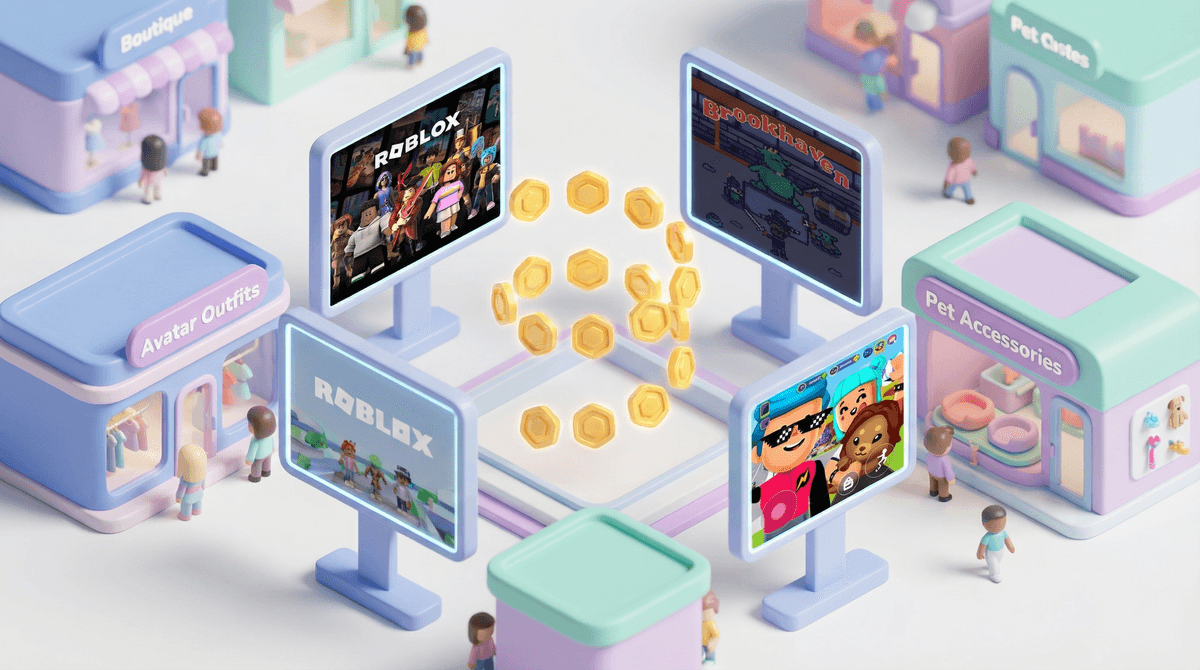
Robux is the virtual currency that powers Roblox, and if you have a kid playing the game, you've probably already had at least three conversations about it this week. It's the money kids use to buy stuff inside Roblox—and unlike some game currencies that you can earn through gameplay, Robux mostly requires real money to obtain.
Here's the thing that catches parents off guard: about 60% of families in our community have kids playing on public servers in Roblox, which means they're not just building in private worlds—they're interacting with the full marketplace, seeing what other players have, and feeling the social pressure to keep up.
When kids ask for Robux, they're usually not thinking about "virtual currency." They're thinking about the specific thing they want to buy. Here's what that actually looks like:
Avatar Customization (The Big One)
This is where most Robux disappears. Kids can buy:
- Clothing and accessories - Everything from designer hoodies to fairy wings to that one specific hairstyle that "literally everyone has"
- Faces and animations - Yes, you can buy different facial expressions and walking styles
- Bundles - Pre-packaged avatar looks that can cost anywhere from 50 to 500+ Robux
The social dynamics here are real. When kids are playing on public servers, their avatar is their identity. It's like showing up to school—what you're wearing matters to them, even if it's all pixels.
Game Passes and Developer Products
This is where it gets interesting from a "is this teaching entrepreneurship or just extracting money" perspective:
- Game passes - One-time purchases that unlock permanent features in specific games (like VIP access, special abilities, or exclusive areas)
- Developer products - Consumable items you can buy repeatedly (extra lives, speed boosts, in-game currency for specific games)
Individual Roblox creators set these prices, which means your kid might spend 25 Robux in one game and 400 in another for similar perks. There's no standardization, and kids don't always understand what they're actually getting before they buy.
Private Servers
For about 100-200 Robux per month, kids can rent private servers for their favorite games. This lets them play with just their friends without random players joining. Some parents actually prefer this option—it's more expensive but creates a more controlled social environment.
Gamepasses for Popular Games
Certain games have become notorious for their monetization. Adopt Me, Brookhaven, Bloxburg (which requires Robux just to access), and Pet Simulator X all have their own internal economies that run on Robux.
Let's be honest about the psychology here. Roblox is designed to make free-to-play feel limited. Kids without Robux:
- Have more basic avatars (which stands out in social games)
- Can't access certain popular games or areas
- Progress more slowly in games with pay-to-win elements
- Can't participate in trading economies within games
This isn't accidental. Roblox's entire business model depends on converting free players into paying customers, and they're very good at it. Kids experience FOMO (fear of missing out) in real-time when their friends have access to things they don't.
Some kids will tell you they can earn Robux through gameplay. Technically true, but here's the reality: earning meaningful amounts of Robux requires either creating popular games (which very few kids do successfully) or participating in the Roblox Premium subscription program, which... requires spending real money anyway.
The "earn Robux free" videos on YouTube are almost always scams or clickbait. Worth having that conversation early .
.
Ages 6-9: At this age, kids often don't distinguish between virtual and real money. They'll ask for Robux the same way they ask for a snack. Consider:
- Giving a small monthly allowance of Robux (400-800 range)
- Helping them understand that you're spending real money
- Reviewing purchases together before they happen
Ages 10-12: Kids start understanding value but are highly susceptible to social pressure. This is when "everyone has it" arguments peak. Consider:
- Connecting Robux to real-world money management (if they want more, they can earn it)
- Teaching them to wait 24 hours before purchases to avoid impulse buying
- Discussing why games are designed to make you want to spend
Ages 13+: Teens can understand the business model but may still struggle with impulse control. Consider:
- Setting monthly spending limits but letting them decide how to allocate
- Discussing the ethics of game monetization
- Exploring whether they want to try creating rather than just consuming
The math that matters: 400 Robux costs $4.99, 800 costs $9.99, and 1,700 costs $19.99. Most individual items cost between 50-500 Robux, but popular game passes can run 1,000+. Do the math on how quickly this adds up.
The subscription question: Roblox Premium ($4.99-$19.99/month) gives kids a monthly Robux stipend plus a 10% bonus on purchases. If you're already spending $10-20/month on Robux anyway, the subscription might make financial sense—but it also normalizes ongoing spending.
The gift card strategy: Many parents prefer giving physical Roblox gift cards rather than linking credit cards to accounts. It creates a natural limit and makes the money feel more real to kids.
Robux spending isn't inherently bad, but it requires active parenting. The 25% of families in our community who report no Roblox usage and the 15% who keep their kids in offline/private modes have made one choice. The 60% whose kids play on public servers are navigating a different reality—one where social dynamics and spending pressure are part of the package.
The question isn't whether your kid should have Robux, but rather: How do you want to teach money management, impulse control, and media literacy using Roblox as the classroom?
Because that's really what this is—an expensive but potentially valuable opportunity to teach real skills in a digital environment they care about.
- Understand the full Roblox ecosystem beyond just the currency
- Explore whether Roblox Premium makes sense for your family
- Learn about setting up parental controls to manage spending
- Have a conversation with your kid about what they actually want to buy and why—you might be surprised by their reasoning