

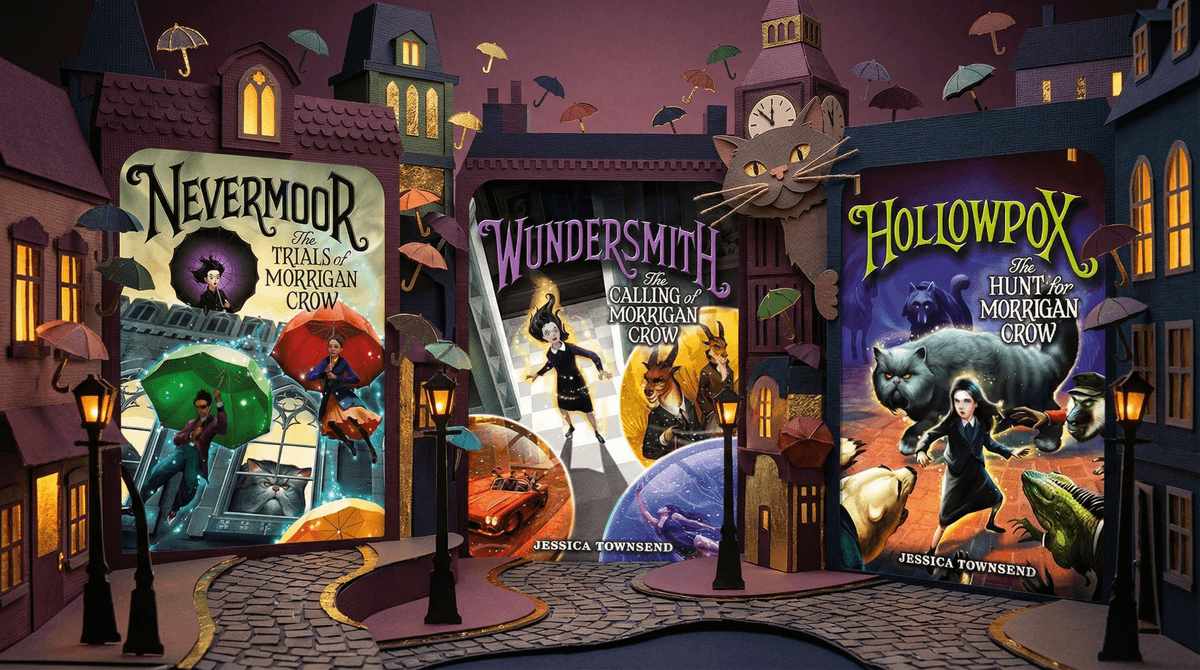
If your kid has been begging you to buy "the next book" or talking about Morrigan Crow and the Wundrous Society, welcome to the Nevermoor universe. This is Jessica Townsend's fantasy series that launched in 2017 with Nevermoor: The Trials of Morrigan Crow, and it's become a genuine phenomenon among middle-grade readers.
The series follows Morrigan Crow, a girl cursed to die on her eleventh birthday who gets rescued at the last moment by a mysterious man named Jupiter North. He whisks her away to Nevermoor, a magical city where she competes for a spot in the Wundrous Society—an elite organization for people with exceptional talents. Think Hogwarts meets The Hunger Games (but way less violent), with a dash of Tim Burton's aesthetic.
Currently there are three books published: Nevermoor: The Trials of Morrigan Crow, Wundersmith: The Calling of Morrigan Crow, and Hollowpox: The Hunt for Morrigan Crow. Book four is expected but doesn't have a release date yet, which is causing genuine distress in households everywhere.
The main character is genuinely different. Morrigan isn't your typical "chosen one" protagonist. She starts the series believing she's cursed and brings bad luck to everyone around her. She's been blamed for everything from minor accidents to major disasters her entire life. Kids who've ever felt like outsiders or scapegoats connect hard with this.
The magic system is creative and weird. Instead of wands and spells, people in Nevermoor have "knacks"—unique magical abilities. Some people can talk to animals, some can control weather, some can see glimpses of the future. Morrigan discovers she's a Wundersmith, someone who can manipulate "Wunder" (the raw magical energy of the world), which is both incredibly powerful and incredibly dangerous. The last Wundersmith before her was basically magical Hitler, so... there's baggage.
The world-building is rich without being overwhelming. Townsend creates this intricate magical city with different districts, magical transportation (the Brolly Rail is an umbrella-based transit system), talking cats, vampire dwarfs, and a hotel that's bigger on the inside. But unlike some fantasy series that drown you in lore, Nevermoor reveals its world gradually and keeps the focus on character relationships.
The found family vibes are strong. Jupiter North and the residents of the Hotel Deucalion become Morrigan's chosen family. For kids dealing with complicated family dynamics or feeling like they don't quite fit in their own homes, this hits different.
Best for ages 9-13, though some 8-year-olds who are strong readers will be fine.
The series gets progressively darker. Book one is whimsical and adventurous with some scary moments. By book three, we're dealing with themes of prejudice, plague, mob violence, and the fear of becoming a monster. Nothing gratuitously violent or graphic, but definitely heavier emotional territory.
Content considerations:
- Death and mortality: The series opens with Morrigan expecting to die. Death is a recurring theme, though not depicted graphically
- Prejudice and discrimination: Major themes in books 2-3, where Morrigan faces persecution for being a Wundersmith
- Scary creatures: The Hollowpox creates infected "Hollowbeast" creatures that attack people
- Complex moral questions: Is Morrigan inherently dangerous because of what she is? Can she control her power? Should people fear her?
Reading level: The vocabulary is sophisticated without being pretentious. Townsend doesn't talk down to kids. Expect words like "ignominious" and "trepidation" but used in context where meaning is clear.
Series commitment: Each book is 400-500 pages. If your kid struggles with longer books or series that don't have endings yet (book 3 has a cliffhanger and we're all waiting), maybe hold off.
This isn't just "girl Harry Potter." Yes, there's a magical school and a chosen one and trials, but the comparison is lazy. Nevermoor has its own identity, and honestly, Morrigan is a more emotionally complex protagonist than Harry ever was. She's dealing with internalized shame and the question of whether she's fundamentally bad—which is pretty sophisticated for middle-grade fiction.
The representation is casual and integrated. Characters of different races, body types, and abilities exist without being "issue books." There's a character who uses a wheelchair, characters with different skin colors, and it's just... normal. No one's making a big deal about it, which is exactly how it should be.
The pacing can be slow in places. Book two in particular has a middle section that drags a bit. Some kids will power through, others might need encouragement. Book three picks up the pace significantly.
There's real emotional depth here. Morrigan struggles with self-worth, fear of her own power, and the weight of other people's expectations. Kids who've dealt with anxiety, feeling "different," or being blamed for things beyond their control will see themselves in her journey. This can be therapeutic, but also might bring up feelings worth talking about.
The villain problem: The series' main antagonist, Ezra Squall (the evil Wundersmith), is compelling but not super present in the early books. The real tension comes from society's fear of Morrigan and her fear of herself. Some kids want a clearer "bad guy to defeat" structure.
If your kid is deep into Nevermoor, here are some conversation starters that go beyond "how's your book?":
"What knack would you want to have?" This opens up great discussions about their interests and values. Do they want something flashy or something helpful? Something for themselves or something to help others?
"Do you think it's fair how people treat Morrigan?" Gets into prejudice, fear, and judging people for things they can't control. Relevant to... well, everything happening in the world.
"What would you do if you had power that scared you?" Explores self-control, responsibility, and the difference between having power and using it.
"Who's your favorite character besides Morrigan?" Hawthorne (her best friend) and Jupiter (her mentor) are usually top picks, but there's a whole cast. This tells you what qualities your kid values in people.
Nevermoor is genuinely good middle-grade fantasy that respects its readers' intelligence and emotional capacity. It's not trying to be the next Harry Potter—it's its own thing, with its own strengths.
Read this if your kid: Loved Percy Jackson, is ready for something slightly more emotionally complex than Wings of Fire, enjoys magical worlds with detailed systems, or has ever felt like an outsider.
Maybe skip if your kid: Needs fast-paced action throughout, gets frustrated by unfinished series, or isn't ready for themes of prejudice and fear of one's own nature.
The good news? Even if book four takes another two years, books 1-3 are meaty enough to sustain multiple re-reads. Kids are finding new details and foreshadowing on second passes. And honestly? That's the mark of a series worth investing in.
Pro tip: If your kid finishes book three and is desperate for more, Neverwhere by Neil Gaiman has similar "magical hidden city" vibes for slightly older readers (13+), or The Girl Who Drank the Moon has comparable themes of feared magical girls who aren't actually dangerous.