

The Ultimate Guide to Movies for 13-Year-Olds: PG-13 and Beyond
Thirteen is when the MPAA literally designed a rating category for your kid (PG-13), but that doesn't mean every PG-13 movie is appropriate—or that some R-rated films aren't worth considering. Here's what actually matters when choosing films for your teen, plus specific recommendations that won't make you regret family movie night.
Top picks to start with:
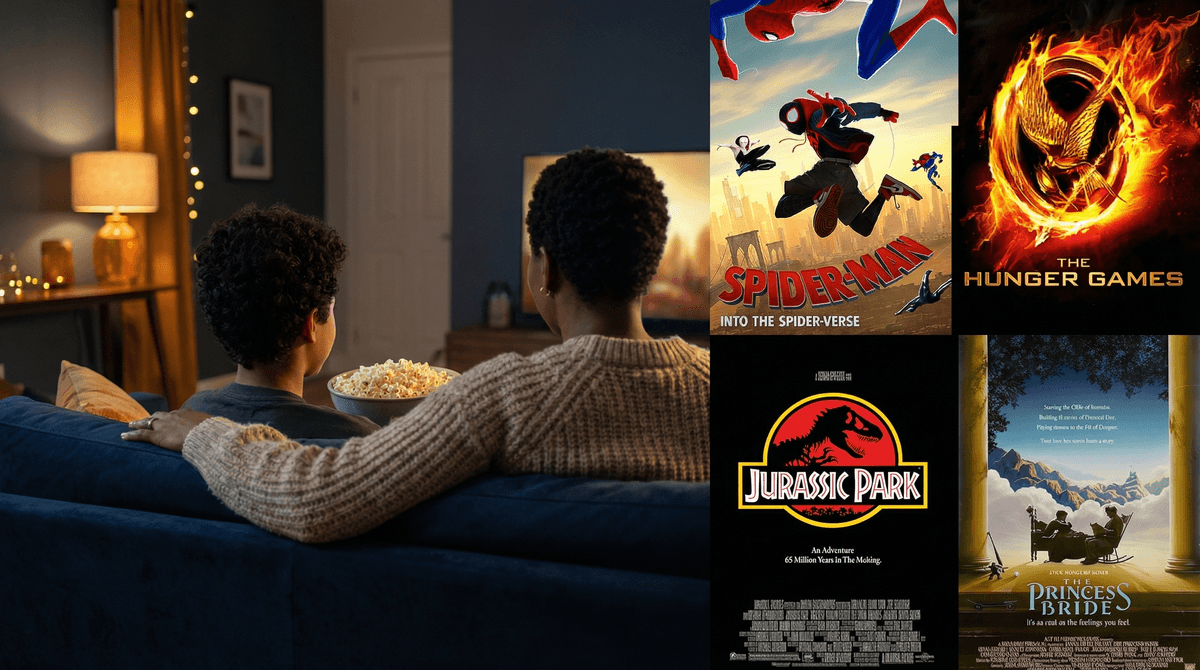
- Action/Adventure: Spider-Man: Into the Spider-Verse, The Hunger Games
- Comedy: Ferris Bueller's Day Off, The Princess Bride
- Drama: The Perks of Being a Wallflower, Hidden Figures
- Thoughtful R-rated options: Dead Poets Society, Good Will Hunting
The PG-13 rating was literally created in 1984 because of complaints about Indiana Jones and the Temple of Doom being too intense for PG. The MPAA decided they needed something between "kids with parental guidance" and "no one under 17."
But here's the thing: PG-13 is an incredibly broad category. It includes everything from Finding Dory (which is basically a PG movie that said "damn" once) to The Dark Knight (which features genuinely disturbing violence and psychological terror).
What PG-13 typically allows:
- Brief strong language (but not the f-word, usually)
- Some violence, but not "realistic" or prolonged
- Brief nudity (non-sexual context)
- Drug use references
- Scary or intense sequences
What it doesn't tell you:
- How intense the scary parts actually are
- Whether the themes are mature vs. just "adult topics mentioned"
- If your specific kid can handle what's on screen
- Whether the movie is actually any good
This is why Common Sense Media exists, and why you should actually read a few parent reviews before committing to movie night.
Forget ratings for a second. Your 13-year-old has probably seen worse on TikTok than in most PG-13 movies. The question isn't "is this rated appropriately" but rather:
Does this movie offer something worth watching?
Some 13-year-olds are ready for thoughtful R-rated dramas about complex topics. Others get genuinely freaked out by jump scares in PG-13 horror movies. You know your kid.
Consider:
- Gore vs. violence: Some kids are fine with stylized action violence but can't handle blood and realistic injury
- Sexual content: Brief nudity in an art film context hits different than a raunchy teen comedy
- Language: If they're in middle school, they've heard it all. The question is whether you want to normalize it at home
- Themes: Mature themes handled well can spark amazing conversations. Mature themes handled poorly are just... awkward
Action & Adventure
Spider-Man: Into the Spider-Verse (2018) Genuinely one of the best superhero movies ever made, period. Stunning animation, real emotional depth, and a protagonist dealing with imposter syndrome and family pressure. Ages 10+
The Hunger Games (2012) Your kid has probably already read the book. The movie handles the violence more tastefully than you'd expect for "kids murdering each other." Opens up great conversations about media manipulation, authoritarianism, and survival. Ages 12+
Jurassic Park (1993) Still holds up 30+ years later. Some genuinely scary moments (the velociraptors in the kitchen, anyone?) but nothing gratuitous. Great for kids who love science. Ages 11+
The Incredibles (2004) Technically PG, but the themes are sophisticated: mid-life crisis, family dynamics, the ethics of superhero intervention. Way smarter than most PG-13 action movies. Ages 8+
Comedy
Ferris Bueller's Day Off (1986) The ultimate "screw the system" teen movie, but actually pretty wholesome. Some language and mild sexual references, but nothing that'll make you cringe. Ages 12+
The Princess Bride (1987) Perfect for kids who think they're too old for "family movies." Clever, quotable, and genuinely funny across generations. Ages 10+
Groundhog Day (1993) Bill Murray at his best. Deals with existential questions in a way that's accessible and hilarious. Some mild adult themes but nothing explicit. Ages 11+
Drama & Real Stories
Hidden Figures (2016) The true story of Black women mathematicians at NASA during the space race. Deals with racism and sexism head-on but in a way that's educational rather than traumatizing. Ages 10+
The Perks of Being a Wallflower (2012) Deals with mental health, trauma, and high school in a raw but not exploitative way. Some heavy themes (abuse is referenced but not shown), but incredibly valuable for teens navigating their own mental health. Ages 14+
October Sky (1999) True story of a coal miner's son who becomes a NASA engineer. Inspiring without being cheesy. Great for kids interested in STEM. Ages 10+
The Imitation Game (2014) Alan Turing's story of breaking the Enigma code during WWII. Deals with persecution of LGBTQ people historically. Some war violence but nothing graphic. Ages 13+
Sci-Fi & Fantasy
Ready Player One (2018) If your kid plays Roblox or Fortnite, they'll love this. Tons of pop culture references and a plot about virtual worlds that feels relevant. Some intense action sequences. Ages 11+
The Maze Runner (2014) Another dystopian YA adaptation. More action-focused than Hunger Games, less philosophical. Good if your kid liked the book series. Ages 12+
Big Hero 6 (2014) Disney movie that deals with grief and loss in a surprisingly mature way. Also: robots and science. Ages 8+
Some R-rated movies are rated that way because of language or brief content, not because they're inappropriate for mature teens. Here are some worth considering:
Dead Poets Society (1989) Rated PG when released, would probably be PG-13 now. About finding your voice and thinking independently. Deals with suicide (not shown graphically). Ages 13+
Good Will Hunting (1997) Rated R for language, but the themes—trauma, mentorship, potential—are perfect for teens. The therapy scenes are genuinely moving. Ages 14+
The Shawshank Redemption (1994) Often cited as one of the best movies ever made. Rated R for prison violence and language, but nothing gratuitous. About hope and resilience. Ages 14+
Hidden Figures is technically PG, but if you're considering R-rated options, Selma (2014) is powerful and educational, though it shows violence against civil rights protesters. Ages 13+ with discussion
Not every popular PG-13 movie is worth your time. Here are some that get recommended but honestly... just aren't great:
Most Marvel movies post-Endgame: They're fine, but they're increasingly just setup for the next movie. Spider-Man: No Way Home is fun if you've watched all the previous Spider-Man movies; otherwise it's just confusing.
Transformers franchise: Loud, incoherent, and weirdly sexist for movies about robots. Your kid will survive without them.
Most teen rom-coms on streaming: They're not harmful, just aggressively mediocre. To All the Boys I've Loved Before is the exception—actually charming.
Here's a practical approach:
- Check the rating (PG-13, R, etc.)
- Read the content descriptors (what specifically earned that rating)
- Look at Common Sense Media for detailed breakdowns
- Watch the trailer together and gauge your kid's reaction
- Ask them what they've heard about it from friends
If you're on the fence, watch it yourself first. Or better yet: watch it together and be ready to pause for questions or to fast-forward through a scene if needed.
7th-8th grade (ages 12-14): Most PG-13 movies are fair game, but be thoughtful about horror and intense violence. They're old enough for complex themes but might not be ready for graphic content.
9th-10th grade (ages 14-16): Thoughtful R-rated movies are increasingly appropriate, especially if you're watching together. They can handle most content but benefit from context and discussion.
11th-12th grade (ages 16-18): At this point, you're mostly just recommending movies rather than gatekeeping. Focus on quality over ratings.
The PG-13 rating was designed for 13-year-olds, but it's a starting point, not a rulebook. Some of the best movies for teens are rated R (for language or brief content), and some PG-13 movies are genuinely inappropriate depending on your kid.
The real questions to ask:
- Is this movie actually good, or just popular?
- Will this spark interesting conversations?
- Can my specific kid handle what's on screen?
- Am I watching with them or are they watching alone?
Movie night with your teen is one of the few remaining shared cultural experiences you'll have before they're fully in their own media ecosystem. Choose movies that are worth discussing, not just consuming.
And if you're looking for more specific recommendations, check out our guides on best movies for teens, movies that teach empathy, or alternatives to Marvel movies.
This week:
- Ask your teen what movies their friends are watching
- Pick one from this list that sounds interesting to both of you
- Watch the trailer together
- Make it an actual event—popcorn, phones away, the whole thing
Need help deciding? Check if specific movies are appropriate for your 13-year-old or explore our full movie database filtered by age, theme, and content.