

Can My Kid Stream on Twitch? Age Rules, Parental Consent, and What You Need to Know
TL;DR: Kids can stream on Twitch starting at age 13, but they need parental permission and supervision until they're 18. If your kid is under 13, they can appear on someone else's stream with you present, but can't have their own account. The real question isn't just "can they?" but "should they?" and "how do we do this safely?"
Quick navigation:
So your 11-year-old just asked if they can start a Twitch channel to stream Minecraft or Fortnite, or your 14-year-old announced they're already streaming and have 47 followers. Either way, you're here because you need actual answers about what's legal, what's safe, and what's realistic.
Here's what Twitch's Terms of Service actually say:
Age 13-17: Kids can have a Twitch account and stream, but only with parental consent and supervision. Twitch requires that a parent or legal guardian be present during all streams and be responsible for monitoring chat and content.
Under 13: No Twitch account, period. This isn't Twitch being mean—it's COPPA (Children's Online Privacy Protection Act) compliance. Kids under 13 can appear in someone else's stream if a parent or guardian is present, but they can't create their own account or stream independently.
Age 18+: Full autonomy. They can stream whenever, whatever (within Twitch's community guidelines, which are actually pretty strict about certain content).
The enforcement reality? Twitch relies heavily on self-reporting of age. There's no ID verification for creating an account. Which means yes, plenty of kids under 13 have accounts, and plenty of 13-17 year olds stream without supervision. But just because it's happening doesn't mean it's allowed—or smart.
Twitch's requirement for parental supervision isn't just a liability cover-your-ass move. Streaming is fundamentally different from playing games or watching videos. Your kid is:
- Broadcasting live to potentially thousands of strangers
- Interacting in real-time through chat (which can get toxic, sexual, or predatory fast)
- Creating a permanent digital footprint (streams can be clipped, downloaded, and shared)
- Potentially revealing personal information (their room, their voice, their schedule, their school mascot on the wall behind them)
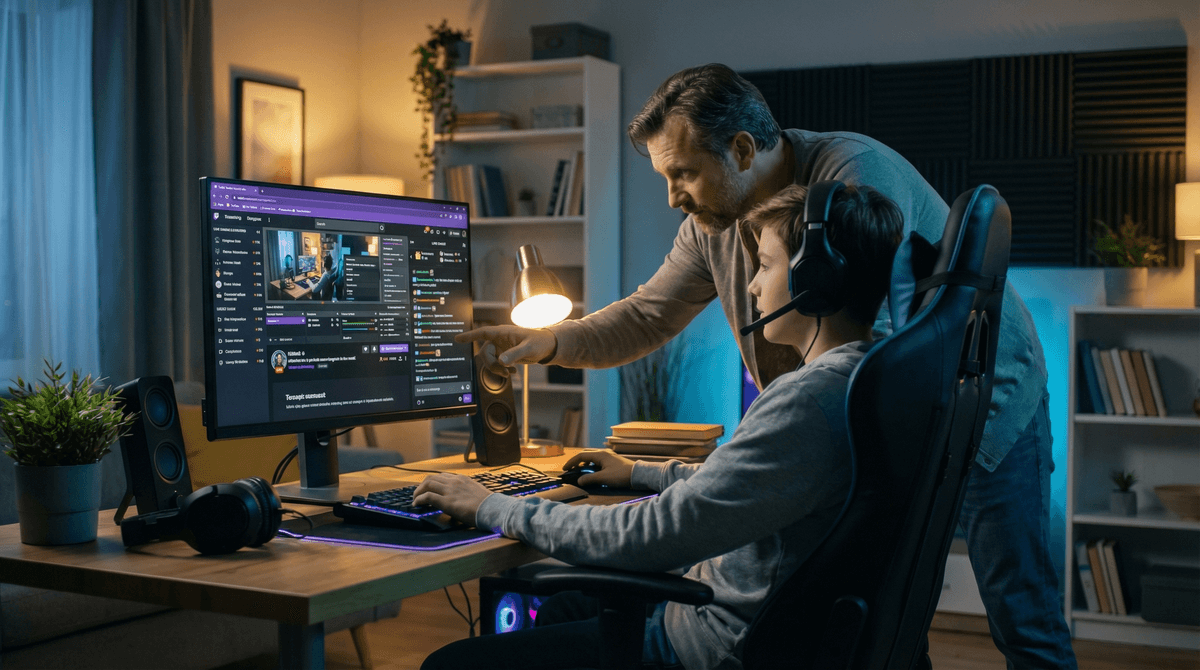
"Supervision" should mean you're actually there, in the room, able to see the screen and monitor chat. Not checking in every 20 minutes. Not just having Twitch open on your phone in the other room. Actually present.
For most families with a 13-year-old, this level of supervision isn't realistic on a regular basis. Which is why most experts (and honestly, most parents who've actually tried this) recommend waiting until 15-16 at the earliest for regular streaming.
Beyond the obvious "stranger danger" concerns, here are the issues that actually trip up young streamers:
Parasocial relationships: Your kid will develop "relationships" with viewers who feel like friends but are strangers. Some will be genuinely supportive. Others will be manipulative, grooming, or just weird. Kids struggle to distinguish between the two.
Performance pressure: Streaming isn't just playing games anymore. It's entertaining, engaging chat, maintaining a schedule, dealing with criticism, and constantly trying to grow an audience. That's a lot of emotional labor for a teenager.
Harassment and hate raids: Twitch has made progress on this, but coordinated harassment is still common, especially for young streamers, girls, and LGBTQ+ kids. Your 14-year-old needs to be emotionally equipped to handle being called slurs in real-time.
The monetization trap: Once your kid starts getting donations, subscriptions, or bits, the dynamic changes. Now they feel obligated to stream, to thank donors by name, to maintain their "community." Learn more about how platform monetization affects kids .
.
Copyright strikes: Kids don't understand music licensing. They'll stream with Spotify playing in the background and get DMCA strikes that can permanently ban their account.
If your kid is 13+ and you've decided to let them try streaming with supervision, here's how to do it less recklessly:
Technical Setup
-
Use a separate streaming account for purchases: Don't link your primary payment method. Use a prepaid card or separate account so if credentials get compromised (which happens), the damage is limited.
-
Enable all privacy settings: Disable whispers (private messages) from non-followers, require email verification for chatters, enable AutoMod at the highest level.
-
Assign moderators you actually know: Not viewers who volunteer. Real people you trust IRL who can help monitor chat.
-
Use a delay: A 30-60 second stream delay means if something goes wrong, you have time to cut the feed before it's broadcast.
-
No camera at first: Audio-only streaming with gameplay footage dramatically reduces privacy risks. No one sees their room, their face, or their body.
Content Boundaries
Establish these rules before the first stream:
- No personal information: Not their real name, school, city, age, or anything identifiable
- No responding to location questions: "Where do you live?" gets "North America" as the most specific answer
- No meeting viewers IRL: Ever. Even the "nice" ones who've been watching for months
- Pre-approved games only: Some games (like Roblox) have additional risks when streaming because of user-generated content
The Conversation About Chat
Your kid needs to understand that chat is not their friend group. It's a public space where anyone can show up. Role-play scenarios:
- Someone asks their age → "I'm a teenager, that's all you need to know"
- Someone offers to send them money/gifts outside Twitch → "No thanks, I don't accept anything off-platform"
- Someone asks to add them on Discord/Snapchat → "I don't share my socials"
- Someone starts getting sexual or aggressive → Timeout/ban immediately, no explanation needed
For kids who want to create content but aren't ready for live streaming:
YouTube: Pre-recorded videos give you editorial control. You can watch and approve before anything goes live. Kids 13+ can have channels with parental permission.
Private Discord servers: Your kid can stream to a small group of actual friends in a private server. Still requires supervision, but much lower risk than public broadcasting.
Outschool or similar platforms: If they want to teach or share knowledge, structured educational platforms have better safety rails than Twitch.
Local gaming clubs or esports teams: Scratches the "community" itch without the broadcast risk.
The answer is no, they can't have their own Twitch account. But I know some of you are thinking "but they're so good at Fortnite" or "they really want to share their Minecraft builds."
Here are the actually-legal options:
-
You stream, they appear: You create the account, you're the streamer, your kid is a guest. You control chat, you monitor everything, you're legally and practically responsible.
-
Private recordings: Use OBS or similar software to record their gameplay for family viewing only. Not published anywhere.
-
Wait: I know, boring answer. But 11-year-olds are fundamentally different from 13-year-olds in terms of emotional regulation, privacy awareness, and ability to handle online dynamics.
The kids who become successful streamers as adults almost never started at age 10. They started at 16, 18, 20. Your kid isn't missing a crucial window. They're avoiding becoming a cautionary tale.
If your teen is already streaming, watch for these warning signs:
- Secretiveness about their channel or viewers
- Streaming at odd hours (late night streams often attract different audiences)
- Defensive about specific viewers ("You don't understand, they're actually really nice")
- Declining grades or activities to maintain streaming schedule
- Mood changes after streams (especially after criticism or low viewership)
- Accepting gifts or money from viewers outside Twitch's official systems
Any of these should trigger a serious conversation and possibly a pause on streaming.
Twitch's official rules are clear: 13+ with parental supervision, 18+ independently. But the rules are just the starting point.
The real questions are:
- Is your specific kid emotionally ready for public performance and real-time criticism?
- Can you actually provide meaningful supervision, not just technical permission?
- Have you built enough trust that they'll tell you when something feels wrong?
- Do they understand that "deleting" something from the internet doesn't actually delete it?
For most families, the honest answer is that 13 is too young for regular public streaming. 15-16 is more realistic. And even then, it requires active parental involvement, not just a signed permission slip.
If your kid is genuinely interested in content creation, streaming, or building an online presence, that's not a bad thing. Those are real skills with real career applications. But there are ways to develop those skills that don't involve broadcasting to strangers during middle school.
If your kid is asking to stream:
- Watch Twitch together for a few weeks. See what streamers actually deal with in chat.
- Read Twitch's Community Guidelines together
- Start with private Discord streaming to friends only
- Revisit in 6 months
If your kid is already streaming:
- Watch their VODs (past broadcasts) to see what you've missed
- Check their follower list and chat logs
- Update privacy settings immediately
- Have a non-punitive conversation about what you've learned and what needs to change
If you're still not sure:
Ask about your specific situation - every family's context is different.
The goal isn't to be the fun-ruining parent. It's to be the parent who helps their kid build an online presence they won't regret when they're applying to colleges or jobs in five years.