

Look, we've all been there. Your kid just has to tell you about how they're the best at [insert literally anything], or they're melting down because they didn't win at Uno, or they're rolling their eyes at a sibling's attempt at something new. It's developmentally normal, sure, but it's also exhausting.
Here's the thing: humility is one of those character traits that's genuinely hard to teach through lectures. "Be humble!" doesn't exactly land when you're seven and convinced you're the reigning champion of everything. But the right TV shows? They can actually do some heavy lifting here.
TV shows that promote humility aren't the preachy after-school specials of the '90s (thank god). They're shows where characters mess up, learn they don't have all the answers, discover that other people have valuable perspectives, and grow from admitting they were wrong. These shows model what humility actually looks like in action—and kids absorb that stuff like sponges.
We're raising kids in a culture that's... not exactly humility-forward. Social media rewards performance and perfection. Gaming culture can be intensely competitive. YouTube and TikTok are full of "look at me" energy. None of this is inherently bad, but it means our kids need extra doses of "you don't have to be the best at everything" and "it's okay to not know things."
Humility isn't about making kids feel small or squashing their confidence. It's about helping them:
- Value other people's contributions and perspectives
- Admit mistakes without falling apart
- Ask for help when they need it
- Celebrate others' successes without jealousy
- Recognize they're always learning and growing
The right shows can normalize all of this in ways that feel natural, not forced.
Ages 3-7: Bluey
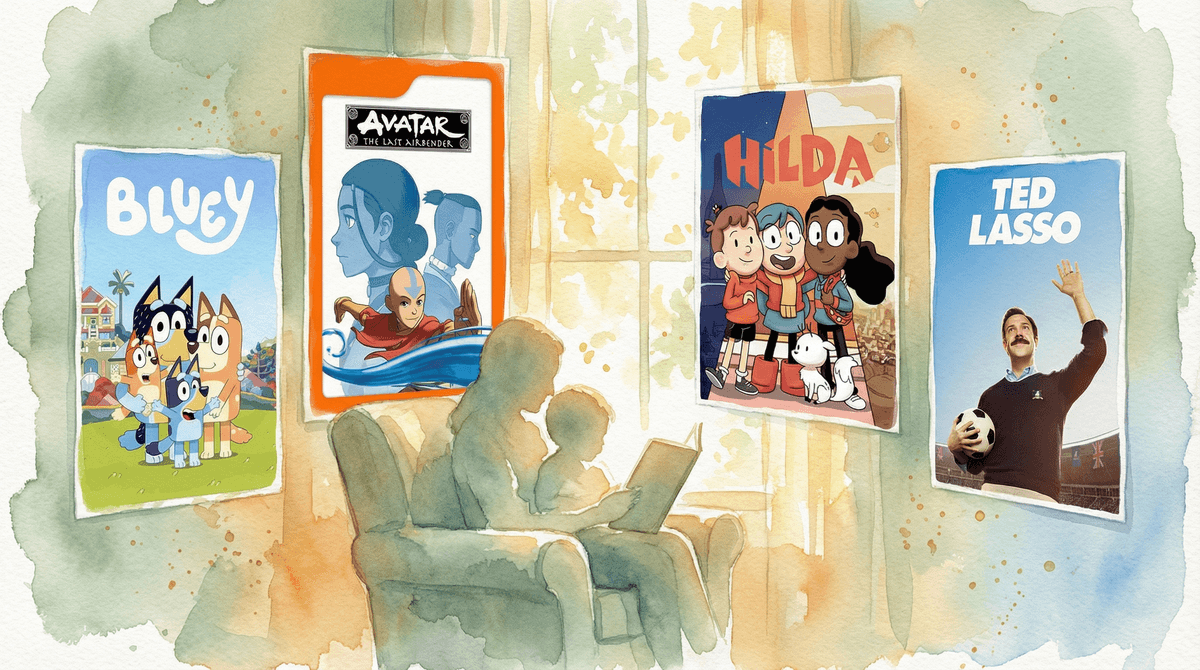
Okay, yes, everyone recommends Bluey for everything, but hear me out. This show is masterful at showing characters—both kids and adults—being wrong, apologizing, and adjusting. Dad loses his cool and apologizes. Bluey gets too competitive and learns to dial it back. Bingo admits she needs help. The episodes are short, the lessons are subtle, and nobody's getting lectured.
Standout episodes: "Takeaway" (Dad admits he was wrong about the game rules), "Octopus" (Chloe shows Bluey a different way to play).
Ages 5-10: Avatar: The Last Airbender
This is the gold standard for character growth, and humility is baked into the entire series. Aang has to learn he can't save everyone alone. Sokka discovers his "plans" aren't always the best. And Zuko's entire arc is basically a masterclass in humbling yourself, admitting you were wrong, and choosing a different path.
Yes, there's action and fantasy adventure, but the emotional core is all about characters learning they don't have all the answers. It's also genuinely great television that parents won't hate watching.
Reality competition shows can go either way on the humility front, but the Baking Show franchise is shockingly wholesome. Kids compete, yes, but they also help each other, celebrate others' successes, and handle failure with grace. The judges are encouraging without being patronizing. It's a surprisingly good model for "you can try your best AND be happy for others."
Plus, it might inspire your kid to bake you cookies. Win-win.
Ages 8-14: Hilda
This animated Netflix series follows a fearless blue-haired kid who constantly gets in over her head and has to figure things out. What makes it great for humility? Hilda is confident but not arrogant. She regularly admits when she's wrong, asks for help, and learns from creatures and people who know more than she does. The show celebrates curiosity and growth over being "the best."
Ages 10+: Ted Lasso
If you've got older kids or tweens, Ted Lasso is basically a humility clinic. The titular character is a coach who openly admits he doesn't know everything about soccer, asks for help constantly, and treats everyone with respect regardless of their status. The show deals with ego, failure, and growth in ways that feel real and earned.
Fair warning: There's some language and adult themes, so preview first or watch together. But the core messages are incredibly valuable.
Ages 6-11: Odd Squad
This PBS show is ostensibly about kid agents solving math-based mysteries, but it's also about teamwork, admitting mistakes, and recognizing that everyone brings different strengths. Characters regularly mess up, course-correct, and learn from each other. It's goofy and fun, but the humility lessons are real.
Don't expect instant results. Your kid isn't going to watch one episode of Bluey and suddenly become a humble, gracious human. This is about slow, steady modeling over time.
Watch together when you can. Co-viewing gives you natural opportunities to talk about what's happening. "Wow, Aang really had to admit he couldn't do that alone, huh?" lands way better than a lecture about teamwork.
Point out the humility moments. Kids don't always catch the subtleties. A quick "Did you notice how she apologized right away?" or "He asked for help instead of pretending he knew everything" can highlight what you want them to absorb.
Balance with confidence-building content. Humility works best when kids also feel secure and capable. You want a mix of "you can do hard things" and "you don't have to be perfect at everything."
TV isn't going to raise your kids for you (unfortunately), but it can be a surprisingly effective tool for teaching values like humility—especially when those values are woven into good storytelling rather than shoved down throats.
The shows above aren't perfect, and they won't solve every ego-related meltdown in your house. But they model something valuable: characters who grow, admit mistakes, value others, and become better humans in the process. And honestly? That's exactly what we're trying to teach our kids anyway.
Start with one show that fits your kid's age and interests. You don't need to overhaul your entire watch list. Just swap out one show and see how it goes.
Talk about what you're watching. Even casual comments during or after episodes can help kids connect the dots between what they're seeing and how they act in real life.
Look for humility moments in other media too. Once you start noticing it, you'll see it everywhere—or notice when it's conspicuously absent. Check out other shows your kids are watching and think about what values they're actually modeling.
And if your kid still insists they're the undisputed champion of everything? Well, at least you tried. Parenting is humbling too.