

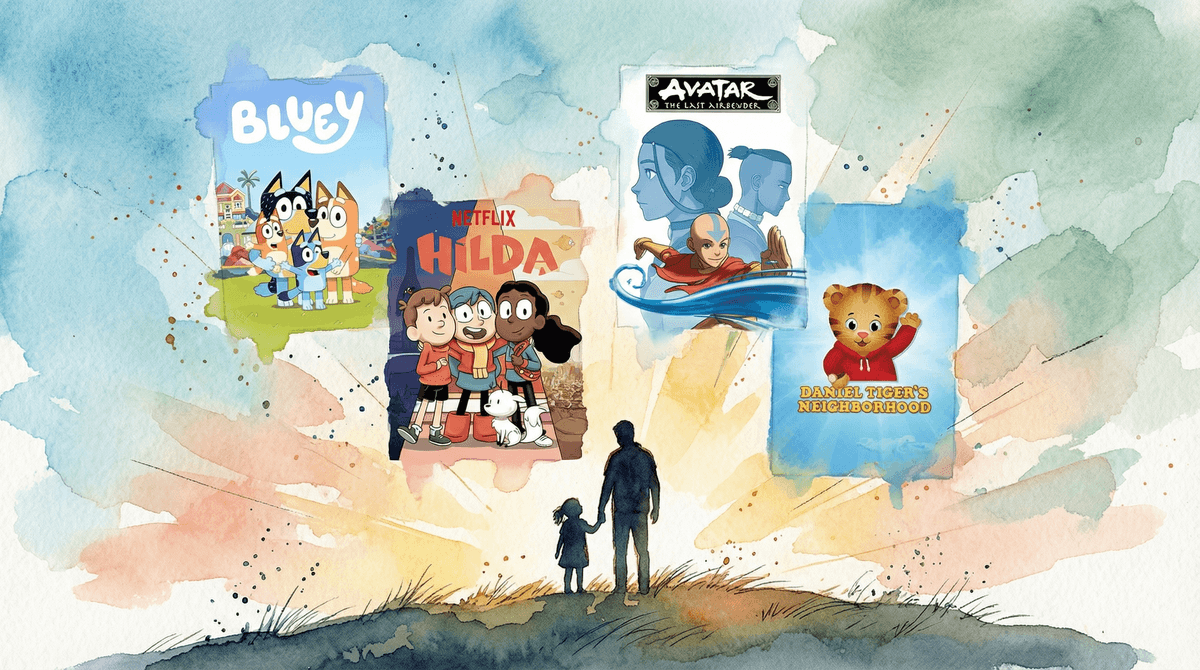
Look, we all know the guilt spiral: your kid just watched three hours of YouTube shorts featuring people screaming at each other over Minecraft builds, and you're wondering if you're raising a future reality TV villain. But here's the thing—not all screen time is created equal. Some shows actually do the heavy lifting of teaching empathy, kindness, and perspective-taking in ways that stick.
Compassion-building TV isn't about saccharine lessons or talking down to kids. It's about stories that help children see the world through someone else's eyes, understand that people have complex inner lives, and recognize that kindness matters. And honestly? Sometimes a well-crafted show can open conversations about feelings and ethics that would be awkward as hell if you just sat your kid down for a "talk."
We're not just being precious about screen time here. Research shows that narrative storytelling activates empathy circuits in the brain—when kids watch characters struggle, make mistakes, and navigate relationships, they're essentially doing empathy reps. It's like a workout for their emotional intelligence.
And in 2026, when so much of kids' media diet is algorithmically-optimized dopamine hits and parasocial relationships with influencers, intentionally choosing shows that model compassion is genuinely countercultural. You're not being a helicopter parent—you're being strategic about what's shaping your kid's worldview during those hours they're glued to a screen anyway.
For Younger Kids (Ages 4-8)
Bluey - Yes, everyone recommends it, but that's because it's legitimately exceptional. This show models emotional regulation, sibling dynamics, and parental patience in ways that feel real. The episode "Sleepytime" will make you cry, and "Flatpack" is basically a masterclass in teaching kids that other people have feelings and needs too.
Daniel Tiger's Neighborhood - If you can get past the slightly uncanny valley animation, this show is unmatched for teaching emotional literacy to preschoolers. The jingles are annoyingly catchy but genuinely help kids name and navigate feelings.
Hilda - A beautifully animated show about a fearless blue-haired girl who befriends creatures and solves problems through curiosity and kindness. It's not preachy, but it consistently shows that understanding others—even scary-looking trolls—leads to better outcomes than fear.
For Middle Elementary (Ages 8-11)
Avatar: The Last Airbender - This is the gold standard. Every character has depth, makes mistakes, and grows. Aang's commitment to finding peaceful solutions, Zuko's redemption arc, Katara's processing of grief—this show does more emotional education than most curricula. And it's genuinely entertaining, so kids will actually watch it.
The Owl House - A fantasy show that deals with found family, neurodivergence, and LGBTQ+ identity with remarkable nuance. The protagonist Luz is relentlessly kind without being a pushover, and the show models that compassion includes standing up to systems that harm people.
Kipo and the Age of Wonderbeasts - Post-apocalyptic but hopeful, this show is all about Kipo's determination to see the good in everyone, even enemies. It's about bridge-building and chosen family, with a killer soundtrack.
For Tweens and Early Teens (Ages 11-14)
Anne with an E - A grittier adaptation of Anne of Green Gables that tackles trauma, bullying, gender roles, and social justice while maintaining Anne's fierce imagination and capacity for forgiveness. Fair warning: it's more intense than the books, but incredibly rich for discussions.
Heartstopper - A queer romance that's basically a masterclass in healthy communication, consent, and supporting friends through mental health struggles. It's unabashedly wholesome without being naive.
She-Ra and the Princesses of Power - Yes, it's a reboot of an 80s toy commercial, but it's transformed into a story about breaking cycles of abuse, the complexity of redemption, and how love (romantic and platonic) requires vulnerability and work.
These shows aren't magic pills. Just parking your kid in front of Avatar won't automatically make them more compassionate. The real value comes from co-viewing and conversation. You don't have to watch every episode, but checking in with questions like "Why do you think that character did that?" or "How would you feel in that situation?" activates the empathy-building potential.
Age ratings matter, but so does your kid. Some 9-year-olds can handle the emotional complexity of Anne with an E, others will be overwhelmed. You know your kid—if they're sensitive to conflict or get nightmares easily, start with gentler options like Hilda.
Representation is part of compassion. Shows that feature diverse characters, family structures, and experiences help kids understand that their worldview isn't universal. This isn't about being "woke"—it's about preparing kids to navigate an actual diverse world with curiosity instead of fear.
The question isn't really "should my kid watch TV?" because let's be real, they're going to. The question is "what are they watching, and what conversations am I having about it?" Compassion-building shows give you material to work with—stories that model emotional intelligence, perspective-taking, and kindness in action.
So yeah, Bluey is better than YouTube drama channels. Avatar beats doomscrolling TikTok. And honestly? Watching a great show together and talking about it might be one of the most valuable things you do with your kid all week.
Pick one show from the age-appropriate list and commit to watching the first three episodes together. See what conversations emerge naturally. And if your kid is already deep into something on this list, Get conversation starters about what makes a character good or kind —you might be surprised by their insights.
Want more recommendations? Check out our guide to shows that teach emotional intelligence or explore alternatives to YouTube for tweens.