

True Detective: What Parents Should Know About HBO's Dark Crime Drama
TL;DR: True Detective is absolutely not for kids. This is mature, adult television with graphic violence, sexual content, disturbing themes, and the kind of existential bleakness that even makes adults need a palate cleanser. If your teen is asking about it (likely because of TikTok edits or Matthew McConaughey memes), here's what you need to know before deciding if they're ready.
True Detective is HBO's acclaimed anthology crime drama series that launched in 2014. Each season features a completely new cast, setting, and mystery—think American Horror Story but for detective noir instead of supernatural horror.
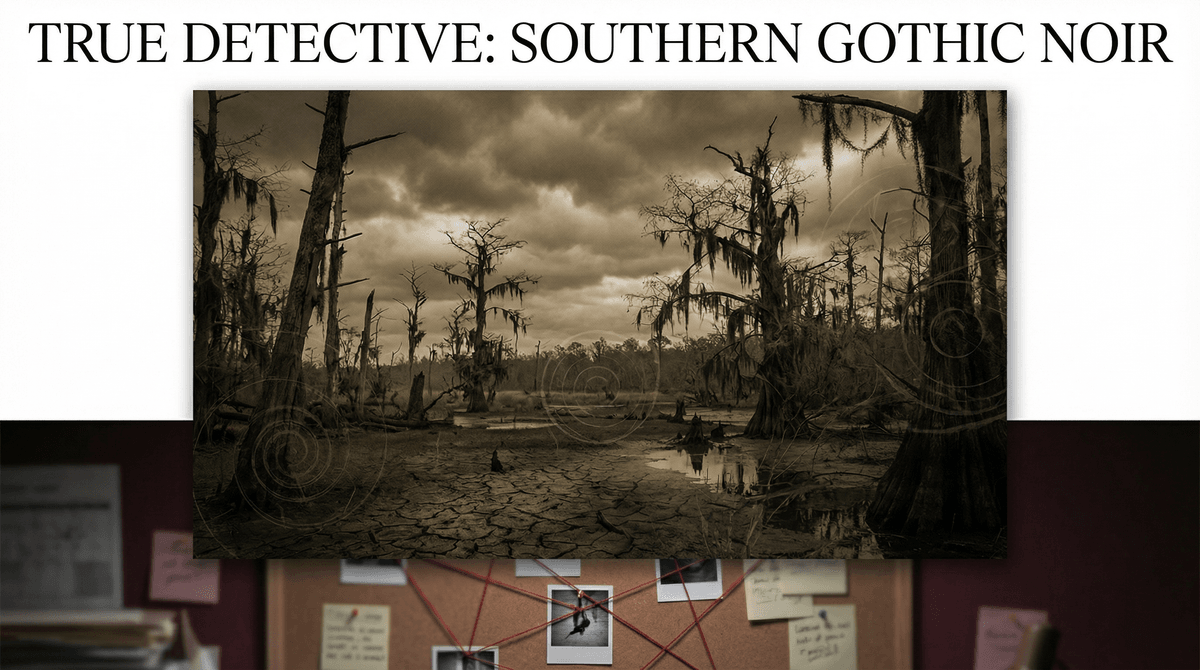
The show became a cultural phenomenon primarily because of its first season, starring Matthew McConaughey and Woody Harrelson as two Louisiana detectives investigating ritualistic murders over a 17-year period. It's the kind of prestige television that gets dissected in think pieces, spawns Reddit theories, and wins acting awards.
If your teen is asking about True Detective in 2026, it's probably not because they're deeply interested in Southern Gothic crime fiction. More likely:
-
TikTok philosophy edits: McConaughey's nihilistic monologues from Season 1 have become viral content, often set to moody music. His character Rust Cohle delivers these deeply pessimistic speeches about existence that teenagers find either profoundly meaningful or hilariously dramatic.
-
The "time is a flat circle" meme: This line has transcended the show and become internet shorthand for feeling stuck in repetitive patterns.
-
Prestige TV credibility: Watching critically acclaimed "difficult" television is social currency for teens who want to seem sophisticated or discuss complex narratives.
-
True Crime obsession: The current generation is deeply into true crime content, and True Detective sits at the intersection of that interest and high-quality drama.
Let's be direct: True Detective earns its TV-MA rating in every possible category.
Graphic Violence: We're talking crime scene photos of ritualized murders, decomposed bodies, explicit violence against women and children (mostly implied but discussed in detail), shootouts, torture, and disturbing imagery that lingers. Season 1's investigation centers on a serial killer with occult leanings, and the show doesn't shy away from showing the aftermath of his crimes.
Sexual Content: Frequent nudity, sex scenes, strip clubs as settings, sexual violence as plot points, and prostitution. Season 2 particularly leans into seedy underworld content.
Substance Abuse: Heavy drinking and drug use aren't just present—they're often central to character development. Rust Cohle's character arc involves significant substance abuse, and it's portrayed as both destructive and somewhat romanticized.
Disturbing Themes: Child abuse, human trafficking, institutional corruption, existential nihilism, and the kind of darkness that suggests evil is systemic and often goes unpunished. This isn't Law & Order where justice prevails in 42 minutes.
Language: Constant strong profanity. If you're bothered by f-bombs, this isn't your show.
What makes True Detective different from standard crime procedurals is its literary ambition. Season 1 especially is packed with philosophical references—Nietzsche, Ligotti, cosmic horror, antinatalism. Rust Cohle's character is essentially a walking philosophy seminar on pessimism and the meaninglessness of existence.
For mature viewers, this adds depth. For younger teens, it can be either:
- Genuinely thought-provoking material that sparks interesting conversations about meaning and morality
- Pseudo-intellectual nonsense that sounds deep but might reinforce unhealthy nihilistic thinking during a developmentally vulnerable period
The show doesn't really offer answers or hope—it wallows in darkness. That's part of its artistic merit, but it's also why it's not great viewing for someone still forming their worldview.
Season 1 (2014): The McConaissance masterpiece. This is what everyone talks about when they reference True Detective. Louisiana, occult murders, two detectives with opposing philosophies. The most cohesive and critically praised season. Also the most disturbing in terms of ritualistic violence and implications about child victims.
Season 2 (2015): Colin Farrell, Rachel McAdams, Vince Vaughn. Set in corrupt California municipalities. Generally considered a disappointing follow-up—convoluted plot, less compelling characters. Still very violent and sexual, but less philosophically interesting.
Season 3 (2018): Mahershala Ali investigating a case across three different time periods in the Ozarks. A return to form after Season 2's stumble. Slightly less graphic than Season 1 but still deals with child abduction and has significant violence.
Season 4 (2024): Jodie Foster in Alaska investigating disappearances. Recent enough that it's what might be driving current teen interest. Returns to the supernatural-adjacent atmosphere of Season 1.
If your teen is going to watch any season, Season 3 is probably the "least worst" option for mature older teens—it's more focused on the detective's memory and aging than on graphic violence, though it's still absolutely TV-MA content.
Under 16: No. Full stop. The content is too graphic, the themes too dark, and there are much better entry points into complex television. If they want prestige drama, try Stranger Things or The Queen's Gambit. If they want detective stories, Sherlock or Knives Out are better starting points.
Ages 16-17: Maybe, with significant caveats. If your teen is:
- Already watching TV-MA content with your knowledge
- Interested in philosophy, literature, or film analysis
- Emotionally mature enough to process dark themes without internalizing nihilistic messages
- Able to discuss what they're watching with you
Then Season 1 or Season 3 might be acceptable with co-viewing or post-episode discussions. This is very much a know-your-kid situation.
Ages 18+: Still intense, but they're adults making their own viewing choices. If they're in college and studying film, philosophy, or criminal justice, True Detective is actually excellent material for analysis.
Here's how to make it a more constructive experience:
Co-view the first episode: You need to see what you're saying yes to. The pilot of Season 1 sets the tone—if you're uncomfortable with that, it doesn't get lighter.
Check in regularly: "What do you think about Rust's philosophy?" or "Do you think the show believes what he's saying?" These discussions are crucial for contextualizing the nihilism.
Provide counter-narratives: If your teen is quoting Rust Cohle's pessimism as profound truth, that's a red flag. Help them understand that the character is intentionally written as damaged and unreliable, not as a philosophical guide.
Watch for impact on mood: If the show's darkness is affecting their outlook or mental health, that's a sign they're not ready for this content.
Discuss the portrayal of women: True Detective has been criticized for how it depicts women—often as victims or sex objects. This is worth discussing explicitly, especially with teenage boys.
If your teen wants complex mystery television that's actually age-appropriate:
- Only Murders in the Building: Mystery with humor and heart, TV-14
- The Mysterious Benedict Society: Puzzle-solving adventure for younger teens
- Poker Face: Natasha Lyonne doing procedural mysteries, TV-14
- Wednesday: Dark but age-appropriate mystery at Nevermore Academy
For true crime interest without the graphic content, try podcasts about true crime that are specifically designed for younger audiences.
True Detective is exceptional television made for adults. It's not "too mature" because of arbitrary gatekeeping—it's genuinely dark, disturbing, and philosophically challenging in ways that can be harmful for viewers who aren't developmentally ready.
If your 15-year-old is watching TikTok clips and quoting Rust Cohle, they're getting the "cool nihilism" without the full context of a deeply troubled character in a show about how darkness affects people. That's very different from watching the actual series.
For older teens (17+) who are genuinely interested in prestige television and can handle mature content, Season 1 or 3 might be acceptable with parental involvement. But there's no shame in saying "this is adult content, and you'll appreciate it more in a few years when you're ready for it."
The show will still be there when they're 20. The McConaughey memes aren't going anywhere. And honestly? True Detective hits differently when you have some life experience behind you anyway.
If you're curious about the show yourself: Start with Season 1, but know that it's a heavy watch. Have something lighter queued up for afterward—you'll need it.
If your teen is persistent: Watch the first episode together and make a decision based on their reaction and your comfort level. This is premium "know your kid" territory.
If they're interested in the philosophical aspects: Consider reading books about philosophy for teens together instead, where they can engage with existential questions without the graphic violence wrapper.
And if you need to explain why they can't watch it, you can be honest: "This isn't about not trusting you—it's about this specific show being genuinely disturbing in ways that aren't fun or entertaining, just dark." Sometimes the most mature thing we can do is recognize we're not ready for certain content yet.