

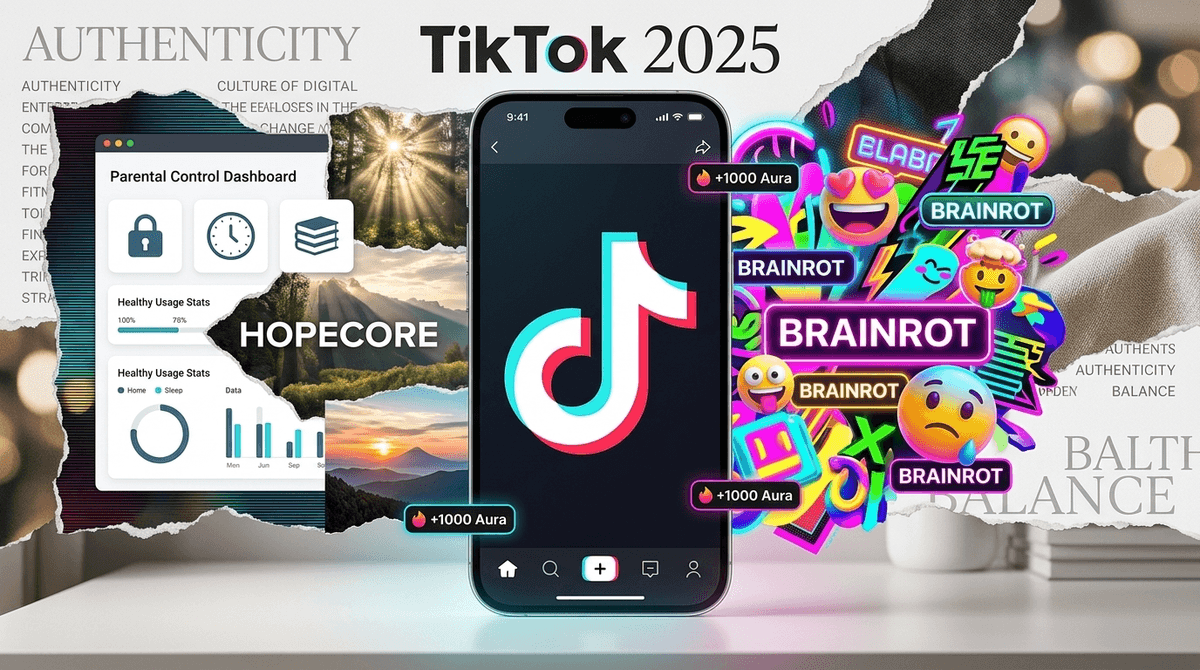
TL;DR
- "Brainrot" is the current umbrella term for nonsensical, hyper-stimulating content like Skibidi Toilet or "Ohio" memes.
- "6-7" refers to the "6-7-8" rule—a viral (and often satirical) set of standards for the "ideal" man (6 feet tall, 7-figure salary, 8-pack abs).
- The "Great Meme Reset" is a shift away from over-produced "influencer" content toward "Hopecore" (earnest, positive clips) and "Underconsumption Core" (minimalism).
- Aura is the new social currency—your teen is either gaining or losing "aura points" based on how cool or cringe they are acting.
- Next Steps: Check out our guide to TikTok parental controls and how to talk to your teen about social media algorithms.
If you feel like you’ve walked into a room where everyone is speaking a different language, you’re not alone. The 2025 TikTok landscape has moved past the simple dance challenges of 2020. It’s faster, weirder, and layered with about five levels of irony.
Between the "looksmaxxing" tutorials and the constant stream of "brainrot," it’s a lot to navigate. But here’s the secret: most of it is a performance. Teens are using these memes as a way to signal they are "in" on the joke. Understanding the vocabulary is half the battle in keeping the lines of communication open.
You’ve probably heard your kid say it, or maybe you’ve seen it in a caption. "Brainrot" is how Gen Z and Gen Alpha describe content that is intentionally nonsensical, loud, and hyper-edited.
Think of it as the digital equivalent of a sugar high. It usually involves split-screen videos where the top half is someone talking and the bottom half is Subway Surfers gameplay or Minecraft parkour. The goal is to keep the brain occupied every millisecond so you don't scroll away.
The "king" of brainrot is Skibidi Toilet, which started as a weird animation and turned into a global obsession. While it looks like absolute junk, to teens, calling something "brainrot" is often a self-aware joke. They know it’s melting their attention span; they’re just laughing about it while it happens.
Learn more about the "brainrot" phenomenon and its effect on attention spans
If your teen’s FYP (For You Page) is showing them videos about "6-7," they’ve hit the "standards" side of TikTok.
The "6-7-8" rule (or sometimes "6-6-6") is a meme about the impossible standards for men: 6 feet tall, 7-figure salary, 8-pack abs. While some creators post this seriously, it has mostly evolved into a trend where people mock how delusional dating standards have become.
However, this is also a gateway into "Looksmaxxing"—the trend of optimizing one’s physical appearance. This can range from harmless (better skincare) to concerning (extreme dieting or "mewing" to change jawlines).
The New Currency: Aura Points
Forget "clout." In 2026, it’s all about Aura.
- Doing something cool without trying? +1,000 Aura.
- Tripping in front of your crush? -5,000 Aura.
- Asking your parents for Robux? -10 Aura (unless you get them, then it’s a wash).
It’s a points-based system for social standing, and while it’s mostly a joke, it reflects the high-pressure social surveillance teens feel every day.
It’s not all brain-melting noise. There’s a massive counter-movement happening on TikTok right now that is actually... kind of beautiful?
This is a trend of "core" videos that focus on human connection, stunning nature, and motivational clips. It’s the "Great Meme Reset" because it rejects the irony and cynicism of typical internet culture. If your teen is into Hopecore, they’re looking for a digital "deep breath."
Underconsumption Core
After years of "Hauls" and "Get Ready With Me" videos featuring 50-step skincare routines, teens are pivoting. Underconsumption Core celebrates using what you have, wearing old clothes, and not buying into every Amazon trend. It’s a reaction to the economic climate and a growing interest in sustainability.
The TikTok algorithm is better than any other platform at finding your "niche." Whether it’s "BookTok" for fans of Percy Jackson or "GymTok," the app makes kids feel seen.
But that "feeling seen" comes at a cost. The intermittent reinforcement—the "just one more scroll" feeling—is neurologically similar to a slot machine. They aren't just watching videos; they are chasing the next hit of dopamine from a video that perfectly matches their current mood.
While TikTok is technically for ages 13+, the "sweet spot" for most of these trends is 15-18.
- Ages 11-13: If they are on the app (or watching YouTube Shorts), they are mostly seeing the "Brainrot" and gaming clips. This is the age to watch out for "Sephora Kids" trends and over-consumption.
- Ages 14-16: This is where the social status memes (Aura, 6-7) hit hardest. Body image issues can peak here as the algorithm starts feeding them "fitness" or "beauty" content.
- Ages 17+: Most older teens are cynical enough to see through the trends, but they are still susceptible to the "doomscrolling" trap.
There are a few areas where "no-BS" parenting is required.
- The "Looksmaxxing" Rabbit Hole: If your teen is obsessed with "canthal tilt" or "jawline surgery," the algorithm has taken them to a dark place. This is often a gateway to "incel" rhetoric or extreme body dysmorphia.
- Unfiltered Live Streams: TikTok Lives are the Wild West. Creators like Kai Cenat (who often appears in TikTok clips) are huge, but the live comment sections are often unmoderated and toxic.
- The Shop Tab: TikTok is now a shopping mall. Be careful with saved credit cards; the "limited time deals" are designed to trigger impulsive spending.
Check out our guide on how to spot "incel-lite" content on social media
Instead of saying "that video is stupid" (which is a -1,000 Aura move, by the way), try asking:
- "I keep seeing videos about 'Aura.' How many points did I just lose for making this dinner?"
- "Is 'Brainrot' actually funny to you, or is it just something to have on in the background?"
- "I heard about 'Underconsumption Core'—do you think people are actually buying less, or is it just a trend?"
By using the language without being "cringe" (which is impossible, but we try), you show them that you’re paying attention to their world without judging it.
TikTok in 2026 is a mix of high-speed nonsense and surprisingly deep cultural shifts. While "Brainrot" might feel like it's lowering their IQ, it's often just the current way teens bond over shared absurdity.
The real risk isn't the slang—it's the algorithm's ability to narrow their worldview. Your job isn't to ban the app (unless that's your family's hard line), but to be the "Great Reset" in their physical life. Encourage the "Hopecore" moments, laugh at the "Aura" jokes, and keep an eye on the "6-7" standards that might be weighing on their self-esteem.
- Audit the FYP: Sit with your teen and have them show you five videos. Don't comment, just watch. It tells you everything you need to know about their current digital headspace.
- Set "Digital Sunsets": Use TikTok parental controls to lock the app after 9 PM.
- Explore Alternatives: If they love the short-form style but need a break from the noise, check out Pinterest for inspiration or Duolingo for a "productive" version of unhinged social media.