

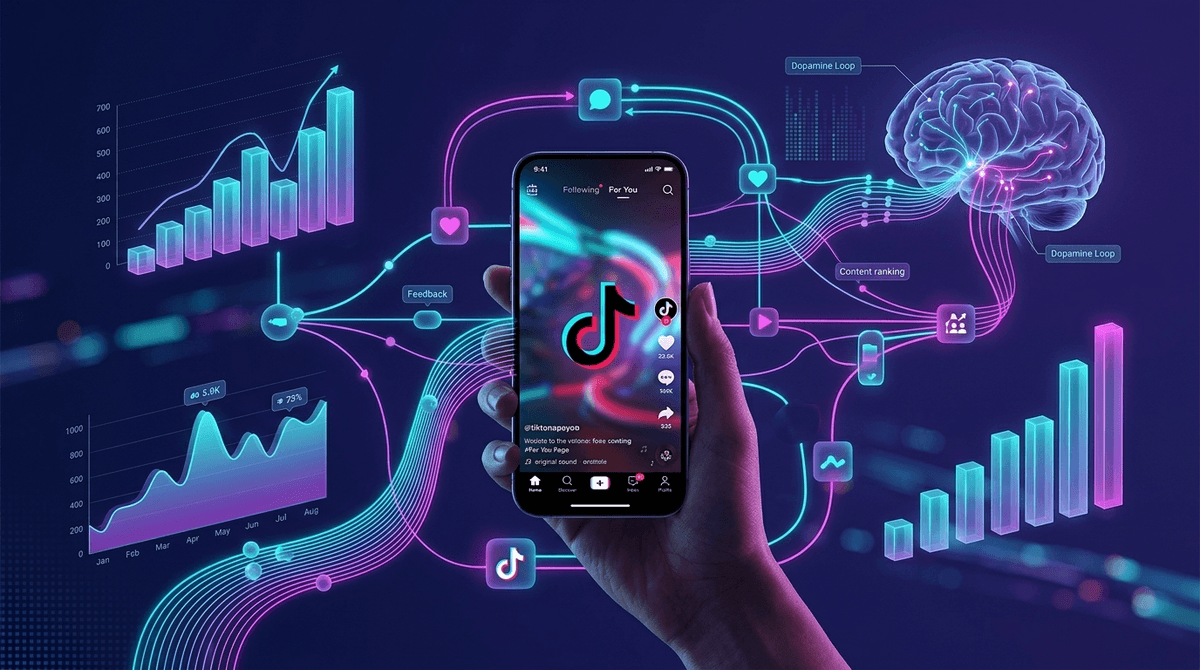
TL;DR: The TikTok For You Page (FYP) is a high-velocity feedback loop that uses micro-signals—like how many milliseconds your kid pauses while scrolling—to build a psychological profile. It’s designed for "infinite stickiness," which is why "just five more minutes" turns into two hours. If you want to skip the scroll and get to the good stuff, check out our top picks for high-value alternatives:
- Best for Creative Skills: Scratch
- Best for Language Learning: Duolingo
- Best for Curiosity: NASA Kids' Club
- Best for Educational Video: Khan Academy
The For You Page is the default landing screen on TikTok. Unlike older social media where you followed friends to see their updates, the FYP doesn't care who you know. It cares about what you linger on.
By 2026, the algorithm has evolved beyond simple "likes" and "shares." It now processes "computer vision" to understand the literal objects in the videos your child watches and tracks "completion rates" with terrifying precision. If your kid watches a 15-second clip of a Minecraft parkour video twice, the algorithm doesn't just show them more Minecraft; it identifies the specific "satisfying" audio used and starts serving up similar sensory-heavy content.
The FYP is basically a digital slot machine where the "jackpot" is a video that makes them laugh or feel understood. In the world of middle school social currency, being the first to see a new "Skibidi" meme or a "Living in Ohio" joke is a big deal.
The algorithm is also incredibly good at finding "subcultures." Whether your kid is into Roblox trading, Percy Jackson fan theories, or DIY science, the FYP finds that niche and floods them with it. It feels like the app "gets" them, which is a powerful feeling for a developing brain.
Ask our chatbot about the psychological effects of infinite scroll
We need to talk about the content. In 2026, the FYP is heavily populated by what kids call "brain rot." This is low-effort, high-stimulation content—think AI-generated voices reading Reddit stories over Subway Surfers gameplay, or nonsensical loops of Skibidi Toilet characters.
It’s not "evil," but it is the nutritional equivalent of eating a bag of gummy bears for dinner. It provides a dopamine hit without any cognitive substance. If your kid’s FYP is 90% brain rot, their attention span is being trained to reset every 7 seconds.
This is Google’s answer to the FYP. It’s integrated directly into the main YouTube experience. While it has the same "infinite scroll" dangers, the parental controls via Google Family Link are generally more robust than TikTok’s.
Instagram Reels
Instagram’s version of the FYP is heavily focused on aesthetics and "trends." For older teens, this can be more about social comparison and "lifestyle" content, which brings its own set of mental health hurdles compared to TikTok’s more chaotic, meme-heavy vibe.
TikTok is officially 13+, but we all know the reality. According to recent community data, roughly 35% of 5th graders are already navigating some form of short-form video feed, whether it’s TikTok or YouTube Shorts.
- Ages 0-10: Full stop—they don’t need this. Their brains are still developing the ability to self-regulate. Use PBS Kids or Epic! for curated, safe content.
- Ages 11-13: If you decide to allow it, use Family Pairing. This lets you link your account to theirs to set screen time limits and filter out keywords.
- Ages 14+: This is the time for "co-piloting." Sit with them, look at their FYP together, and ask, "Why do you think the app showed you this?"
Learn more about setting up TikTok Family Pairing
The FYP is a mirror. If a teen is going through a rough patch and starts engaging with "sad-fishing" or "depression-core" content, the algorithm will—without any moral compass—flood them with more of it. It doesn't know the child is struggling; it just knows the child is watching.
Conversely, it can be a place for incredible discovery. A kid who likes Wingspan might find a whole community of young ornithologists. The key is intentionality.
How to "Reset" the Algorithm
If your kid's feed has become a toxic sludge of "brain rot" or inappropriate content, you can actually reset it.
- Go to Settings and Privacy.
- Select Content Preferences.
- Hit Refresh your For You feed. This gives them a clean slate, but they have to be intentional about what they "like" moving forward to keep it high-quality.
If you’re looking to transition your kid away from the "zombie scroll," these platforms offer engagement without the predatory algorithm:
Instead of consuming 15-second clips, let them build their own games. Scratch is a block-based coding language that feels like a game but teaches logic and computational thinking. It’s the gold standard for "productive" screen time.
Duolingo uses the same gamification tricks as TikTok (streaks, leaderboards, notifications) but uses them to teach a second language. It’s a great way to scratch that "I need to check my phone" itch while actually learning something.
If you want to pull them away from the screen entirely, this book (and the subsequent movie) is a cultural touchstone right now. It deals with themes of technology and nature in a way that resonates with the "digital native" generation.
The TikTok FYP is the most sophisticated engagement engine ever built. It is not a "fair fight" between your child's willpower and the algorithm. Expecting a 12-year-old to just "put the phone down" after 20 minutes of FYP scrolling is like asking them to stop eating a bag of chips after one bite—the biology is working against them.
Next Steps:
- Check the "Screen Time" settings on their phone to see exactly how many hours are going into TikTok.
- Watch the FYP with them. Don't judge, just observe. If it’s all "brain rot," it’s time for a conversation.
- Set a "Hard Stop" time. The FYP is most dangerous at night when the prefrontal cortex is tired and less able to say "enough."
Check out our guide on how to talk to your kids about algorithms