

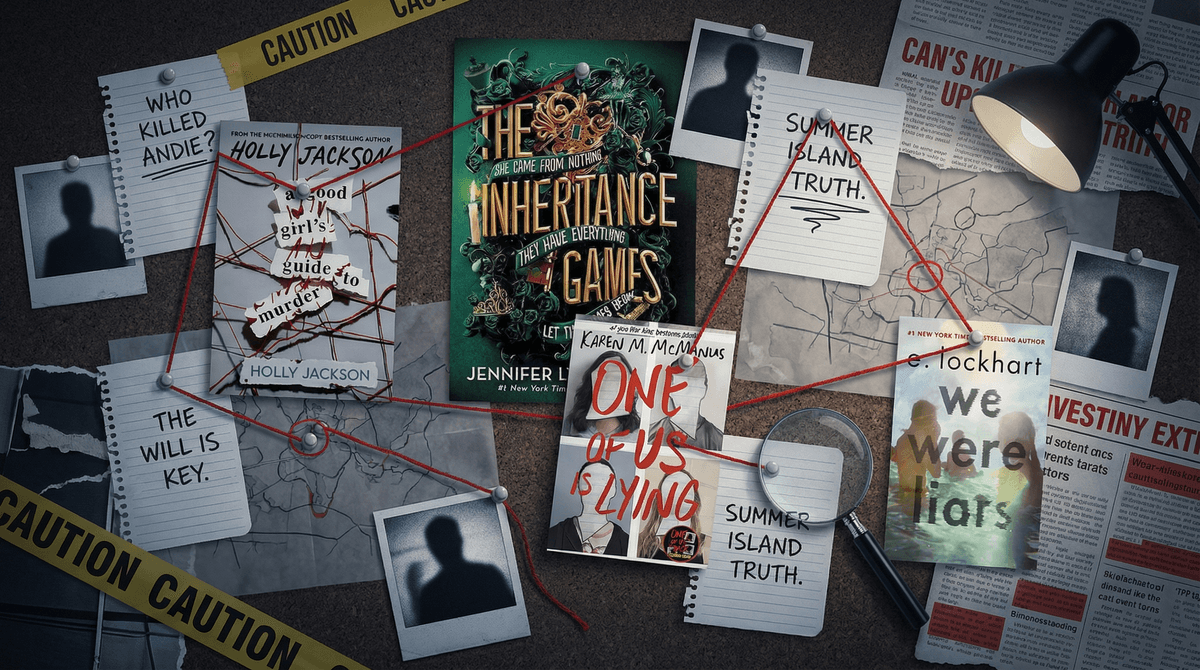
Teen thrillers are exactly what they sound like: suspenseful, heart-pounding books written specifically for the YA audience (roughly ages 12-18). Think One of Us Is Lying, We Were Liars, or anything by Karen McManus. These aren't your gentle coming-of-age stories—they're murder mysteries, psychological mind-benders, survival tales, and conspiracy plots that keep readers up way past bedtime.
The genre has absolutely exploded in the last decade. Walk into any bookstore and the YA section is dominated by dark covers with cryptic taglines. And honestly? Many of these books are genuinely good. Like, adults-are-reading-them-too good.
But here's the thing: not all thrillers are created equal, and "young adult" is doing a LOT of heavy lifting as a category when it spans both 12-year-olds and 18-year-olds.
Thrillers hit different when you're a teenager. The intensity, the stakes, the feeling that everything matters SO MUCH—it actually matches their internal experience of the world. Teens are naturally drawn to stories that take their emotions seriously, and thrillers deliver that in spades.
Plus, these books often feature teen protagonists solving actual problems without adults swooping in to save the day. There's real agency here. The main character is figuring out who the killer is, uncovering the conspiracy, surviving the impossible situation—not waiting for a grown-up to handle it.
And let's be real: thrillers are just really fun to read. The dopamine hit of a good plot twist? The satisfaction of piecing together clues? The communal experience of everyone at school reading the same book and theorizing together? It's social, it's engaging, and it gets kids actually excited about reading.
Here's where it gets tricky. "Teen thriller" can mean:
Ages 12-14 (Middle Grade Thriller/Light YA): Books like One of Us Is Lying or Truly Devious—mystery-focused, some tension, but generally lighter on graphic content. Deaths happen "off-page," romance is innocent, language is mild.
Ages 14-16 (Core YA Thriller): This is where you get more psychological intensity, on-page violence (though usually not gratuitous), complex moral situations, and heavier themes like trauma, mental health, abuse. Think The Cheerleaders or A Good Girl's Guide to Murder.
Ages 16-18 (Upper YA/Adult Crossover): Books that don't pull punches. Graphic violence, sexual content, disturbing psychological themes, substance use. Authors like Gillian Flynn or Ruth Ware write books that get shelved in YA but are essentially adult thrillers with teen protagonists.
The problem? Publishers slap "YA" on all of these and call it a day. A 12-year-old who loved The Inheritance Games might pick up something significantly darker without realizing it.
Let's separate real concerns from pearl-clutching:
Real concerns:
- Psychological intensity that lingers. Some thrillers deal with gaslighting, manipulation, or paranoia in ways that can genuinely mess with an anxious teen's head. If your kid already struggles with intrusive thoughts or anxiety, a book about not being able to trust your own memory might not be the move.
- Graphic violence or sexual assault. Some YA thrillers include detailed descriptions of violence or SA, sometimes as plot points, sometimes as backstory. This isn't automatically bad, but it should match your teen's maturity level and emotional readiness.
- Romanticized toxic relationships. The "dangerous bad boy" trope shows up in romantic thrillers, and sometimes the red flags are treated as features, not bugs.
Not actually concerning:
- Murder as a plot device. Teens can absolutely handle stories about murder. They're not going to become desensitized criminals because they read a mystery novel.
- Moral complexity. Good thrillers often live in gray areas. That's actually valuable—learning that people can make bad choices for understandable reasons is part of developing empathy and critical thinking.
- Being scared. Feeling scared while reading is... kind of the point? If your teen likes thrillers, they're choosing that emotional experience. It's like a roller coaster—controlled fear in a safe environment.
Start with conversation, not interrogation: "What are you reading? What's it about?" is so much better than "Is that appropriate?" Most teens will actually tell you about the book if you seem genuinely interested rather than suspicious.
Use the preview feature: Amazon, Goodreads, and most library apps let you read the first chapter. If you're unsure about a book, spend five minutes reading the opening. You'll get a sense of tone, writing style, and content level pretty quickly.
Check Common Sense Media or StoryGraph:
Both have content warnings and age recommendations from actual parents and readers. Learn more about using review sites effectively .
.
Trust your teen's self-regulation (mostly): Most kids will put down a book that's too intense for them. If your 13-year-old picks up something that turns out to be too much, they'll usually just... stop reading it. That's healthy self-awareness.
But also: know your kid: If your teen has experienced trauma, struggles with self-harm, or has significant anxiety, you might want to be more involved in screening books that could be triggering. That's not helicoptering—that's just being thoughtful.
If you're looking for quality thrillers that won't keep YOU up at night worrying:
- A Good Girl's Guide to Murder series (ages 14+)
- The Inheritance Games (ages 12+)
- One of Us Is Lying (ages 13+)
- Truly Devious series (ages 12+)
- We Were Liars (ages 14+, but heads up—emotionally heavy)
Want more options? Check out our full guide to age-appropriate mystery and thriller books.
Teen thrillers aren't inherently problematic. They're actually getting a lot of kids excited about reading, which in our current digital landscape feels like a minor miracle.
The key is matching the right book to the right kid at the right time. A well-chosen thriller can be an incredible way for teens to explore complex emotions, practice critical thinking, and experience controlled intensity in a safe format. A poorly-matched one can be unnecessarily disturbing or just... boring.
Your job isn't to pre-screen every book (unless your family dynamic calls for that). It's to stay generally aware, keep communication open, and help your teen develop their own ability to assess whether something is right for them.
And hey—if your teen is reading a 400-page thriller instead of scrolling TikTok? That's a parenting win. Take it.
- Ask your teen what they're reading this week (genuinely curious, not cop-mode)
- Check out our guide to talking to teens about mature content in books
- If your teen loved a particular thriller, Find books similar to One of Us Is Lying