

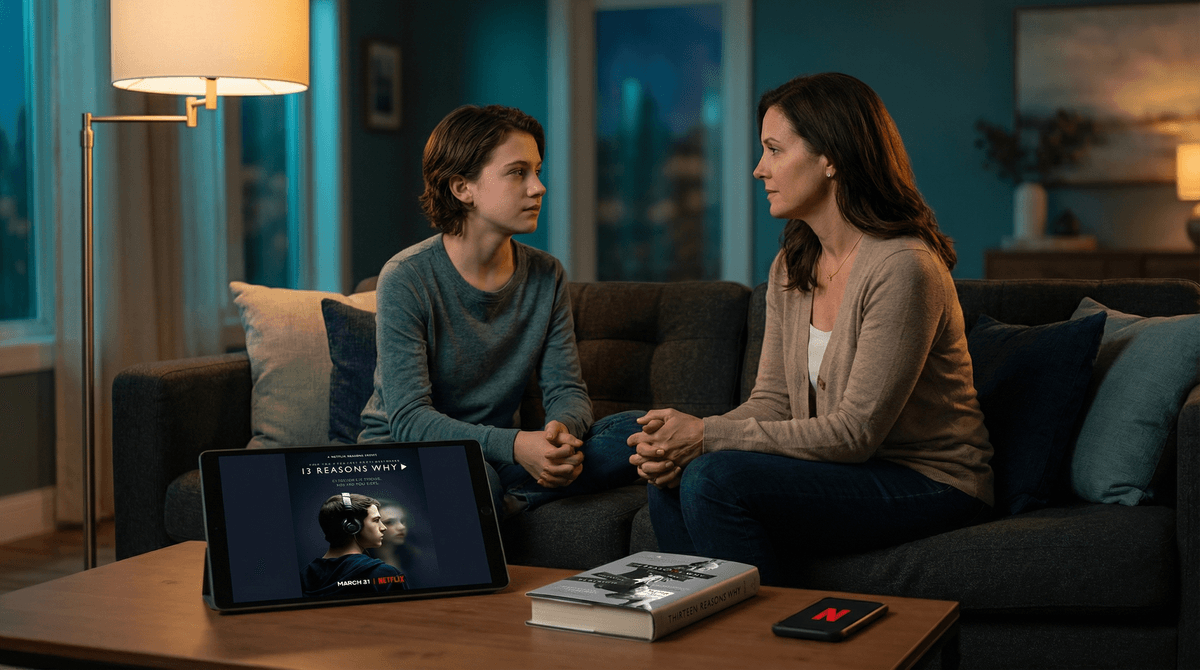
13 Reasons Why is a Netflix series that dropped in 2017 and immediately became one of the most controversial shows aimed at teens in recent memory. Based on Jay Asher's 2007 novel, it follows high schooler Clay Jensen as he listens to cassette tapes left behind by his classmate Hannah Baker, who died by suicide. Each tape reveals a person who contributed to her decision to end her life.
The show ran for four seasons, but it's that first season—with its graphic depiction of suicide, sexual assault, and relentless bullying—that sparked intense debate among parents, educators, and mental health professionals. Some praised it for starting conversations about teen mental health. Others argued it glorified suicide and could be dangerous for vulnerable viewers.
Here's the thing: whether your teen has already watched it, is asking to watch it, or you're just trying to understand what all the fuss was about, this show demands a conversation. Not a lecture. An actual conversation.
Even though the show ended in 2020, 13 Reasons Why continues to be discovered by new cohorts of teens. It's still sitting there in Netflix's catalog, and the themes it tackles—depression, sexual violence, substance abuse, the lasting impact of bullying—are unfortunately evergreen.
The show also arrived at a cultural moment when we were just beginning to talk more openly about teen mental health. It forced parents and schools to reckon with uncomfortable questions: Are we paying attention? Do teens know where to get help? How much does our silence contribute to their suffering?
But here's where it gets complicated: mental health experts raised serious concerns about the show's approach. The first season included a graphic, three-minute suicide scene. Research suggested that suicide rates among teens increased in the month following the show's release. Netflix eventually removed the scene in 2019, but the damage was done.
The question isn't really "should my teen watch this show?" The better question is: "If my teen watches (or has watched) this show, how do I make sure they're processing it safely?"
Because here's the reality—teens are going to find content that deals with heavy themes. They're going to encounter stories about suicide, depression, and trauma. The question is whether they're encountering them alone or with support.
If your teen is asking to watch 13 Reasons Why, that's actually a good sign. They're coming to you. They're not just watching it secretly on their phone at 2am. That's your opening.
Before They Watch (If You're Having This Discussion Preemptively)
Ask why they want to watch it. Is everyone at school talking about it? Did a friend recommend it? Are they dealing with something that makes them curious about these themes?
Be honest about your concerns. "I've heard this show deals with some really intense topics like suicide and sexual assault. I want to understand why you're interested in it and make sure we can talk about what comes up."
Set expectations for watching together. For teens dealing with depression, anxiety, or who have been affected by suicide, this show can be actively harmful. Consider watching it together, or at minimum, checking in after each episode. This isn't helicopter parenting—it's scaffolding for heavy content.
If They've Already Watched It
Don't freak out. Seriously. If you come in hot with "I can't believe you watched that without asking me," you've just closed the door on any meaningful conversation.
Instead, try: "I know you watched 13 Reasons Why. I'm not mad—I'm just curious what you thought about it. Some parts of that show are pretty intense."
Then listen. Actually listen. Don't immediately jump to correcting their interpretations or sharing what you read on a parenting blog (yes, the irony is not lost on me).
Questions to Ask (Not Interrogate—Ask)
- "What did you think about how they showed Hannah's story?"
- "Did any part of it feel realistic to how things are at your school?"
- "Were there any characters you related to?"
- "Did it make you think differently about how we treat each other?"
The goal isn't to get them to parrot back the "right" answers. It's to understand how they're processing what they saw.
The show gets some things dangerously wrong:
It presents suicide as a revenge fantasy. Hannah's tapes are designed to make people feel guilty. That's not how we should frame suicide—it's not a tool for payback, it's a tragedy that devastates everyone left behind.
It oversimplifies mental health. The show suggests that if only people had been nicer to Hannah, she wouldn't have died. But suicide is almost always linked to underlying mental health conditions. It's not just about a series of bad events.
The graphic depiction was harmful. Showing suicide in explicit detail can be triggering for vulnerable viewers and has been linked to suicide contagion.
What it gets right: The show does capture how isolating high school can feel, how adults often miss warning signs, and how sexual assault and bullying can compound trauma.
If your teen is watching this show, pay attention to changes in behavior:
- Withdrawing from friends and activities
- Increased talk about death or feeling hopeless
- Changes in sleep or eating patterns
- Giving away possessions
- Saying goodbye in ways that feel final
If you see any of these signs, talk to a mental health professional immediately. Don't wait. Don't minimize it. The 988 Suicide & Crisis Lifeline is available 24/7.
13 Reasons Why isn't a show I'd recommend for most teens, especially those under 16 or anyone struggling with mental health issues. But if your teen has watched it or is determined to watch it, your job isn't to shield them from difficult content forever—it's to help them process it critically and know where to turn for help.
The show's biggest failure is that it presents suicide as an understandable response to being hurt. Your job is to counter that narrative: suicide is a permanent solution to temporary problems, and there is always another option, always someone who can help.
Use this show as a springboard for bigger conversations: How do we treat each other? What do we do when we're struggling? How do we help friends who are hurting? Where do we go when we need support?
And make sure your teen knows—really knows—that they can come to you with anything. Even the heavy stuff. Especially the heavy stuff.
- Talk to your teen about mental health resources at their school and in your community
- Make sure they have the 988 Suicide & Crisis Lifeline saved in their phone
- Check out alternatives to 13 Reasons Why that tackle similar themes more responsibly
- Read our guide on talking to teens about mental health for more conversation starters
If you're concerned about your teen's mental health, don't wait. Reach out to their school counselor, their pediatrician, or a mental health professional. Trust your gut. You know your kid.