

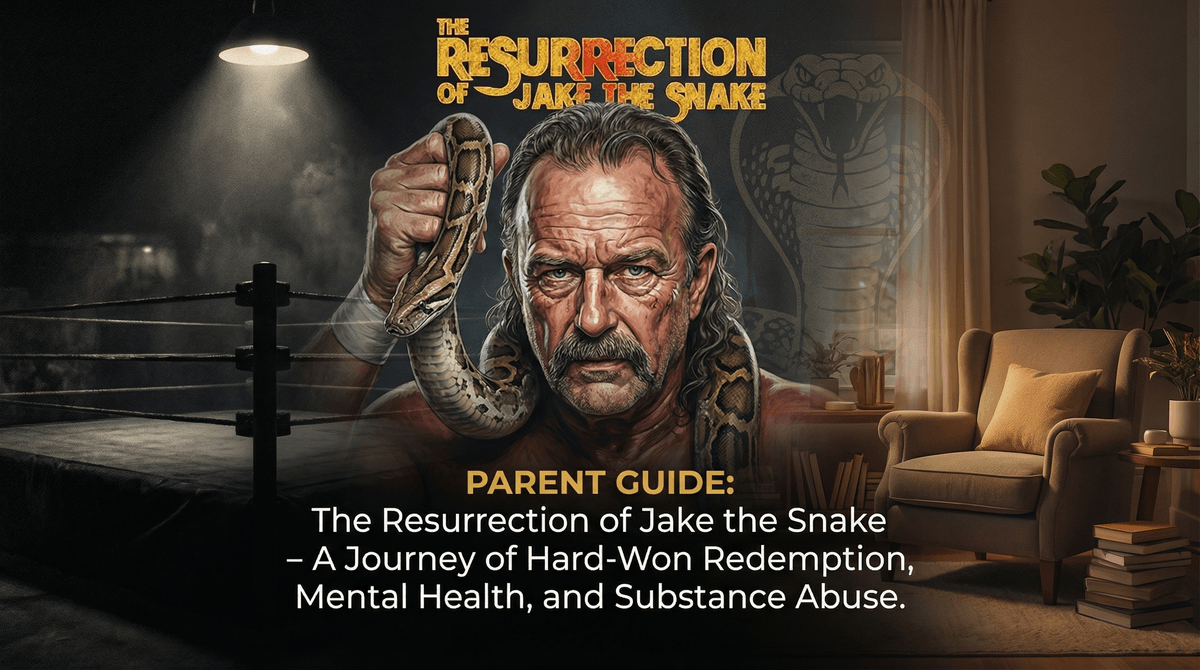
The Resurrection of Jake the Snake: A Raw Documentary About Addiction and Recovery
TL;DR: This isn't a wrestling documentary for kids. The Resurrection of Jake the Snake is an unflinching, mature look at addiction, trauma, and redemption that's appropriate for older teens (16+) and adults. If your teen is wrestling-obsessed and asking to watch it, this guide will help you decide if they're ready for its heavy content.
Released in 2015, "The Resurrection of Jake the Snake" follows former WWE superstar Jake "The Snake" Roberts as he attempts to get sober and rebuild his life after decades of addiction to drugs and alcohol. Directed by Steve Yu, the film doesn't pull punches—it shows Roberts at his absolute lowest, living in squalor, barely able to walk, and seemingly waiting to die.
The documentary gained attention because fellow wrestler Diamond Dallas Page (DDP) essentially saved Roberts' life by bringing him to his home and putting him through an intense recovery program centered around DDP's yoga system. It's a real-life redemption story, but getting there means watching some genuinely difficult content.
If you've got a teen who's into wrestling, they've probably heard about this documentary. It's become legendary in wrestling circles, not just because Jake Roberts was one of the most iconic wrestlers of the 1980s and 90s, but because it's brutally honest about what happens when the spotlight fades and the demons take over.
The documentary has been praised for its raw honesty about addiction and has actually helped spark conversations about mental health in the wrestling community. WWE has even referenced it in their programming, and Roberts himself has become a symbol of recovery and second chances.
This is not sanitized. The first 20 minutes are genuinely hard to watch. You see Roberts in a filthy house, barely coherent, covered in his own waste. The filmmakers made a choice to show the reality of rock-bottom addiction, and they don't flinch.
Language is rough throughout. Constant profanity, which feels authentic to the subject matter rather than gratuitous, but it's pervasive.
Substance abuse is the central theme. There's extensive discussion and some depiction of drug and alcohol use. Roberts is candid about his addictions, and while you don't see him actively using on camera, the effects are visible and disturbing.
Trauma and abuse are discussed. Roberts opens up about childhood sexual abuse and how it contributed to his addiction. These conversations are handled with relative sensitivity but are still heavy and explicit in nature.
Some wrestling violence. There's archival footage of Roberts' wrestling career, including his signature move of throwing a live python on opponents. The wrestling violence is tame compared to the real-life content.
The redemption arc is genuine. This isn't trauma porn. The second half of the documentary shows real progress, real work, and real hope. DDP's intervention and Roberts' commitment to recovery provide a genuinely uplifting counterweight to the darkness.
Not appropriate for kids under 16. Full stop. The content is too mature, the addiction imagery too disturbing, and the themes too complex for younger viewers.
Ages 16-17: Maybe, with significant context and ideally watching together. If your teen:
- Has shown maturity in handling difficult topics
- Understands addiction as a disease rather than a moral failing
- Is genuinely interested in wrestling history (not just looking for shock value)
- Can handle graphic depictions of someone at their lowest point
Then this could be an opportunity for a meaningful conversation about addiction, recovery, and mental health.
Ages 18+: Still intense, but appropriate for adults who understand what they're getting into.
Despite—or perhaps because of—its unflinching approach, this documentary has genuine educational merit:
Addiction is shown as a disease, not a choice. Roberts' struggle is presented with empathy. You see how childhood trauma, the pressures of fame, and the physical toll of wrestling all contributed to his addiction.
Recovery is shown as hard work. There's no magic fix. DDP puts Roberts through grueling physical and mental work. The documentary shows the daily grind of getting better, not just a before-and-after montage.
The importance of support systems. DDP's intervention literally saved Roberts' life. The film shows how having someone who refuses to give up on you can make the difference.
Mental health matters. The documentary doesn't shy away from discussing depression, trauma, and PTSD. For teens who might be struggling or know someone who is, seeing that even "tough guys" deal with mental health issues can be powerful.
If you decide this is appropriate for your older teen, here's how to approach it:
Set expectations beforehand. "This is going to be really hard to watch at the beginning. Jake is at his absolute lowest. If it's too much, we can turn it off."
Pause for check-ins. Especially in the first act, take breaks to discuss what you're seeing and how your teen is processing it.
Talk about addiction as disease. Use this as an opportunity to discuss how addiction works, how it affects the brain, and why recovery is so difficult.
Discuss the role of trauma. Roberts' childhood abuse is a significant part of his story. This can open conversations about how trauma affects people long-term and why therapy and support matter.
Highlight the helpers. DDP is the hero of this story. Talk about what it means to show up for someone, to refuse to give up on them, and to create structure and support for recovery.
Connect to current issues. If your teen knows someone struggling with addiction or mental health issues, this can help them understand what that person might be going through.
The documentary is available on various streaming platforms and for rental/purchase on Amazon, iTunes, and other digital platforms. It's not currently on major subscription services like Netflix or Hulu, which might actually be a good thing—it requires a deliberate choice to watch rather than stumbling upon it.
For parents who aren't familiar with wrestling culture, Jake Roberts was a huge star in the 1980s and early 90s. He was known for his psychological approach to wrestling (rare at the time), his menacing presence, and his signature python. He never won the major championships but was one of the most respected performers of his era.
The documentary is part of a larger conversation in wrestling about the physical and mental toll the industry takes on performers. Many wrestlers from Roberts' generation have died young from drug overdoses, suicide, or health complications from years of steroid use and untreated injuries. This film doesn't exist in isolation—it's part of a reckoning in the wrestling world about how performers are treated and what happens after their careers end.
If your teen is into modern wrestling like WWE or AEW, they should know this history. The industry has changed significantly (though not completely) in terms of health support and mental health resources, partly because of stories like Roberts'.
This is a powerful documentary about addiction and recovery that happens to be set in the wrestling world. It's not appropriate for younger kids, and even for older teens, it requires parental judgment about maturity level and context.
Watch it if: Your older teen is mature enough to handle graphic depictions of addiction, you're looking for an opportunity to have real conversations about substance abuse and mental health, and you're prepared to watch something genuinely difficult together.
Skip it if: Your teen is under 16, they're just looking for wrestling highlights (this isn't that), or you're not ready to have in-depth conversations about addiction, trauma, and recovery.
The documentary's power comes from its refusal to look away. That's also what makes it inappropriate for younger viewers. But for the right audience, at the right age, with the right context, it's a genuinely important film about second chances and the hard work of getting better.
If you watch it together, consider following up with other documentaries about addiction and recovery that might resonate with your family.
If your teen is interested in wrestling, check out age-appropriate wrestling content that doesn't require the maturity level of this documentary.
If this sparks conversations about mental health, you might explore resources for talking to teens about addiction and supporting friends who might be struggling.