

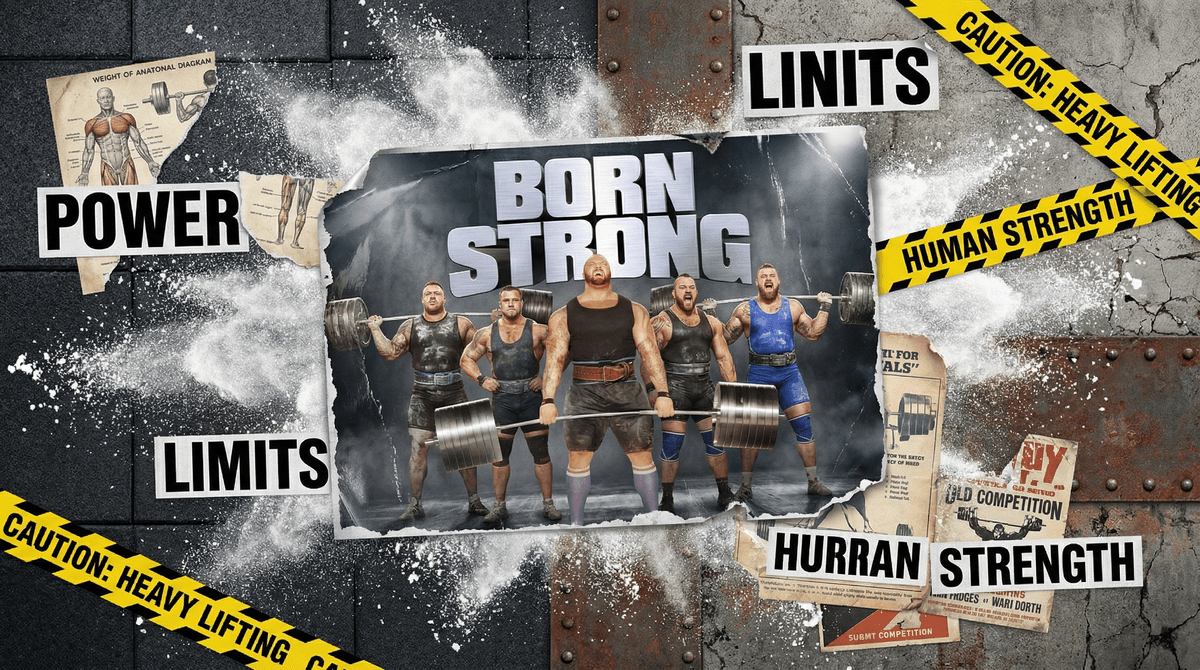
Born Strong: Is This Strongman Documentary Right for Your Teen?
TL;DR: Born Strong is a 2017 Netflix documentary following four elite strongman competitors as they prepare for and compete in Arnold Schwarzenegger's annual strongman championship. It's compelling for teens interested in athletics, dedication, and pushing human limits — but comes with frequent strong language, intense competition pressure, and some concerning attitudes about pain and injury. Best for ages 14+, especially those into weightlifting, CrossFit, or extreme sports.
This 102-minute documentary gives you an intimate look at four of the world's strongest men: Žydrūnas Savickas (Lithuania), Eddie Hall (England), Hafþór Júlíus Björnsson (Iceland — yes, The Mountain from Game of Thrones), and Brian Shaw (USA).
The film follows them through their training, family lives, personal struggles, and ultimately their competition at the Arnold Strongman Classic in Columbus, Ohio. We're talking about guys who deadlift over 1,000 pounds, flip cars, and carry refrigerators up stairs for sport.
If your teen is into fitness content on YouTube, follows strongman or powerlifting accounts, or is generally fascinated by what the human body can do at its absolute limit, this documentary delivers.
The four athletes are genuinely compelling characters with different personalities and motivations. Eddie Hall is brash and emotional. Brian Shaw is methodical and family-oriented. Žydrūnas is the aging champion trying to stay on top. Hafþór is the young challenger with movie star looks.
Unlike a lot of sports documentaries that feel manufactured, Born Strong captures real vulnerability — these guys cry, doubt themselves, deal with injuries, and struggle with the mental pressure of competition.
The Language Situation
Let's get this out of the way: there's a lot of swearing. F-bombs drop regularly, especially from Eddie Hall, who uses profanity like punctuation. It's not gratuitous in a shocking way — it's just how these guys talk, especially under stress. But if you're trying to maintain a no-swearing household, this isn't going to help your cause.
The subtitles for the non-English speakers are accurate, which means you're reading profanity even when you're not hearing it in English.
The Pain and Injury Factor
This is where it gets complicated. The documentary doesn't shy away from showing the physical toll of strongman competition. We see:
- Eddie Hall passing out after a deadlift (legitimately losing consciousness)
- Discussion of torn muscles, hernias, and chronic injuries
- Athletes training through obvious pain
- The expectation that you push past your body's warning signals
For a teen who's into lifting or athletics, this could be either a cautionary tale about the dangers of pushing too far or a glorification of ignoring your body's limits. Your mileage will vary based on your kid's personality and your family's conversations about athletic health.
The athletes themselves are somewhat aware of the trade-offs — Brian Shaw talks about wanting to be healthy for his kids — but the overall message is still "pain is part of greatness."
Positive Elements Worth Noting
Despite the concerns, there's genuinely good stuff here:
Work Ethic and Dedication: These guys train for hours every single day. The documentary shows the unglamorous reality of elite athletics — it's not just the competition, it's the daily grind.
Family Support: We see wives, kids, and parents who support these athletes. Brian Shaw's relationship with his wife is particularly touching — she's clearly his anchor.
Sportsmanship: Despite the competition, there's real respect between these athletes. They congratulate each other, acknowledge each other's achievements, and genuinely seem to care about each other's success.
Goal Setting: The film is essentially a masterclass in setting impossible goals and working backward to achieve them. For teens interested in goal-setting and achievement , there's a lot to discuss here.
International Perspective: Seeing athletes from different countries and cultures is valuable. The Lithuanian, Icelandic, and English perspectives add depth.
Ages 10-12: Probably skip it. The language alone makes it a tough sell, and the intensity of the competition and injury discussion is a lot for this age group.
Ages 13-14: Maybe, with co-viewing. If your teen is mature and already into serious athletics, this could work as a conversation starter about healthy competition, knowing your limits, and the difference between dedication and obsession.
Ages 15+: This is the sweet spot. Older teens can handle the language and have the cognitive development to think critically about what they're seeing. They can appreciate the dedication while also questioning whether the physical cost is worth it.
If you do watch this together, here are some conversation starters:
-
What's the difference between pushing yourself and hurting yourself? Eddie Hall literally passes out. Is that dedication or dangerous?
-
How do these athletes balance family life with their training? What sacrifices are their families making?
-
What happens after their careers end? The documentary doesn't really address the long-term health consequences. Worth a conversation about thinking long-term
. -
Is there a difference between strength sports and other extreme sports? How is this different from skateboarding, parkour, or extreme sports content on YouTube?
-
What does "winning" actually mean? Žydrūnas has won the most competitions but is aging out. Eddie Hall sets a world record but doesn't win the competition. What matters more?
If your teen liked Born Strong, consider:
- Icarus (Netflix) - About doping in cycling, more investigative journalism than character study, ages 15+
- The Dawn Wall (Netflix) - Rock climbing documentary, less language, similar dedication themes, ages 12+
- Free Solo - Alex Honnold climbing without ropes, intense but less profanity, ages 13+
- Rising Phoenix (Netflix) - Paralympic athletes, more family-friendly, ages 10+
If you want the dedication and work ethic without the strongman intensity, The Dawn Wall is probably your best bet.
It's worth noting that this is a very specific type of masculinity on display. These are men who define themselves by physical strength, who push through pain, and who measure success by how much weight they can move.
There's nothing inherently wrong with this, but it's also not the only model of masculinity. If your teen is watching a lot of fitness and strength content, Born Strong might reinforce some ideas about what it means to be strong or successful that are worth discussing.
The good news: the athletes do show emotional vulnerability, they talk about their families, and they're not portrayed as one-dimensional meatheads. But the core message is still "stronger is better."
Born Strong is a well-made documentary that gives real insight into an extreme sport most of us know nothing about. If your teen is into athletics, competition, or just fascinated by human physical limits, there's value here.
Watch it together if you can. The language means you're probably already okay with your teen hearing profanity, but the more interesting conversations are about dedication, health, family sacrifice, and what we're willing to risk for achievement.
It's not going to turn your kid into a strongman (the barriers to entry are pretty high), but it might inspire them to take their own training more seriously, think about goal-setting, or just appreciate what the human body can do.
Final verdict: 14+ with co-viewing recommended, especially if your teen is into serious athletics. The language is frequent, the intensity is real, but the character development and sportsmanship make it worth considering.
- Check out the Netflix rating and parent reviews for Born Strong
- Looking for more sports documentaries for teens?
- Interested in how to talk to teens about athletic injuries and limits?
- Want to explore healthier fitness content for younger teens?