

The Ultimate Stardew Valley Parents Guide: Farming, Romance, and Everything In Between
TL;DR: Stardew Valley is a beloved farming sim that's genuinely wholesome for ages 10+, but it does include some mature themes parents should know about: marriage and romance options (including same-sex relationships), alcohol references, mild combat, and a few darker storylines about depression and PTSD. The multiplayer mode is safe (no chat with strangers), and the game actually teaches resource management, planning, and delayed gratification. It's one of the rare games that's both relaxing AND educational.
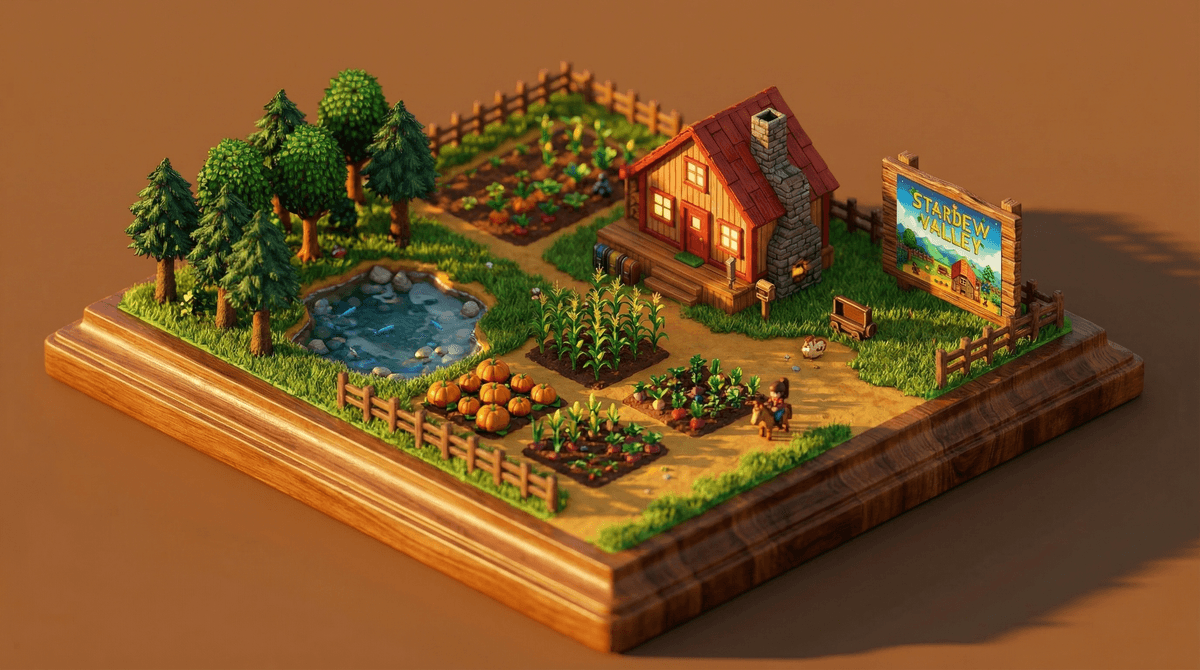
Stardew Valley is a farming simulation RPG where players inherit their grandfather's old farm and work to restore it to its former glory. Created by solo developer Eric Barone (ConcernedApe) and released in 2016, it's become a cultural phenomenon with over 30 million copies sold across every platform imaginable.
The gameplay loop is addictive but chill: plant crops, tend animals, explore caves, fish, build relationships with townspeople, and slowly transform your overgrown plot into a thriving farm. Think Animal Crossing meets [Harvest Moon](https://screenwiseapp.com/media/harvest-moon-app, but with more depth and heart.
Stardew Valley hits that sweet spot of being relaxing without being boring. There's no time pressure, no way to "lose," and no microtransactions or ads. Kids love the sense of progression—every day brings new crops, new friendships, new discoveries. The pixel art style is charming, the music is genuinely beautiful, and there's always something to optimize or improve.
But honestly? The real magic is that it respects players' time and intelligence. The game rewards planning, experimentation, and patience. Want to focus on fishing instead of farming? Go for it. Prefer mining and combat? That works too. It's the kind of open-ended gameplay that lets different personalities thrive.
The Good Stuff
No predatory monetization: You buy the game once (usually $15), and that's it. No loot boxes, no battle passes, no "Farmville-style" energy systems that pressure kids to spend money. In an era of Roblox and Fortnite constantly asking for money, this is refreshing.
Actually teaches valuable skills: Resource management, long-term planning, opportunity cost, basic economics—this game sneaks in math and critical thinking without feeling like homework. Kids learn that planting expensive crops doesn't matter if they die before harvest, or that sometimes the boring steady income beats the exciting gamble.
Safe multiplayer: The co-op mode lets up to 4 players share a farm, but there's no chat with strangers and no way for random people to join your game. It's perfect for siblings or friends, and requires genuine cooperation and communication.
Representation done right: The game includes same-sex marriage options and diverse characters without making a big deal about it. It's just... there. Normalized. Which is exactly how it should be.
The Stuff to Be Aware Of
Romance and relationships: Once your character reaches a certain friendship level with eligible townspeople, you can date and eventually marry them. The romance is very G-rated (think hand-holding and a kiss at the wedding), but there are 12 marriage candidates, including same-sex options. If your family isn't ready for conversations about dating or same-sex relationships, this might come up. That said, romance is completely optional—you can ignore it entirely.
Alcohol references: The local saloon is a major social hub, and several characters struggle with alcohol. One character (Shane) has a pretty heavy storyline about depression and alcoholism. Another character (Pam) is clearly dealing with alcohol dependency. The game doesn't glorify drinking, but it also doesn't shy away from showing its impact on people's lives. There's also a "beer" item you can brew and sell.
Mild combat: The mines contain monsters you fight with swords and slingshots. It's very cartoony violence (slimes, bats, skeletons) with no blood or gore. Think The Legend of Zelda level of combat. That said, the mines are optional—some kids never go down there and focus entirely on farming.
Darker themes in character stories: Beyond Shane's alcoholism storyline, there are references to failed marriages, loneliness, PTSD (one character is a war veteran), and general small-town struggles. The game has a surprising amount of emotional depth. These storylines are handled with sensitivity, but they're there.
Time sink potential: This is the big one. Stardew Valley is designed to be "just one more day..." and suddenly two hours have passed. The gameplay loop is incredibly compelling, and kids can easily lose track of time. You'll want clear boundaries around playtime.
Ages 8-9: Probably too young for independent play. The reading level is accessible, but the resource management and planning required can be overwhelming. The darker character storylines might also be confusing or upsetting without context. If your 8-year-old is interested, consider playing together.
Ages 10-12: Sweet spot for most kids. They can handle the complexity, appreciate the progression systems, and are starting to understand resource management. You might want to preview some of the character storylines (especially Shane's) and decide if you want to have conversations about them proactively.
Ages 13+: Totally appropriate. Teens actually get more out of the game because they can appreciate the deeper character stories and the game's commentary on corporate greed (there's a whole storyline about an evil corporation trying to take over the town). Many teens find it genuinely relaxing and use it as a healthy way to decompress.
Co-op mode is genuinely great for siblings or friends. Players share resources and need to coordinate who's doing what. It teaches collaboration and communication in a low-stakes environment.
The key safety feature: multiplayer is invite-only. There's no matchmaking with strangers, no public servers, no chat with random people. Your kid can only play with people they specifically invite via a code. This makes it one of the safer multiplayer experiences out there.
That said, sharing a farm can lead to sibling conflicts. "Why did you sell all my strawberries?!" "You planted crops where I was going to build a barn!" These are actually great opportunities to practice conflict resolution, but be ready to mediate.
The irony is that Stardew Valley teaches more practical skills than most games explicitly designed to be educational. Kids learn:
- Delayed gratification: Better crops take longer to grow but yield bigger profits
- Opportunity cost: Time spent fishing is time not spent farming
- Planning and optimization: Crop rotation, seasonal planning, layout efficiency
- Social skills: Building relationships requires remembering preferences and showing up consistently
- Basic economics: Supply and demand, profit margins, investment vs. return
And they learn all this while thinking they're just playing a fun farming game. That's the best kind of learning.
If your kid plays Minecraft, Stardew Valley offers similar creative freedom and open-ended gameplay, but with more structure and progression. It's less overwhelming than Minecraft's infinite possibilities.
Compared to Roblox, Stardew Valley is a complete, polished experience with zero pressure to spend money. It's the anti-Roblox in the best way.
If they like Animal Crossing, Stardew Valley offers similar cozy vibes but with more depth and challenge. Animal Crossing is more about decoration and collection; Stardew Valley adds resource management and planning.
Looking for more cozy games like this? There's a whole genre of low-stress, high-charm games that offer similar vibes.
If the romance aspect concerns you, frame it as an opportunity: "I noticed you can date characters in this game. That's optional, but if you're curious about it, we can talk about what healthy relationships look like." The game actually models consent pretty well—characters will tell you if you're moving too fast.
For the alcohol storylines, consider it a conversation starter: "Shane's story is pretty heavy. What do you think about how the game shows his struggles?" The game doesn't preach, which makes it a good jumping-off point for discussions about mental health and addiction.
The corporate greed storyline (Joja Corp trying to destroy the community) can spark conversations about local businesses vs. big corporations, community values, and what makes a town worth living in. It's surprisingly thoughtful social commentary for a farming game.
Stardew Valley is one of the best games you can let your kid play. Yes, there are some mature themes, but they're handled with nuance and care. The game is fundamentally about building community, working hard, and finding meaning in simple pleasures. In a gaming landscape full of manipulative monetization and empty dopamine hits, Stardew Valley is the rare game that's both entertaining and enriching.
For ages 10+, this is an easy recommendation. The time sink potential is real, so set clear boundaries, but within those boundaries, this is quality screen time. It's one of the few games where "just one more day" actually translates to practicing planning, patience, and problem-solving.
Plus, the creator continues to release free updates years after launch, adding new content and features without charging a cent. That's the kind of game development we should support.
- Try it yourself first: The game is available on everything (PC, Mac, Switch, PlayStation, Xbox, even mobile). Spend an hour or two to see if it matches your family's values.
- Set time expectations upfront: "You can play for an hour, which is about 2-3 in-game days." The game saves at the end of each day, making natural stopping points.
- Consider co-op: If you have multiple kids, the shared farm experience can be really special (and helps prevent "it's my turn!" fights).
- Check out other farming and life sim games if this genre appeals to your family.
Want to dive deeper into whether this is right for your specific kid? Ask about your family's specific situation and get personalized guidance.