

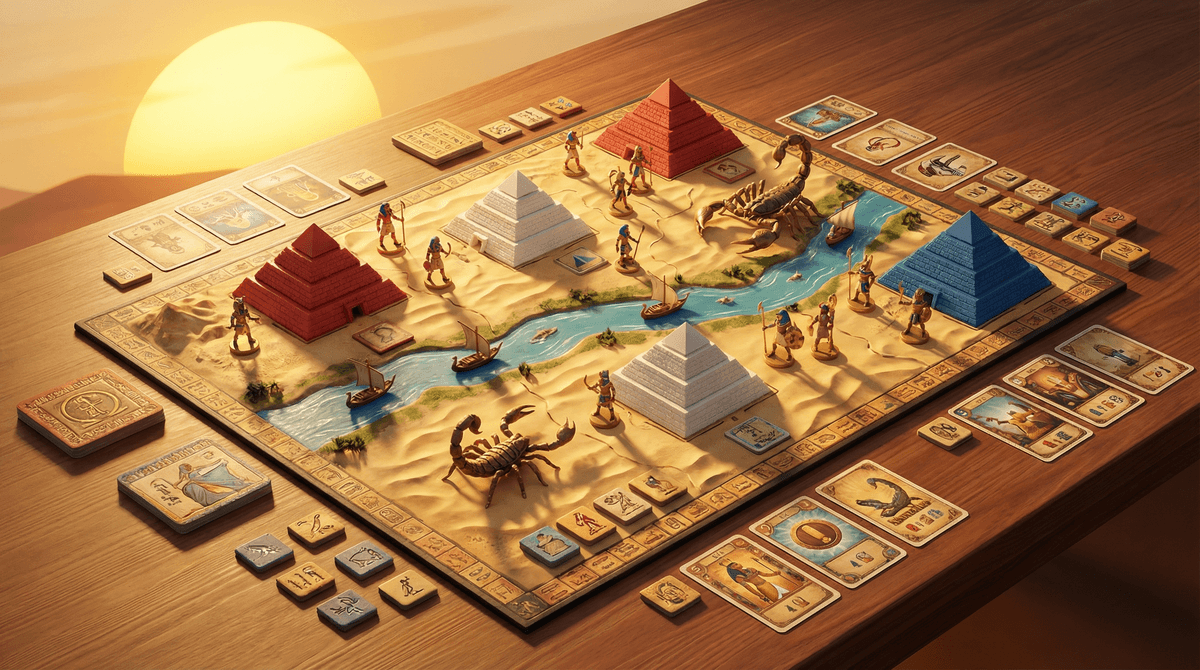
Kemet: Blood and Sand – A Parent's Guide to This Strategic War Game
TL;DR: Kemet: Blood and Sand is an intense, strategic war game set in ancient Egypt with beautiful components and genuinely complex gameplay. Best for ages 14+ who already love strategy games. Expect 90-120 minute play sessions, direct combat between players, and a steep learning curve. Not a gateway game—this is for teens who've already conquered Catan and are ready for something meatier.
Kemet: Blood and Sand is a 2021 reimplementation of the original Kemet (2012), a highly-regarded area-control strategy game where 2-5 players control Egyptian tribes battling for dominance. Think less Risk (roll dice and hope), more chess on steroids with Egyptian gods and mythological creatures.
Players recruit troops, upgrade their pyramids to unlock powerful abilities, summon mythical beasts, and engage in direct tactical combat to control temples and earn victory points. The game is known for its aggressive playstyle—you're rewarded for attacking, not turtling behind defenses. Games typically run 90-120 minutes once everyone knows the rules.
The "Blood and Sand" version streamlined some rules from the original, improved component quality, and rebalanced certain powers. If you're researching this because your teen mentioned it, they're probably already deep into the hobby gaming world.
Kemet hits a sweet spot for experienced board gamers:
Asymmetric powers that actually matter: Each player can customize their "tech tree" by upgrading different colored pyramids (red for combat, white for defense/movement, blue for economy). No two games feel the same because you're constantly making meaningful choices about which powers to pursue.
Combat with actual tactics: Unlike dice-heavy war games, Kemet uses a card-based combat system where players secretly choose battle cards and add their troop strength. There's bluffing, reading opponents, and genuine tactical depth. Your teen isn't just rolling dice and hoping—they're making calculated decisions.
Aggressive gameplay: The victory point system actively punishes passive play. You earn points for winning battles, controlling temples, and achieving specific objectives. Sitting back and building isn't viable, which keeps the game moving and engaging.
Gorgeous components: The miniatures are genuinely impressive—giant scorpions, phoenixes, mummies, and Egyptian warriors. The production quality is high, which matters for teens who appreciate the aesthetic side of gaming.
The Learning Curve Is Real
This isn't Ticket to Ride. The rulebook is dense, there are multiple phases per turn, and the power cards have lots of text and interactions to track. Expect the first game to take 2-3 hours as everyone figures out what they're doing.
Your teen needs to be comfortable with:
- Reading and interpreting complex card text
- Planning several turns ahead
- Managing multiple resources simultaneously
- Handling direct conflict with other players
If your kid struggles with Monopoly rules, Kemet will be overwhelming. If they've mastered Wingspan or Terraforming Mars, they're ready.
The Violence Is Abstract But Present
The theme is war. Players attack each other's armies, creatures die, temples are conquered. However, the violence is completely abstract—you're moving plastic miniatures around a board and comparing numbers. There's no gore, no graphic imagery, no disturbing content.
The art style is stylized ancient Egyptian mythology. You'll see depictions of gods like Anubis and Set, mythological creatures, and Egyptian warriors. Nothing remotely realistic or disturbing.
Age recommendation: The box says 14+, and I'd stick with that. Not because of content concerns, but because younger kids will struggle with the strategic depth and game length.
Time Commitment
A full game takes 90-120 minutes with experienced players, potentially 2-3 hours for the first few plays. This isn't a quick weeknight game—it's a Saturday afternoon commitment.
The game also doesn't pause well. Once you start, you're in it. If your family struggles to dedicate 2+ hours to sitting at a table together, this might collect dust.
Social Dynamics Matter
Kemet involves direct player conflict. Your teen will attack their siblings/friends, block their strategies, and compete for the same objectives. Some kids thrive on this competitive tension. Others find it stressful or take losses personally.
If your family enjoys competitive games like Codenames or Splendor, you'll probably handle Kemet's conflict fine. If board game nights tend to end in tears and accusations of unfairness, maybe stick with cooperative games like Pandemic.
The Price Point
Kemet: Blood and Sand retails for $70-90 depending on where you buy it. That's expensive for a board game, though not unusual for hobby games with this many components.
You're paying for quality—the miniatures, the board, the cards are all well-made. But if your teen has a history of playing a game twice and moving on, this is a significant investment that might not pay off.
Beyond entertainment, here's what your teen develops playing Kemet:
Strategic planning: You need to think 3-4 turns ahead, anticipate opponent moves, and adapt when plans fall apart. This is genuine strategic thinking, not just tactics.
Resource management: Balancing prayer points (currency), troop positions, and power upgrades requires careful planning and prioritization.
Risk assessment: Every attack is a calculated risk. Do you commit resources to this battle? Can you afford to lose? What are the opportunity costs?
Reading opponents: Success requires understanding what your opponents are likely to do, which powers they've invested in, and what their victory point situation looks like.
Graceful losing: You will lose battles. You will have strategies disrupted. Learning to adapt and stay in the game when things go wrong is valuable.
These are legitimately useful skills that transfer beyond gaming. Learn more about how strategy games build executive function .
.
Perfect for:
- Teens 14+ who already love strategy games
- Families who regularly play hobby board games together
- Kids who've expressed interest in more complex games
- Groups who enjoy competitive, confrontational gameplay
- Anyone fascinated by ancient Egypt or mythology
Skip it if:
If you like the idea of Kemet but want something different:
Less complex but still strategic: Smallworld offers area control with fantasy races in a more accessible package (ages 10+, 60 minutes).
Similar complexity, different theme: Scythe provides deep strategy in an alternate-history 1920s Europe setting with less direct combat.
More accessible war game: Memoir '44 gives you tactical World War II battles with simpler rules (ages 12+, 45 minutes).
Cooperative instead: If your family prefers working together, Spirit Island offers similar strategic depth without player conflict.
Check out our full guide to strategy board games for teens for more options.
Kemet: Blood and Sand is genuinely excellent—if your teen is ready for it. The strategy is deep, the components are beautiful, and the gameplay rewards skill and planning. It's not trying to be an accessible family game, and that's okay.
Buy it if: Your 14+ teen already loves complex strategy games, your family can commit to 2-hour game sessions, and everyone's comfortable with competitive conflict.
Skip it if: Your teen is still building their board gaming skills, your schedule is packed, or you're looking for a casual family game night option.
This isn't a game that will sit on the shelf gathering dust if it's the right fit—it's the kind of game that becomes a regular request. But it needs the right player and the right family dynamic to shine.
If you're unsure whether your teen is ready, consider renting it from a local board game café first, or watching a playthrough video together on YouTube to see if the complexity level feels appropriate. Here's how to know if your teen is ready for complex strategy games.