

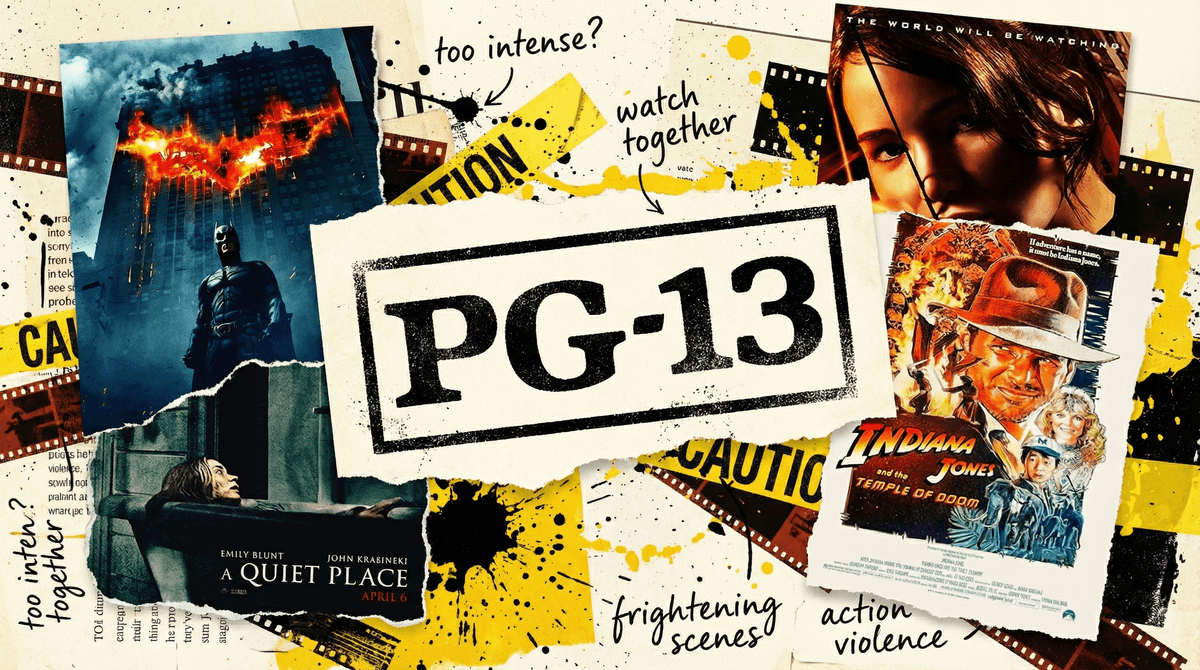
Let's start with the basics: PG-13 means "Parents Strongly Cautioned" and suggests that some material may be inappropriate for children under 13. The Motion Picture Association (MPA) introduced this rating in 1984, basically because parents were losing their minds over the gap between PG movies like Indiana Jones and the Temple of Doom (which had a dude ripping out a still-beating heart) and R-rated films.
Here's what the rating technically allows:
- Violence: Can be intense, but not "persistent" or "extreme"
- Language: One use of the F-word (non-sexual context), plus various other profanities
- Nudity: Brief, non-sexual nudity is okay
- Drug use: Present but not glorified
- Sexual content: Innuendo and some sensuality, but nothing explicit
But here's the thing nobody tells you: PG-13 is the most inconsistent rating in the system. It's become a catch-all for everything from Spider-Man: Into the Spider-Verse (which most 7-year-olds can handle) to movies with body counts that would make a horror film blush.
Let's be real: PG-13 is where the money is. Studios discovered that slapping a PG-13 rating on a film maximizes the audience—teens can go without parents, but it's not so intense that families won't bring younger kids anyway.
This financial incentive has led to some... creative editing. Studios will literally reshoot scenes or cut frames to avoid an R rating. That's why you'll see someone get shot in a PG-13 movie but there's barely any blood. It's not artistic choice—it's ratings management.
The result? PG-13 has become bloated. It now includes everything from gentle coming-of-age stories to superhero battles with city-destroying violence. A PG-13 rating tells you almost nothing about whether the movie is right for your kid.
Let's break down what you're really dealing with:
Violence (The Big One)
This is where PG-13 gets wild. The rating allows for significant violence as long as it's not "realistic" or doesn't show consequences. Translation: Your kid can watch hundreds of aliens/robots/CGI creatures get obliterated, but realistic human-on-human violence with blood? That pushes toward R.
Movies like The Dark Knight are PG-13 despite being genuinely disturbing. The Joker's pencil trick scene? That's nightmare fuel for many kids, but it got through because it's not explicitly gory.
What to watch for: Fantasy violence is usually fine for most tweens. Realistic violence, torture, or intense peril? That's where you need to know your kid.
Language
The "one F-bomb" rule is famous, but honestly, language is rarely the main concern in PG-13 movies. Most kids have heard worse on the school bus. That said, if your family has strong feelings about profanity, know that PG-13 movies can include pretty much everything except the F-word used repeatedly.
Sexual Content
PG-13 movies can have sexual innuendo, making-out scenes, and implied sex (the classic "camera pans away" moment). What they can't show is actual nudity in a sexual context or explicit sexual activity.
For most parents, this is less concerning than the violence, but it's worth noting that some PG-13 comedies lean heavily into sexual humor that goes way over younger kids' heads but might make you uncomfortable watching with your 11-year-old.
Scary/Intense Scenes
This is hugely variable by kid. Some 8-year-olds eat up scary content; some 13-year-olds are still spooked by jump scares. PG-13 horror movies like A Quiet Place are genuinely scary—like, adults-covering-their-eyes scary.
Here's the uncomfortable truth: The rating says 13, but that number is arbitrary. Your mature 10-year-old might handle most PG-13 content better than your sensitive 14-year-old. Here's how to think about it:
Ages 8-10: Some PG-13 movies are totally fine (Paddington 2, most Pixar-adjacent content), but action-heavy blockbusters can be overwhelming. The violence isn't the only issue—it's also the length, complexity, and intensity. A 2.5-hour superhero movie is a lot for this age.
Ages 11-12: This is peak PG-13 territory for many families. Kids are ready for more complex stories and can handle action sequences, but you still want to preview anything with horror elements or heavy themes (death, trauma, war).
Ages 13+: Technically the target audience, but even here, know your kid. Some PG-13 movies deal with mature themes (suicide, addiction, sexual assault) that might warrant a conversation, even if the content isn't explicit.
Forget the rating. Here's what actually matters:
1. Use Common Sense Media or IMDb Parents Guide These sites break down exactly what's in the movie. You can see if the violence is cartoonish or realistic, if there's drug use, what kind of language appears. It takes 2 minutes and saves you from the "I didn't know there would be that much..." conversation.
2. Watch Trailers Together Not to decide if they can watch it—but to gauge their reaction. If your kid is already anxious during the trailer, the full movie probably isn't the move.
3. Consider Your Kid's Media Diet Is this their first exposure to violence/scary content, or are they already watching The Hunger Games on repeat? Context matters. A kid who's been watching Marvel movies since age 7 is probably fine with more PG-13 action than a kid who's been on a steady diet of Bluey.
4. Co-Watch When Possible Especially for borderline content or sensitive kids. Being there lets you gauge their reaction in real-time and answer questions. Plus, honestly, some PG-13 movies have moments where even you might be like "yikes, didn't expect that."
5. Have the Post-Movie Conversation "What did you think about [that scene]?" is worth more than any rating. It helps you understand what landed, what bothered them, and what they're processing.
Here's where it gets messier: Streaming platforms have their own rating systems that don't always align with theatrical ratings. A movie might be PG-13 in theaters but show up as "13+" or "TV-14" on Netflix, which technically has different standards.
Plus, streaming makes it easier for kids to watch without you knowing. If your 10-year-old has access to your Disney+ account, they have access to every Marvel moviee](https://screenwiseapp.com/guides/parents-guide-to-marvel-movie-age-ratings), many of which are intense PG-13 fare. Learn more about managing streaming access for different ages .
.
PG-13 is a starting point, not a rulebook. It tells you the movie might be fine for a 13-year-old, but it doesn't account for your kid's maturity, sensitivity, or your family's values.
The real move? Spend 5 minutes researching specific content instead of relying on a single letter-number combo. Your kid's media experience shouldn't be determined by a committee trying to maximize box office returns.
And remember: Saying "not yet" isn't being overprotective—it's being intentional. There's no award for letting your kid watch intense content before they're ready, and there's zero shame in waiting until they are.
- Check out our guide to age-appropriate action movies if you're trying to find PG-13 content that actually matches your kid's age
- Explore alternatives to popular PG-13 movies for younger kids who want to feel included in the conversation
- Learn how to talk to kids about media violence if you're navigating this for the first time
The rating system isn't going to parent for you—but being informed and intentional about it? That's the whole game.