

The Ultimate Guide to Must-Watch Teen Movies for Family Movie Night
TL;DR: Skip the algorithm and curate your own teen movie festival. Here are the actual best teen movies worth watching together—from timeless PG classics to thoughtful PG-13 films that spark real conversations. Plus what to watch out for and how to navigate those awkward moments.
Quick picks by vibe:
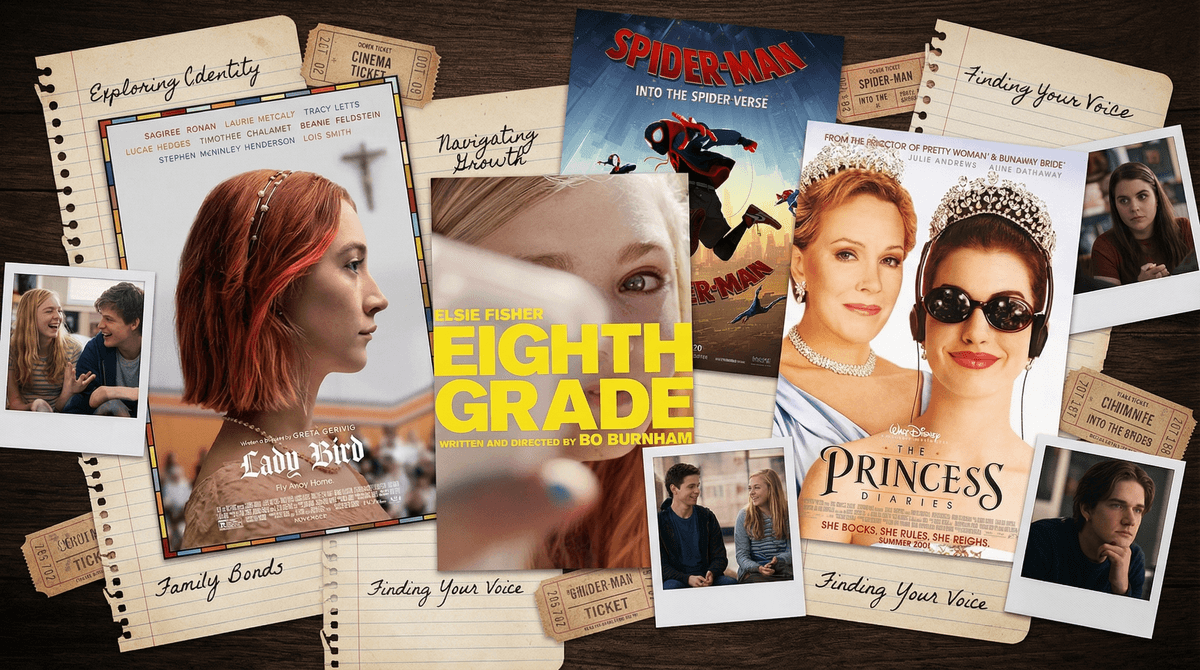
- Feel-good comfort: The Princess Diaries, Bend It Like Beckham, Hunt for the Wilderpeople
- Smart and funny: The Edge of Seventeen, Booksmart, Eighth Grade
- Actually good adaptations: The Perks of Being a Wallflower, Little Women (2019), Spider-Man: Into the Spider-Verse
Teen movies get a bad rap. Sure, there's plenty of forgettable content out there, but the good ones? They're doing real work—helping teens see themselves, process big feelings, and understand that everyone feels like an outsider sometimes. The trick is knowing which ones are worth your time and which ones are just two hours of cringe you'll never get back.
Before you roll your eyes at another coming-of-age story, consider this: teen movies are often the first place kids see complex emotions taken seriously. Not every family talks openly about anxiety, identity, friendship breakups, or first heartbreak. A well-made teen movie can open those doors in a way that feels less confrontational than a kitchen table heart-to-heart.
Plus, watching together gives you insight into what your teen is thinking about—and creates a shared reference point for future conversations. When they're struggling with a friend situation, you can reference that scene from Booksmart instead of launching into lecture mode.
The Princess Diaries (G, Ages 8+)
Anne Hathaway's breakout role is pure comfort food. Yes, it's a fairy tale, but it's also about an awkward teen finding confidence without completely changing who she is. The message isn't "become pretty and popular"—it's "own your weird and lead with kindness." Plus, Julie Andrews.
Watch out for: Literally nothing. This is one of the safest bets on this list.
Bend It Like Beckham (PG-13, Ages 11+)
A British-Indian teen wants to play soccer despite her traditional family's expectations. It's funny, heartfelt, and tackles cultural identity, gender expectations, and following your passion without being preachy about any of it.
Watch out for: Some mild language and a few romantic subplot moments, but nothing that'll make you dive for the remote.
Hunt for the Wilderpeople (PG-13, Ages 10+)
If you haven't seen this New Zealand gem, stop what you're doing. A foster kid and his grumpy foster uncle go on the run in the bush. It's hilarious, touching, and completely unique. Director Taika Waititi (who later made Thor: Ragnarok) brings the perfect balance of humor and heart.
Watch out for: Some mild violence and a few instances of strong language, but it's all in service of a genuinely moving story about found family.
The Edge of Seventeen (R, Ages 14+)
This is probably the most honest teen movie made in the last decade. Hailee Steinfeld plays Nadine, a high school junior having the worst year of her life. It's funny and painful and real in a way that most teen movies aren't brave enough to be. Woody Harrelson as her deadpan teacher is perfection.
Watch out for: It's rated R for language, sexual content, and some drinking. This is a "watch with your older teen" movie, not a "put on for the middle schooler" movie. But if your 14-15+ year old is ready for honest conversations about sex, mental health, and teenage drinking, this is actually a great vehicle for those discussions.
Booksmart (R, Ages 15+)
Two academic overachievers realize on the eve of graduation that they should have had more fun in high school. What follows is a hilarious, heartfelt night of trying to make up for lost time. It's basically Superbad but smarter and with better female friendships.
Watch out for: Rated R for language, drug use, and sexual content. Again, this is for older teens who can handle frank discussions about these topics. But it's also one of the few teen movies that shows kids making mistakes without completely destroying their lives—which is actually a valuable message.
Eighth Grade (R, Ages 13+)
Bo Burnham's directorial debut is uncomfortably accurate about what it's like to be 13 in the age of social media. The main character, Kayla, makes YouTube videos about confidence while struggling with crippling anxiety. It's cringe in the best way—the kind that makes you go "oh god, I remember feeling exactly like that."
Watch out for: Rated R mostly for language and some sexual content (a high school boy shows a middle school girl explicit photos, which is handled as the creepy, inappropriate thing it is). Despite the R rating, this is actually appropriate for many 13-14 year olds—it's literally about their experience. Read more about why the R rating might not tell the whole story .
.
The Perks of Being a Wallflower (PG-13, Ages 14+)
Stephen Chbosky adapted his own beloved novel and somehow made it work. It's about Charlie, a freshman with a traumatic past, finding his people. Logan Lerman, Emma Watson, and Ezra Miller are all perfectly cast. It tackles mental health, trauma, sexuality, and friendship with real sensitivity.
Watch out for: Heavy themes including sexual abuse (referenced, not shown), suicide, and drug use. This is not a light watch, but it's handled thoughtfully. Definitely preview this one if you're not familiar with the book, and maybe have a conversation ready about the serious topics it raises.
Little Women (2019) (PG, Ages 10+)
Greta Gerwig's adaptation is so good it made people who'd seen five previous versions of Little Women say "wait, this story is actually about something." The non-linear structure emphasizes Jo's artistic ambitions and the economic realities facing women in the 1860s (and, let's be honest, now). Saoirse Ronan, Florence Pugh, and Timothée Chalamet are all excellent.
Watch out for: Honestly, nothing. This is one of the rare PG-rated films that doesn't feel dumbed down. It's just genuinely good filmmaking.
Spider-Man: Into the Spider-Verse (PG, Ages 8+)
Yes, it's technically a superhero movie, but it's really a coming-of-age story about Miles Morales figuring out who he is and what kind of hero he wants to be. The animation is groundbreaking, the soundtrack is fire, and the emotional beats hit hard. Plus it's one of the few superhero movies that's genuinely about something beyond punching bad guys.
Watch out for: Some intense action sequences and the death of a major character (handled tastefully but still emotional). Otherwise, this is pretty universally appealing.
The Way Way Back (PG-13, Ages 12+)
A shy 14-year-old finds confidence working at a water park over the summer. Steve Carell plays against type as the jerk boyfriend of the kid's mom, and Sam Rockwell is perfect as the water park manager who becomes an unlikely mentor. It's funny and sweet without being saccharine.
Lady Bird (R, Ages 14+)
Greta Gerwig's semi-autobiographical film about a high school senior navigating her relationship with her mom, her first romance, and leaving Sacramento for college. Saoirse Ronan and Laurie Metcalf are both phenomenal. The mother-daughter relationship is so specific and real it hurts.
Watch out for: Rated R for language, sexual content, and brief graphic nudity. This is another "older teen" movie, but it's so good at capturing the push-pull of the parent-teen relationship that it's worth watching together if your kid is ready.
Paddleton (TV-14, Ages 13+)
Okay, this one's technically not a teen movie—it's about two middle-aged neighbors who are best friends. But hear me out: it's on Netflix, it's deeply moving, and it's one of the best movies about friendship, period. Sometimes teens need to see that the awkwardness and intensity of friendship doesn't go away—it just evolves.
Not every popular teen movie is worth your time. Here's what you can safely skip:
Thirteen: Yes, it's "realistic" about teen drug use and self-harm, but it's also sensationalized and potentially triggering without offering much in terms of hope or solutions.
Most teen rom-coms from the early 2000s: She's All That, 10 Things I Hate About You—these have their nostalgic charm, but the gender dynamics and consent issues are... yikes. If you do watch them, be prepared to pause and discuss why certain behaviors aren't actually romantic.
After and its sequels: These Wattpad-to-screen adaptations romanticize toxic relationships in ways that are genuinely concerning. If your teen is into these, have a conversation about what healthy relationships actually look like.
Ages 8-11: Stick with PG and lighter PG-13 films. The Princess Diaries, Little Women, Spider-Man: Into the Spider-Verse, and Hunt for the Wilderpeople are all solid choices.
Ages 12-13: You can start introducing more mature PG-13 content like The Way Way Back and Bend It Like Beckham. Eighth Grade is rated R but might be appropriate depending on your kid's maturity level and your family's comfort with language.
Ages 14-15: Most PG-13 films are fair game, and you can start introducing thoughtful R-rated films like The Edge of Seventeen, Lady Bird, and The Perks of Being a Wallflower. The key is watching together and being ready to discuss the mature themes.
Ages 16+: At this point, you're mostly looking at whether the content aligns with your family values rather than whether your teen can handle it. Booksmart and similar R-rated teen comedies are probably fine.
Let them pick sometimes: Alternate who chooses the movie. Yes, you might have to sit through something that's not your first choice, but it shows you respect their taste.
Don't pause to lecture: If something concerning happens in the movie, resist the urge to pause and deliver a sermon. Make a mental note and bring it up naturally afterward. "That scene where X happened—what did you think about that?"
Share your own experiences: "Oh man, I had a friend breakup like that in high school. It was brutal." This makes you human instead of just a parent.
Read the room: If your teen seems uncomfortable (phone out, body language closed off), maybe this isn't the right movie for right now. You can always try again later.
Use Common Sense Media: Before committing to a movie, check Common Sense Media for detailed content breakdowns. They list every instance of language, violence, sexual content, etc., so you know exactly what you're getting into.
Teen movies at their best are more than entertainment—they're emotional education. They show teens that their feelings are valid, that growing up is universally awkward, and that there are multiple ways to navigate adolescence.
The goal isn't to shield your teen from every uncomfortable topic. It's to create opportunities for them to encounter those topics in a controlled environment where you're right there to process it with them. A movie about teen drinking watched together with discussion is infinitely more valuable than them encountering those same situations unprepared in real life.
Start here: Pick one movie from this list that matches your teen's age and interests. Watch it together. See what they think. Ask what resonated with them. And go from there. You're building a foundation of shared cultural references and open communication that'll serve you well through the teenage years.
Want more recommendations? Check out our guides on coming-of-age movies, movies about mental health, or alternatives to Netflix for family movie night.