

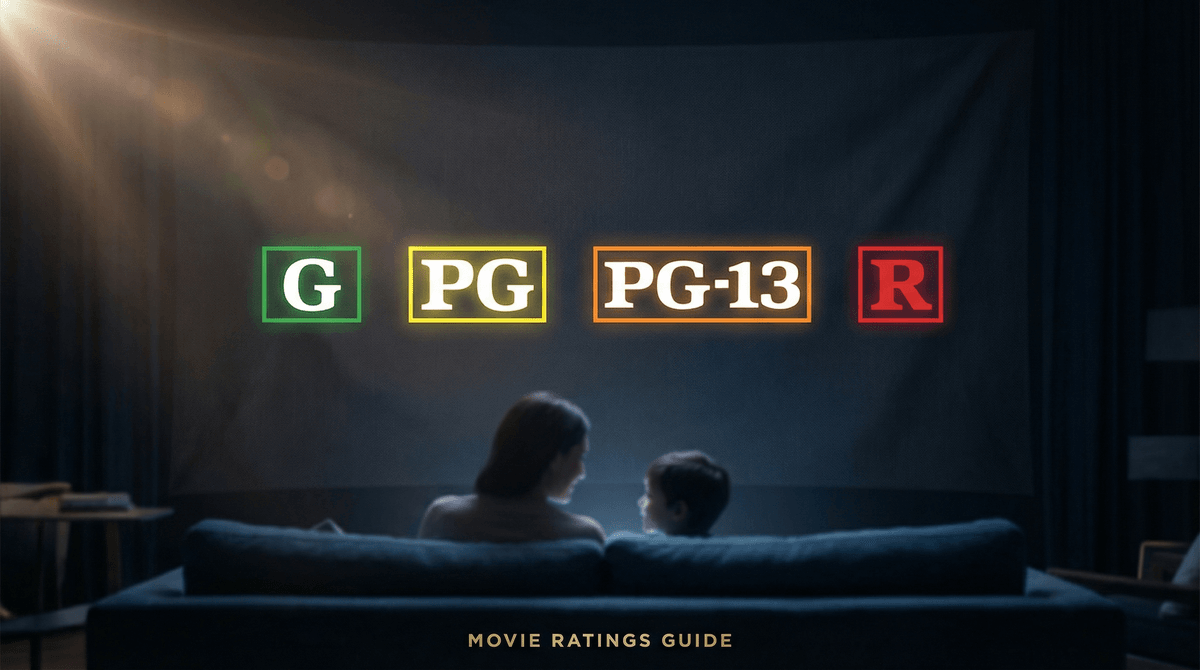
The Ultimate Guide to MPAA Movie Ratings: What G, PG, PG-13, R, and NC-17 Really Mean
The MPAA rating system is supposed to help parents make informed choices, but it's wildly inconsistent and often misleading. G means genuinely for everyone, PG is where things get murky (could be Paddington or could be intense dinosaur violence), PG-13 is the dumping ground for everything Hollywood wants teens to see, R means kids under 17 need a parent (but varies from mild language to extreme violence), and NC-17 is the kiss of death that most theaters won't even show.
The real issue? The MPAA cares way more about language and brief nudity than it does about violence, which means your kid can watch people get brutally murdered in a PG-13 movie but heaven forbid someone says "fuck" twice.
Bottom line: Use ratings as a starting point, not the final word. Pair them with resources like Common Sense Media and your own judgment about what your kid can handle.
The Motion Picture Association of America (now just "MPA" because they went international) created the rating system in 1968 to avoid government censorship. Before that, Hollywood had the Hayes Code, which was basically a list of moral rules about what you could and couldn't show in movies. The rating system was supposed to be better because it gave parents information instead of just banning content outright.
Here's the thing though: the MPAA is funded by the major studios. It's not a government agency, it's not a nonprofit consumer advocacy group, it's literally the movie industry rating its own content. The people who rate movies are supposedly "average American parents," but the whole process is super secretive and inconsistent.
G - General Audiences
What it means officially: Nothing offensive to parents for viewing by children.
What it actually means: This movie is safe for literally everyone. No scary stuff, no language, no sexual content, no drug use. Think Toy Story, classic Disney animations, and documentaries about penguins.
The catch: Studios actually avoid G ratings now because they think it makes movies seem "babyish" and limits the audience. That's why you see so many movies that could be G rated getting bumped to PG with one mild word or slightly intense scene. It's a business decision, not a content one.
Good for: Ages 4 and up, family movie nights where you don't want to think about anything.
PG - Parental Guidance Suggested
What it means officially: Some material may not be suitable for children. Parents urged to give "parental guidance."
What it actually means: This is the Wild West of ratings. PG can mean Paddington (adorable bear, mild peril) or it can mean Jaws (people getting eaten by a shark, genuine nightmare fuel). It can mean The Goonies (some language, adventure scares) or Jurassic Park (people being violently killed by dinosaurs).
What triggers it: Mild language, brief violence, some scary moments, thematic elements. But "mild" and "brief" are doing a LOT of heavy lifting here.
The catch: PG is where the MPAA's inconsistency really shows. Violence gets a pass way more easily than language or sexuality. You can show dinosaurs eating people whole, but one "ass" and suddenly we need to warn parents.
Good for: Ages 7+, but seriously, watch the trailer first. PG in 2026 is not the same as PG in 1982.
PG-13 - Parents Strongly Cautioned
What it means officially: Some material may be inappropriate for children under 13.
What it actually means: This is where Hollywood lives now. PG-13 is the sweet spot that lets studios pack theaters with teens while still being "acceptable" for younger kids if parents are cool with it. It's also the most inconsistent rating by far.
What triggers it: Drug references, brief nudity, strong language (but only one or two F-bombs), intense violence (as long as there's not too much blood), sexual content (as long as it's not explicit).
The catch: The MPAA will let you show almost unlimited violence in a PG-13 movie as long as there's minimal blood and gore. Meanwhile, if someone says "fuck" more than once, automatic R rating. This is why the Marvel movies can show city-destroying battles with implied mass casualties but everyone speaks in family-friendly quips.
Also, PG-13 didn't exist until 1984 (it was created because of Indiana Jones and the Temple of Doom and Gremlins, both of which were too intense for PG but not quite R-worthy).
Good for: Ages 11+, but really depends on the kid and the specific movie. A PG-13 comedy is very different from a PG-13 action movie.
R - Restricted
What it means officially: Under 17 requires accompanying parent or adult guardian.
What it actually means: This movie has content that the MPAA thinks is too mature for kids, but there's a HUGE range here. R can mean The King's Speech (lots of F-words used in a therapeutic context) or it can mean Saw (torture porn).
What triggers it: Strong language throughout, intense violence/gore, sexual content, drug use. Basically, if it has "too much" of any of the PG-13 triggers, it becomes R.
The catch: The MPAA is way more lenient with violence than sex or language. You can show graphic violence and still sometimes get PG-13, but show a breast or use "fuck" liberally and you're getting an R. This is very much an American cultural thing—European rating systems are often the opposite.
Good for: Ages 15+ depending on maturity and the specific content. An R-rated historical drama is different from an R-rated horror movie.
NC-17 - No One 17 and Under Admitted
What it means officially: Clearly adult content.
What it actually means: This rating is basically a death sentence for a movie. Most theater chains won't show NC-17 films, many newspapers won't advertise them, and Walmart won't stock them.
What triggers it: Explicit sexual content, extreme violence, or prolonged drug use. But honestly, the line between R and NC-17 is completely arbitrary and often comes down to how much the studio pushes back.
The catch: NC-17 is almost exclusively reserved for sexual content. You can show extreme violence and get an R (see: most horror movies), but show explicit sex and you're getting NC-17. This is why most filmmakers will cut their movies to get an R rating rather than accept NC-17.
Good for: Adults only. Not relevant for family viewing decisions.
Violence Gets a Pass, Language Doesn't
The MPAA's priorities are completely backward from a child development perspective. Research shows that exposure to violence is more harmful to kids than hearing curse words, but the rating system treats language as more serious. The Dark Knight is PG-13 despite showing a guy getting a pencil shoved through his eye socket, but if Batman had said "fuck" three times, it would've been rated R.
They're Inconsistent as Hell
Two movies with nearly identical content can get different ratings depending on who's rating them, what year it is, and honestly, what mood the raters are in. There's no clear rubric, no transparency, and no real accountability.
They Don't Account for Context
A movie that uses strong language in an educational or historical context gets the same treatment as a movie that uses it gratuitously. Schindler's List is rated R, which means technically kids under 17 shouldn't see it without a parent, even though it's one of the most important historical films ever made.
They Ignore Thematic Complexity
The ratings focus on countable things (how many F-words, how much blood) rather than emotional or psychological impact. A movie with zero curse words and no violence can still be deeply disturbing or inappropriate for kids if it deals with heavy themes like suicide, abuse, or existential dread.
Don't rely on ratings alone. Use them as a starting point, but do your own research:
- Check Common Sense Media - They break down exactly what's in a movie and give both parent and kid ratings
- Watch trailers - They'll give you a sense of tone and content
- Read parent reviews - Other parents often mention specific scenes that might be issues
- Consider your kid's specific sensitivities - Some kids can handle scary monsters but not family conflict. Some are fine with language but get nightmares from mild peril
- Pre-watch when possible - If you're unsure, watch it yourself first
Talk to your kids about what they're watching. The rating matters less than whether you're engaged with their media consumption. A PG-13 movie watched together with discussion is better than a G movie watched alone on an iPad.
Remember that ratings have changed over time. Movies that were PG in the 80s would absolutely be PG-13 now. Gremlins, Indiana Jones and the Temple of Doom, and Poltergeist were all PG and they're all pretty intense.
Here's a rough framework, but every kid is different:
Ages 4-7: Stick with G and carefully selected PG movies. At this age, kids are still figuring out fantasy vs. reality, so even mild scares can be intense.
Ages 8-10: Most PG is fine, some PG-13 with pre-screening. Kids this age can handle more adventure and peril but may still struggle with intense emotional themes.
Ages 11-13: PG-13 becomes more appropriate, but still check content. This is when kids start wanting to watch what their friends are watching, so you'll need to balance social pressure with your family's values.
Ages 14+: Most PG-13 is fine, carefully selected R movies with discussion. Teens can handle more complex themes and content, but they still benefit from processing it with adults.
The MPAA rating system is better than nothing, but it's not great. It's inconsistent, it prioritizes the wrong things, and it's controlled by the industry it's supposed to be regulating.
Use ratings as a starting point, but not the final word. Trust your judgment, know your kid, and don't be afraid to say no to something that's technically "age-appropriate" if it doesn't feel right for your family.
And remember: there's no award for letting your kid watch R-rated movies early, and there's no shame in saying a 10-year-old isn't ready for PG-13. You know your kid better than any rating board ever will.
- Set up a family media plan that includes how you'll make decisions about movies
- Create a list of pre-approved movies for each kid so you're not making decisions on the fly
- Check out age-appropriate movies on streaming services that fit your family's values
- Have a conversation with your kids about why ratings exist and what your family's guidelines are
The goal isn't to shield kids from everything forever—it's to introduce them to age-appropriate content at the right time, with the right context and support.