

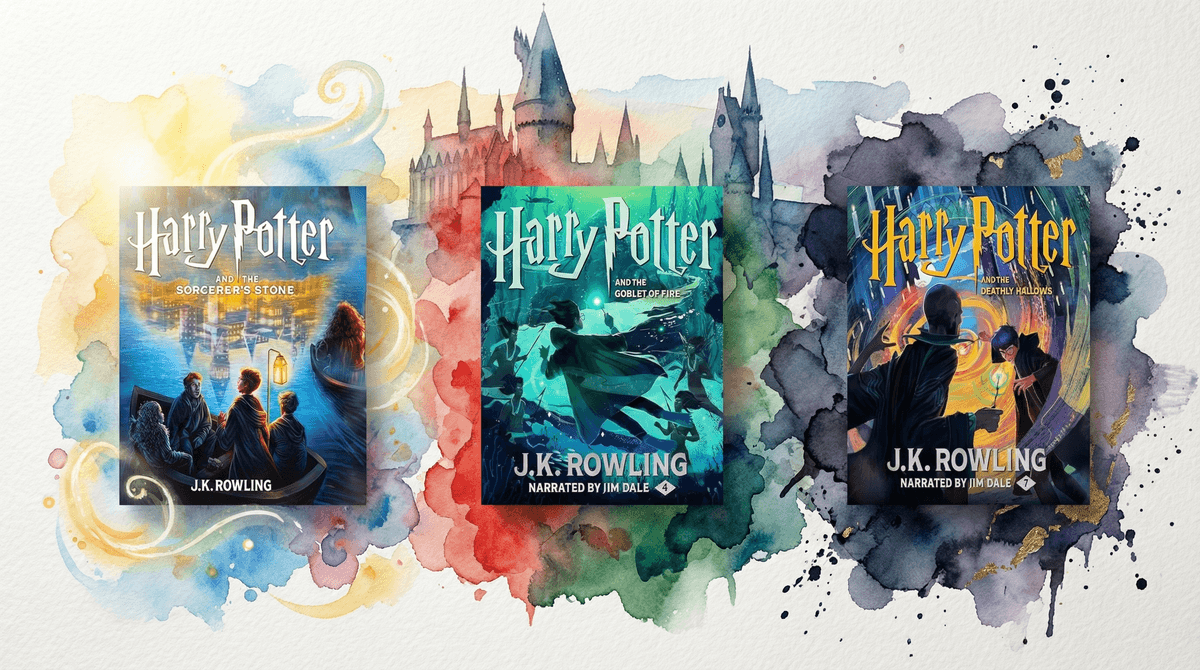
Look, the Harry Potter series is one of those rare cultural phenomena that genuinely lives up to the hype. But here's the thing that trips up a lot of parents: this is not a seven-book series for one age group. It's more like seven different books that happen to follow the same characters, each one aging up significantly in both complexity and darkness.
J.K. Rowling wrote these books in real-time as her audience grew up, and it shows. Book one is a delightful children's adventure. Book seven is basically a war novel with teenage protagonists dealing with fascism, death, and trauma. The gap between those two is massive.
So when your 7-year-old begs to read Harry Potter because their friend is reading it, the real question isn't "Is Harry Potter appropriate?" It's "Which Harry Potter book are we talking about?"
The series works because it grows with readers. Harry starts at 11, dealing with 11-year-old problems (making friends, learning new things, dealing with bullies). By the end, he's 17, dealing with actual life-and-death stakes, moral complexity, and loss.
The magic system is fun and accessible. The world-building is rich enough to get lost in. The characters feel real. And honestly? It's just really well-written. These books turn reluctant readers into voracious ones, and they create a shared cultural literacy that spans generations at this point.
Plus, for parents, there's something genuinely wonderful about reading a series where the core message is: love matters, friendship matters, standing up to fascism matters, and the choices you make define who you are more than the circumstances you're born into.
Book 1: Harry Potter and the Sorcerer's Stone
Recommended age: 7-8+
This is the most accessible book in the series. It's a straightforward adventure story about a kid discovering he's special and going to magic school. The scary bits (Voldemort's face on the back of someone's head, the three-headed dog) are more "spooky" than genuinely frightening.
Complexity level: Chapter book reader who can handle 300 pages
Scary factor: 2/10
Themes: Friendship, belonging, good vs. evil (very clear-cut)
Most 7-8 year olds who are solid readers can handle this. Some 6-year-olds can too, but it's a long book, so consider their attention span.
Book 2: Harry Potter and the Chamber of Secrets
Recommended age: 8+
Slightly darker than book one. There's a giant murderous snake, kids getting petrified (basically paralyzed and near-death), and some genuinely creepy scenes in the Chamber itself. The Tom Riddle diary subplot introduces the concept of possession, which can be unsettling.
Complexity level: Similar to book 1
Scary factor: 4/10
Themes: Prejudice (the "mudblood" slur gets introduced), fear, rumors and mob mentality
If your kid handled book one fine, they're probably ready for this one.
Book 3: Harry Potter and the Prisoner of Azkaban
Recommended age: 9+
This is where the series starts to mature. The Dementors are legitimately frightening creatures that represent depression and despair. The time-travel plot is more complex. The moral landscape gets murkier—not everyone is purely good or purely evil.
Complexity level: More sophisticated plot structure
Scary factor: 5/10
Themes: Depression, trauma, the complexity of human nature, betrayal and redemption
Many consider this the best book in the series from a craft perspective. It's also the turning point where the series stops being purely "children's literature."
Book 4: Harry Potter and the Goblet of Fire
Recommended age: 10+
This is the big jump. The book ends with a major character death that is violent and traumatic. Voldemort returns to full power in a genuinely disturbing scene involving blood magic and murder. The tournament tasks are dangerous and intense.
Complexity level: 700+ pages, multiple plot threads
Scary factor: 7/10
Themes: Death, corruption, the return of fascism, first romance
This is the book where I'd pump the brakes for younger readers. That ending is heavy. If your kid isn't ready to process a beloved character dying violently, wait on this one.
Book 5: Harry Potter and the Order of the Phoenix
Recommended age: 11+
The longest book in the series, and emotionally, one of the hardest. Harry is angry, traumatized, and dealing with PTSD. Another major character dies. There's government corruption, propaganda, and a pretty intense torture scene (Umbridge's detention with the blood quill).
Complexity level: 800+ pages, heavy on political themes
Scary factor: 7/10
Themes: Trauma, PTSD, government authoritarianism, propaganda, teenage angst, grief
Your kid needs to be emotionally mature enough to handle a protagonist who is genuinely struggling and not always likable. Harry is kind of a pain in this book—intentionally so.
Book 6: Harry Potter and the Half-Blood Prince
Recommended age: 11-12+
Dark, but in a different way. There's less action, more detective work. The big death at the end is devastating but less violent than previous deaths. The romance subplots are more prominent. Voldemort's backstory is explored, which includes child abuse, murder, and dark magic.
Complexity level: More character-driven, less plot-driven
Scary factor: 6/10
Themes: Obsession, the origins of evil, sacrifice, first love
This one's more about emotional maturity than fear tolerance.
Book 7: Harry Potter and the Deathly Hallows
Recommended age: 12-13+
This is a war novel. Multiple beloved characters die, some violently. There's torture, there's genocide, there's a scene where Harry watches his parents die through someone else's eyes. The camping section is long and bleak. The final battle is intense.
Complexity level: Brings together seven books worth of plot threads
Scary factor: 8/10
Themes: War, sacrifice, mortality, fascism, the cost of resistance
Do not hand this to a 9-year-old. I don't care how advanced a reader they are. The emotional content is intense.
The movies follow a similar trajectory, but with some important differences:
- The movies are more intense than the early books (visual horror hits different)
- But the movies cut a LOT of the emotional complexity from the later books
- The movie ratings are actually pretty helpful: PG for the first three, PG-13 for the rest
If you're trying to decide between books and movies, books first is usually the move. Kids can process scary content better when they're creating the images in their head rather than having them shown to them.
That said, the Harry Potter movies can be a great family experience once your kid is ready for them.
Here's a strategy that works really well: read the series aloud together, even if your kid can read independently.
Why? Because you can:
- Pause to discuss scary or complex parts
- Process the deaths and dark themes together
- Gauge their reaction in real-time
- Skip or summarize sections if needed (looking at you, camping scenes in book 7)
- Make it a special bonding experience
Some families read the early books independently, then switch to reading aloud for books 4-7. That's a solid approach.
Yeah, this is going to happen. Some 8-year-old in your kid's class is going to blow through all seven books, and your kid is going to feel left out.
Here's the thing: reading levels and emotional readiness are not the same thing. A kid can technically decode the words in Deathly Hallows at age 8 and still not be ready to process Dobby's death or the torture scenes or the existential dread.
You can acknowledge this directly: "Yes, Emma is reading book 7. Emma's family made that choice for Emma. We're making a different choice for our family because I want to make sure you're ready to handle some of the really intense stuff that happens."
Or you can do what many families do: let them read ahead, but check in frequently and be available to process the heavy stuff together.
Look, you're going to have to decide how your family wants to handle J.K. Rowling's public statements about transgender people. That's a family values conversation.
What I will say: the books themselves don't contain transphobic content. The controversy is about the author's statements and activism outside the books. Some families have decided to separate art from artist. Some families have decided to step away from the series entirely. Some families use it as an opportunity to discuss how people we admire can still hold harmful views.
This is a complex topic worth thinking through before your kid gets invested in the series.
The Harry Potter series is genuinely wonderful, but it's not one-size-fits-all. Here's the cheat sheet:
- Books 1-3: Most kids 8-10 who are solid readers
- Book 4: 10+ and ready for character death
- Books 5-7: 11-13+ and emotionally mature enough for war, loss, and moral complexity
Trust your gut. You know your kid. Some 9-year-olds are ready for the whole series. Some 12-year-olds aren't ready for the later books. Both are fine.
And honestly? There's no rush. These books have been around for 25+ years and they'll still be here when your kid is ready. Better to read them at the right time than to push through too early and have the experience be overwhelming instead of magical.
- Start with Harry Potter and the Sorcerer's Stone and see how it goes
- Check out other great fantasy series for kids if you want alternatives
- Consider reading Percy Jackson as a bridge series—similar vibe, slightly less dark
- If you want to talk through whether your specific kid is ready, See if your child is ready for Harry Potter
Happy reading. And remember: the real magic is in sharing these stories together, whenever your family is ready. ✨