

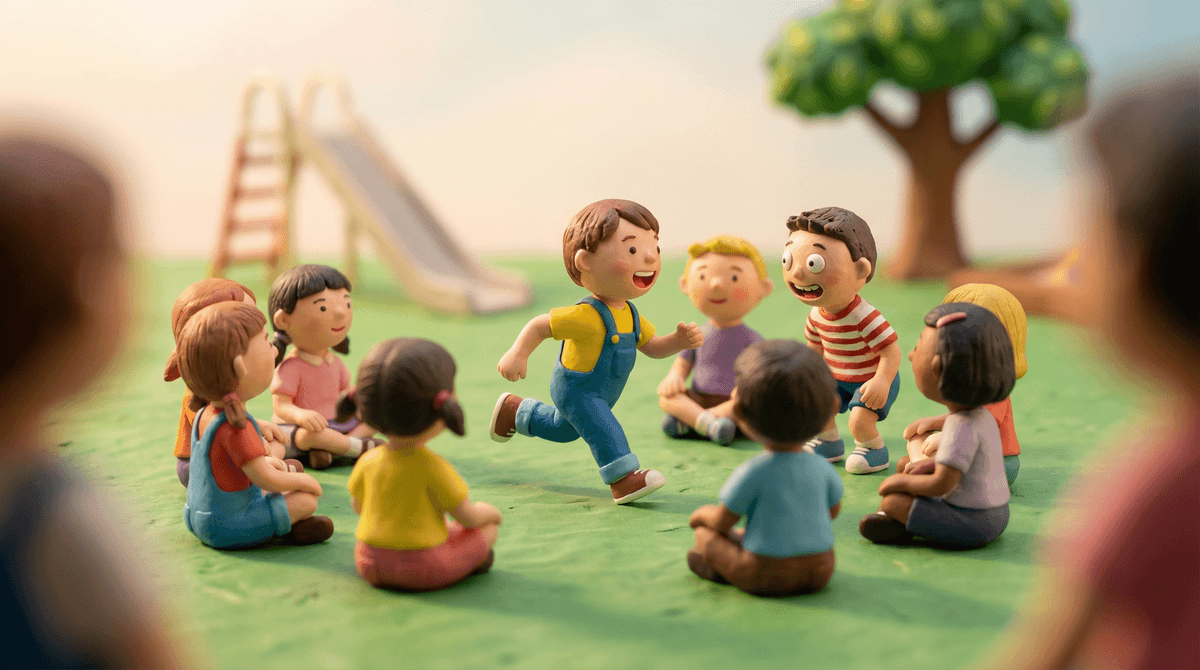
Duck, Duck, Goose is that circle game you probably played a thousand times as a kid and completely forgot about until you saw it at a birthday party last month. One kid walks around the outside of a circle, tapping heads and saying "duck, duck, duck" until they suddenly yell "GOOSE!" and then chaos ensues as both kids race around the circle trying to claim the empty spot.
It's beautifully simple. No equipment needed (unless you count a patch of grass or gym floor). No batteries required. No in-app purchases. No subscription model. Just kids, a circle, and the universal human experience of not knowing when you're about to become the goose.
The game has been around forever—like, legitimately generations—and variations exist across cultures. In Minnesota, they inexplicably call it "Duck, Duck, Gray Duck" which is objectively weird but we're not here to judge. Some versions have the person who gets tagged sit in the "mush pot" in the center if they lose the race. The core mechanic stays the same: anticipation, sudden action, turn-taking, and the sweet relief of sitting back down.
Look, I know you clicked on this thinking "why is there a guide about Duck, Duck, Goose on a digital wellness platform?" Fair question. Here's why it matters:
It teaches skills that screens can't. Duck, Duck, Goose is basically a masterclass in executive function disguised as a silly game. Kids have to:
- Wait their turn (impulse control)
- Pay attention even when it's not their turn (sustained attention)
- Handle the disappointment of not being picked (emotional regulation)
- Deal with losing the race without melting down (resilience)
- Celebrate winning without being a jerk about it (sportsmanship)
These are the exact skills that get zero practice time when kids are passively consuming content or playing games where they can just restart instantly when things don't go their way.
It builds real social connection. There's eye contact. Physical proximity. Reading social cues about whether someone's about to pick you. The shared experience of watching someone walk around the circle for way too long building suspense. The genuine excitement when your friend gets picked. This is the stuff that builds actual friendships and social competence.
It gets them moving. Not in a "we need to gamify exercise" way, but in a "running around in circles is fun and also your body needs to move" way. The WHO recommends kids get 60 minutes of physical activity daily. Duck, Duck, Goose counts.
-
Form a circle. Everyone sits facing inward. You need at least 5-6 kids for this to really work, though you can technically do it with fewer if you're desperate.
-
Pick someone to be "It." This person stands and walks around the outside of the circle.
-
Tap and say "duck." The person who's It taps each person's head (gently, we're not trying to give anyone a concussion) and says "duck."
-
Eventually say "goose." When they're ready, they tap someone and say "GOOSE" instead.
-
Chase time. The goose jumps up and chases It around the circle. It is trying to get to the empty spot and sit down. The goose is trying to tag them before they get there.
-
What happens next:
- If It makes it to the spot without being tagged, the goose becomes the new It
- If the goose tags It before they sit down, It has to go again (or sits in the "mush pot" in the center, depending on your house rules)
-
Repeat forever. Or until snack time. Whichever comes first.
Ages 3-4: They can sort of play, but don't expect rule adherence. They'll probably all run around randomly and it'll be adorable chaos. That's fine. They're learning by watching and participating in their own way.
Ages 5-7: This is the sweet spot. They understand the rules, they care about the rules, and they're developing the impulse control to actually wait their turn. You'll still need to manage some feelings when kids don't get picked or lose the race.
Ages 8-10: They've got this down and will probably start adding their own variations. "Double goose!" "Reverse goose!" Let them experiment with the format—it's actually great for creative thinking and rule negotiation.
Ages 11+: They might think they're too cool for it, but in the right context (camp, youth group, drama warm-up), they'll get into it. The game scales surprisingly well with older kids who lean into the fun rather than worrying about looking silly.
The picking anxiety is real. Some kids get stressed about being the picker because they don't want to hurt anyone's feelings or show favoritism. Some kids get stressed about never getting picked. Both are valid. You can help by:
- Encouraging pickers to "surprise themselves" rather than overthinking it
- Reminding kids that everyone gets a turn eventually
- Noticing if someone hasn't been picked in a while and gently suggesting they might be a good choice
Winning and losing are both hard. This game is actually a fantastic low-stakes way to practice both. The kid who loses becomes It, which isn't really a punishment—it's just another role. The kid who wins gets to sit down, which isn't really a prize—it's just what happens. This is healthy.
Some kids will try to game the system. The kid who walks around saying "duck" for five full minutes building suspense. The kid who only picks their best friend. The kid who sits in a spot that's strategically easier to defend. This is all fine and actually shows sophisticated thinking. Let them experiment.
Physical boundaries matter. Make sure kids know:
- Tap heads gently (or shoulders if head-touching feels weird)
- No pushing or shoving during the chase
- Stay in the circle when you're sitting
- If someone says stop, we stop
Mush Pot: If you get tagged, you sit in the middle until someone else loses. Adds stakes but can feel punitive for younger kids.
Categories: Instead of "duck," use categories—animals, colors, foods—and then pick an outlier. "Cat, cat, cat, DOG!" This adds cognitive challenge for older kids.
Compliment, Compliment, Compliment: Each person gives a compliment instead of saying "duck," then gives a different compliment when they pick the goose. Surprisingly sweet and great for building positive group culture.
Reverse direction: The goose and It run in opposite directions around the circle. Increases collision risk but adds excitement.
Duck, Duck, Goose isn't going to replace Minecraft or Roblox in your kid's heart. That's not the point. But it's a reminder that some of the best childhood experiences are shockingly simple, require zero technology, and teach skills that actually matter.
If you're looking for more screen-free activities that build social skills, check out our guide to classic playground games or alternatives to video games for social play.
The next time you're at a playdate and the kids are glazed over on screens, you have permission to be that parent who says "hey, let's play Duck, Duck, Goose." Will they groan? Maybe. Will they have fun once they start? Probably. Will they remember it longer than whatever YouTube video they were about to watch? Absolutely.