

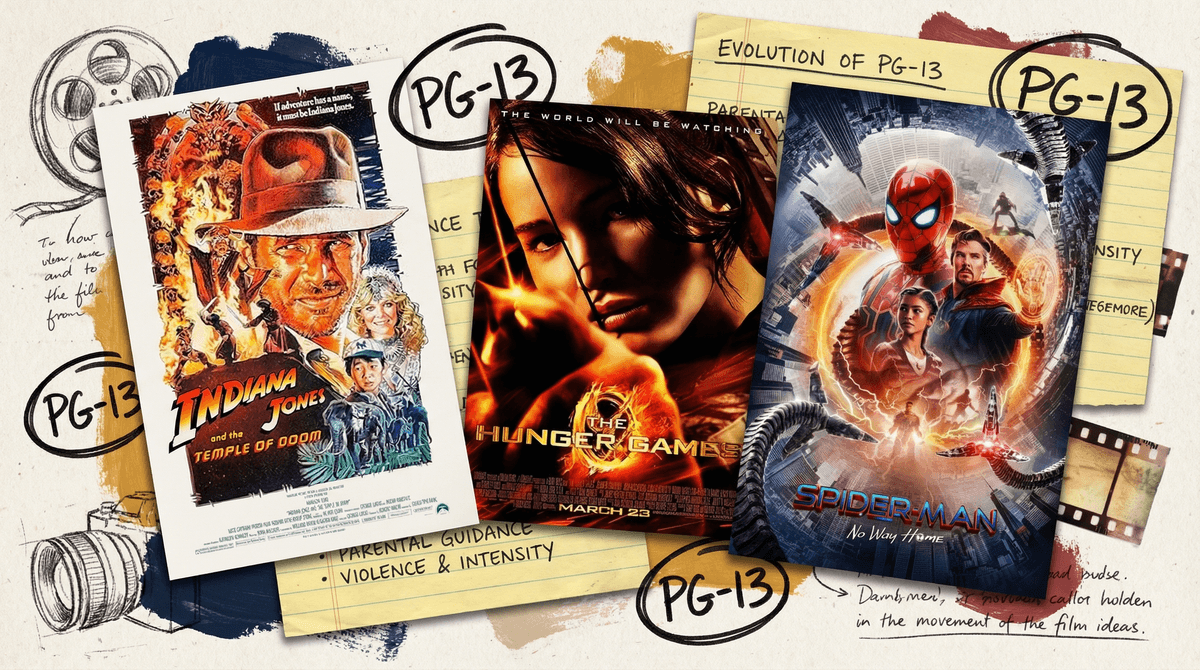
Let's start with the basics: PG-13 means "Parents Strongly Cautioned" and suggests that some material may be inappropriate for children under 13. It was created in 1984 after parents complained that Indiana Jones and the Temple of Doom was too intense for PG but didn't warrant an R rating. Steven Spielberg himself suggested the need for a middle ground.
But here's the thing: PG-13 is wildly inconsistent. A PG-13 movie can have one F-bomb (but only one!), intense violence as long as there's no blood, frightening sequences, brief nudity, drug references, and "thematic elements" that basically means "stuff that might mess with your kid's head." The rating tells you almost nothing about whether YOUR specific child is ready for it.
The MPAA rating system has some... let's call them quirks:
Violence gets a pass, bodies don't. You can show someone getting shot 47 times in a PG-13 movie as long as you don't show much blood. But show a woman's nipple for 2 seconds? Instant R rating. This is a uniquely American phenomenon that honestly makes no sense when you think about it.
Context doesn't matter enough. A movie about the Holocaust and a superhero punch-fest can both be PG-13, but they're not remotely the same viewing experience for a 10-year-old.
The "one F-bomb rule" is absurd. Movies can have one F-word and stay PG-13, but two pushes it to R. As if the second F-bomb is what traumatizes kids, not the alien invasion happening on screen.
Ratings creep is real. Studies show that PG-13 movies today contain significantly more violence, sexual content, and profanity than PG-13 movies from the 1980s and 90s. The goalposts keep moving.
Forget the rating for a minute. Here's what actually matters when deciding if your kid is ready for more mature content:
Your Kid's Specific Sensitivities
Some kids can handle intense action but get nightmares from jump scares. Others can process complex themes about death but get anxious seeing characters argue. You know your kid better than any rating board does.
Questions to ask yourself:
- How do they handle scary or tense situations in real life?
- Do they ask questions when confused, or internalize and worry?
- Can they separate fantasy from reality?
- How do they process big emotions?
The Specific Content, Not Just the Rating
Common Sense Media is your best friend here. They break down exactly what's in a movie: how much violence, what kind of language, sexual content, drinking/drugs, and scary scenes. They also give two age ratings: one from parents, one from kids. Often these differ by 2-3 years, which tells you something.
The MPAA gives you a rating. Common Sense Media tells you why.
Your Family Values and Boundaries
Some families are fine with violence but strict about language. Others are the opposite. Some parents want to shield their kids from death and loss; others believe in age-appropriate exposure to life's realities. There's no universal "right" answer here, just what works for your family.
Here's the reality on the ground:
Ages 8-10: Most PG-13 movies are genuinely too much. There are exceptions—The Lego Movie is technically PG but could easily be G, while some "family" PG-13 movies like Jumanji: Welcome to the Jungle work for mature 10-year-olds. But generally? Stick with PG for this age unless you've done your homework on the specific movie.
Ages 11-12: This is where it gets tricky. Lots of kids this age are ready for SOME PG-13 content, but not all. The Marvel movies are basically designed for this age group—action-heavy but not gory, mild language, minimal sexual content. But a PG-13 war movie or psychological thriller? Probably not.
Ages 13+: Even at 13, not every PG-13 movie is appropriate. The Hunger Games deals with kids killing kids. Jaws is PG (!) but genuinely terrifying. Age 13 doesn't magically mean they're ready for everything.
Let's talk about the elephant in the room: your kid's friends are probably watching stuff you're not comfortable with yet. By 5th grade, many kids have seen multiple Marvel movies. By 7th grade, a significant number have watched R-rated movies at friends' houses.
This creates real social pressure. Your kid doesn't want to be the only one who hasn't seen Spider-Man: No Way Home. They don't want to sit out of conversations about Stranger Things (which is TV-14, the TV equivalent of PG-13, but honestly pushes into R-rated territory at times).
You don't have to give in to this pressure, but you do need to acknowledge it exists. Some strategies:
- Co-watch first viewings of borderline content so you can pause, discuss, and gauge their reaction
- Use the "we watch it together or not at all" rule for PG-13 content under age 13
- Explain your reasoning so it's not just "because I said so"
- Pick your battles—maybe you allow the Marvel movie but hold firm on the horror film
Here's a practical system:
- Check the rating (PG, PG-13, R, etc.)
- Read the rating description on IMDB or the poster—it tells you WHY it got that rating
- Look up the movie on Common Sense Media for detailed content breakdown
- Read parent reviews from people with similar values
- Watch the trailer yourself—trailers often show you the tone and intensity level
- When in doubt, watch it first or watch it together
For streaming content, use the parental controls on Netflix, Disney+, etc. to filter by rating. But know that kids are resourceful and will find workarounds if they're determined.
Here's what the research actually shows: it's not just about what kids watch, but how you talk about it with them. Kids who watch mature content with parents who discuss it, answer questions, and provide context process it better than kids who watch age-appropriate content alone.
This doesn't mean "let them watch anything as long as you talk about it." It means that the conversation is part of the decision-making process.
Questions to ask during or after:
- "What did you think about that scene?"
- "How do you think that character felt?"
- "Do you think that's realistic?"
- "Would you make the same choice?"
PG-13 is a suggestion, not a mandate or a guarantee. It's one data point in your decision-making process, not the only one.
The rating system is imperfect, inconsistent, and doesn't know your kid. Use it as a starting point, not an ending point. Do your homework on specific movies. Trust your instincts. And remember that saying "not yet" isn't saying "never"—it's saying "I care enough to think about this."
Your 10-year-old doesn't need to see every Marvel movie the weekend it drops. Your 12-year-old can wait a year for that intense thriller. There's no award for earliest exposure to mature content.
- Set up an account on Common Sense Media and bookmark it
- Have a family conversation about movie ratings and what they mean
- Create a family media plan that includes your values around content
- Learn more about age-appropriate content across different platforms
- Check out alternatives to popular PG-13 movies for younger kids who feel left out
Remember: you're not ruining your kid's childhood by being thoughtful about what they watch. You're being an intentional parent. That's literally the job.