

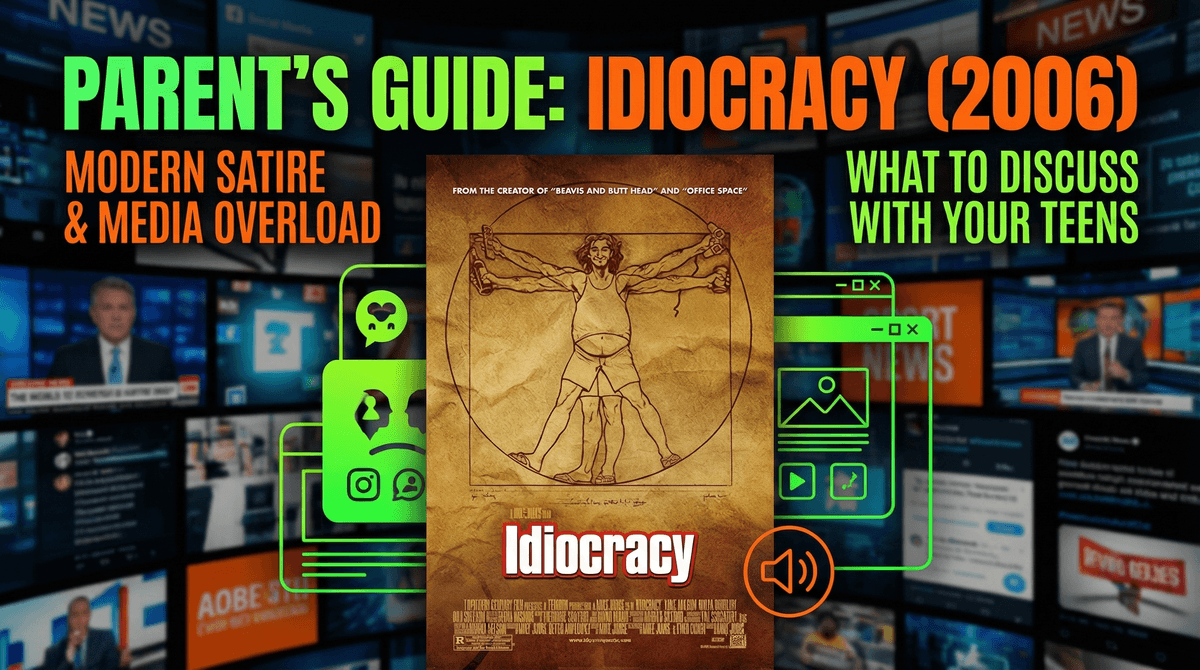
Idiocracy: Why This R-Rated Satire Isn't Ready for Family Movie Night
TL;DR: Idiocracy is a 2006 satirical comedy that imagines a dumbed-down future America. While it's become a cult classic with eerily prescient social commentary, it's firmly R-rated for constant profanity, sexual content, and crude humor. Not appropriate for kids under 17, and even then, it depends on your teen's maturity level and your family's comfort with raunchy comedy.
Looking for actually family-friendly satire? Check out Wall-E or The Lego Movie instead.
Mike Judge (the creator of Beavis and Butt-Head and Office Space) directed this satirical sci-fi comedy about an average guy who wakes up 500 years in the future to discover that humanity has become catastrophically stupid. The premise: intelligent people stopped having kids while less educated people reproduced prolifically, leading to a society where the most popular TV show is literally just a guy getting hit in the groin for 90 minutes, and the #1 movie is called "Ass" — just a butt on screen for two hours.
The movie flopped at the box office in 2006 (Fox barely released it), but it's gained a massive following over the years as people point to real-world parallels. You've probably seen memes or references to it, especially around election seasons or whenever someone wants to comment on the "dumbing down" of society.
Here's the thing about Idiocracy: it's become cultural shorthand for "society is getting dumber." Parents reference it when talking about YouTube brain rot, the appeal of Skibidi Toilet, or concerns about TikTok destroying attention spans.
The movie's vision of a future where corporations run everything, advertising is everywhere, and entertainment has been reduced to the lowest common denominator feels... uncomfortably relevant. The fictional president is a former wrestler and porn star. The crops are watered with a sports drink because "it's got electrolytes." The entire economy runs on consumption of junk.
Sound familiar? That's why it keeps popping up in your feed.
Let's be specific about what's actually in this movie, because "R-rated comedy" can mean a lot of different things.
Profanity: Constant. F-bombs throughout, along with pretty much every other curse word you can think of. It's not Scarface levels, but it's frequent and casual.
Sexual Content: This is where it gets particularly inappropriate for kids. The movie includes:
- Multiple scenes in a brothel-like "rehabilitation" center
- A masturbation-themed Starbucks (yes, really)
- Crude sexual dialogue and innuendo throughout
- Scantily clad women used as set decoration in the dystopian future
- References to prostitution and sexual services as normalized commerce
Crude Humor: The entire premise of the future society is that everything has been dumbed down to the most base level. There are repeated jokes about:
- Bathroom humor (the toilet jokes are... extensive)
- Violence as entertainment
- Stupidity as a punchline
- Corporate greed and exploitation
Violence: Relatively mild compared to the other content. Some slapstick violence, people getting hurt for laughs, but nothing graphic or gory.
Themes: This is actually the most interesting part for older teens. The movie is fundamentally about:
- Eugenics and intelligence (handled satirically, but still potentially uncomfortable)
- Class and education divides
- Corporate control of society
- Anti-intellectualism
- Environmental collapse
Honestly? For mature high schoolers, maybe. The movie is a satire that can spark genuinely interesting conversations about:
- Media literacy and the "dumbing down" of content
- How algorithms and engagement metrics shape what we watch
- The role of education in society
- Corporate influence on daily life
- Critical thinking about the content we consume
But here's the catch: you can have all those conversations without watching a movie where Starbucks is a brothel and the most popular show is called "Ow! My Balls!" There are better, less crude ways to discuss media criticism with teens.
If you want satire that actually works for family viewing, Wall-E covers similar themes (consumerism, environmental collapse, humanity's relationship with technology) without the R-rated content. For older kids ready for more mature themes but not full R-rated territory, Don't Look Up or The Truman Show offer social commentary with less crude humor.
Under 13: Hard no. The sexual content alone makes this completely inappropriate, and the humor won't land anyway.
Ages 13-15: Still no. The R rating exists for a reason. Even if your middle schooler is mature and you're okay with some profanity, the sexual content crosses lines that most parents aren't comfortable with at this age.
Ages 16-17: Maybe, but it really depends on your teen and your family values. Questions to consider:
- Are they comfortable with crude sexual humor?
- Can they engage critically with satire versus just laughing at the surface-level jokes?
- Do they have enough context about media criticism to understand what the movie is actually trying to say?
- Are you prepared to discuss some uncomfortable themes about intelligence, class, and eugenics?
If you do watch it with an older teen, make it a co-viewing experience. The movie works best as a starting point for conversation, not as standalone entertainment.
Ages 18+: They're adults. They can make their own choices. Though if they're asking you about it, maybe watch it together and talk about whether the satire actually holds up or if it's just mean-spirited.
The eugenics problem: The movie's premise is built on a pretty uncomfortable foundation — that "stupid people" are outbreeding "smart people" and this is destroying society. While it's meant as satire, the underlying message flirts with some genuinely problematic ideas about intelligence, class, and worth. This isn't just theoretical concern; the movie has been adopted by some pretty unsavory groups as unironic support for their views.
It's meaner than you remember: If you saw Idiocracy years ago and are thinking about showing it to your teen, rewatch it first. The movie's humor often punches down at the "stupid" people rather than focusing its satire on the systems and structures that created the dystopia. It's less "clever critique of anti-intellectualism" and more "look at all these dumb people."
The prophecy problem: A lot of people reference Idiocracy as if it's coming true, which... isn't really accurate? People aren't getting dumber. What IS happening is that algorithms and engagement-driven content are changing how we consume information. That's a conversation worth having, but Idiocracy's premise isn't the right framework for it.
Better alternatives exist: If you want to talk about media literacy, critical thinking, or the problems with engagement-driven content, there are better starting points. The Social Dilemma is a documentary that covers similar ground without the crude humor. Wall-E offers a more nuanced (and family-friendly) look at consumerism and environmental collapse.
The good news? You can discuss everything interesting about Idiocracy without actually watching it. Here's how:
Media literacy conversations: Talk about how YouTube's algorithm or TikTok's For You page shapes what content gets promoted. Why does outrage and extreme content get more engagement? What happens when entertainment is optimized purely for views?
Critical thinking about "brain rot": When your kid is watching Skibidi Toilet or some other seemingly mindless content, instead of just saying "this is dumb," ask: "What makes this entertaining? Why do you think it's popular? How is it different from what I watched as a kid?"
Corporate influence: Look at how advertising works in the apps and games your kids use. Roblox's economy is a great case study in how companies create entire ecosystems around consumption.
Environmental themes: Wall-E, FernGully, or even The Lorax cover similar ground about environmental collapse and consumerism without the R-rated content.
Idiocracy is an R-rated comedy that's aged into a cultural touchstone but hasn't necessarily aged well as a movie. It's too crude for family viewing, too mean-spirited to be truly insightful satire, and built on a premise that's more problematic than prophetic.
If your teen is asking about it because they've heard references, you can explain the premise and why it resonates with people without actually watching it. If they're 17+ and you're considering co-viewing, rewatch it yourself first and decide if the crude humor and uncomfortable themes are worth the conversations it might spark.
But honestly? There are better ways to discuss media literacy, critical thinking, and the problems with engagement-driven content. The Social Dilemma for documentaries, Wall-E for family-friendly satire, or just having ongoing conversations about what makes content valuable versus just engaging will get you further than a movie where the joke is "haha, everyone is stupid."
- For younger kids asking about it: Explain it's an adult movie that imagines a silly future, then redirect to Wall-E or The Lego Movie for age-appropriate satire
- For teens 16+: If you're considering it, watch it yourself first, then decide if co-viewing makes sense for your family
- For ongoing conversations: Focus on media literacy and critical thinking about content rather than using one R-rated movie as your teaching tool
Want to dig deeper into how algorithms shape what kids watch? Check out our guides on YouTube recommendations and TikTok's For You page.