

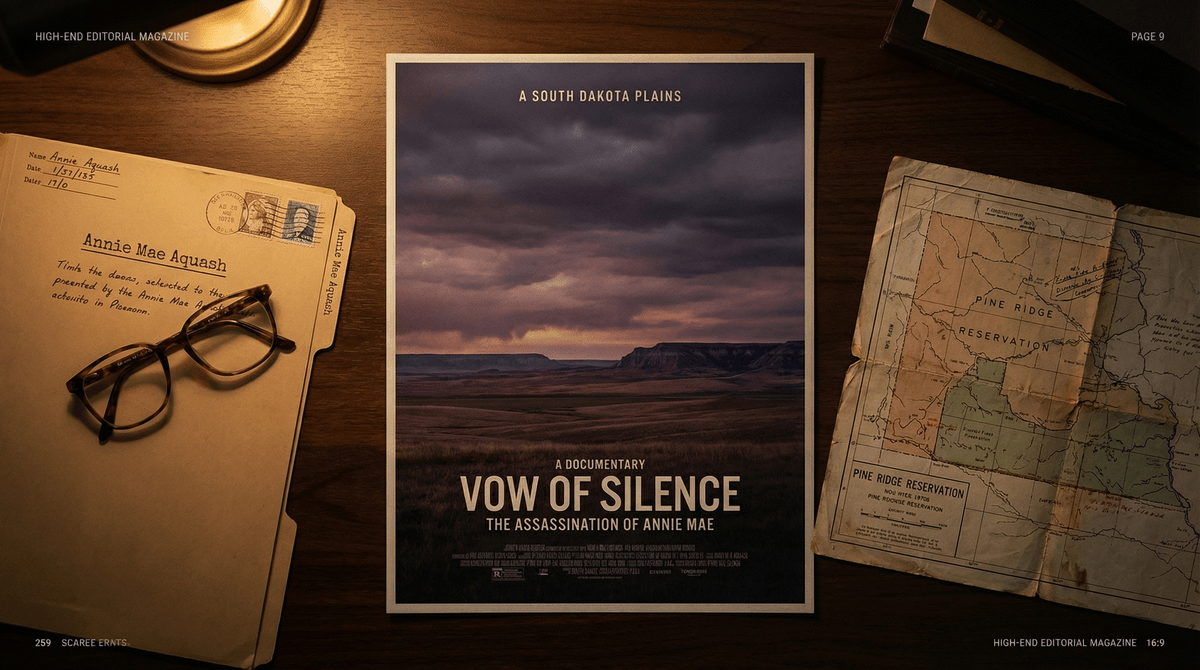
Vow of Silence: The Assassination of Annie Mae
TL;DR: This is a heavy, mature documentary series about a real political murder within the American Indian Movement in the 1970s. It's on Hulu, it's deeply important Indigenous history, and it's absolutely not for kids. We're talking graphic crime scene photos, detailed discussions of violence, and complex political betrayal. If you have teens interested in social justice or Indigenous rights (15+), this could spark crucial conversations—but watch it first yourself.
Vow of Silence is a documentary series investigating the 1975 murder of Annie Mae Aquash, a Mi'kmaq woman and prominent activist in the American Indian Movement (AIM). She was found dead on the Pine Ridge Reservation in South Dakota, initially ruled an exposure death, then revealed to be an execution-style shooting to the back of her head.
The documentary digs into the paranoia, FBI infiltration, and internal suspicion that led to Annie Mae being accused of being an informant by her own movement—and ultimately killed by people she considered comrades. It's investigative journalism meets historical reckoning, with her daughters seeking answers decades later.
If your teen is suddenly asking about this series, it's likely because:
-
Social justice education: Many high school history and ethnic studies classes are finally incorporating Indigenous activism and the FBI's COINTELPRO operations. Annie Mae's story is central to understanding how the U.S. government systematically undermined civil rights movements.
-
True crime interest: The genre continues to dominate teen viewing habits, but this isn't Making a Murderer or your standard true crime fare. This is about political violence and community trauma.
-
Indigenous representation: There's growing awareness among young people about Indigenous history beyond the sanitized textbook version. This documentary centers Indigenous voices telling their own story.
The Heavy Stuff (And There's A Lot)
Graphic content: The series includes actual crime scene photographs of Annie Mae's body, detailed forensic discussions, and descriptions of her murder. This isn't implied violence—it's documentary evidence that's disturbing even for adults.
Complex political context: Understanding this story requires grappling with FBI surveillance, government-sponsored violence against activists, the Wounded Knee occupation, and the concept of political assassination on U.S. soil. It's not a straightforward "good guys vs. bad guys" narrative.
Betrayal and paranoia: The most painful aspect is that Annie Mae was likely killed by people within her own movement who believed FBI propaganda that she was an informant. It's a story about how oppression creates conditions where communities turn on themselves.
Ongoing trauma: This isn't ancient history. Annie Mae's daughters are still seeking justice, and the series shows how this violence reverberates through families and communities today.
The Educational Value
Despite—or because of—the difficult content, this documentary offers something rare:
Indigenous-centered storytelling: The filmmakers worked closely with Annie Mae's family and community. This isn't a white filmmaker's interpretation of Indigenous pain.
Media literacy lessons: The series explicitly shows how the FBI planted false information and used media to discredit activists. It's a masterclass in understanding propaganda and disinformation—skills teens desperately need right now.
Intersectionality: Annie Mae was a woman in a male-dominated movement, Indigenous in a racist society, and an activist in a surveillance state. Her story illuminates how multiple forms of oppression intersect.
Accountability and justice: The documentary grapples with what justice looks like when the perpetrators were themselves victims of a larger system of violence. There are no easy answers.
Not recommended under 15: The graphic content alone makes this inappropriate for middle schoolers, but more importantly, the political complexity requires a level of critical thinking and historical context most younger teens don't have yet.
Ages 15-17 with context: If your older teen is taking ethnic studies, AP U.S. History, or is involved in activism, this could be valuable—but watch it together or at least watch it first yourself. The content is genuinely disturbing, and teens need space to process.
Ages 18+: College-age young adults studying history, political science, or Indigenous studies will find this essential viewing.
Red Flags That Your Teen Isn't Ready
- They're drawn to true crime purely for entertainment/shock value
- They don't have foundational knowledge of civil rights movements or Indigenous history
- They're struggling with anxiety or depression (the themes of betrayal and violence could be triggering)
- They tend to see complex issues in black-and-white terms
If your teen wants to watch this, or has already seen it, here are conversation starters:
"What did you know about the American Indian Movement before watching this?" This helps you gauge whether they have enough context to understand what they're seeing.
"Why do you think the FBI targeted activists like Annie Mae?"
Opens discussion about government surveillance, then and now. You might be surprised how this connects to current debates about privacy and social media .
.
"How do you think paranoia and infiltration affected the movement?" This is the heart of the tragedy—how oppression creates conditions where communities can't trust each other.
"What does justice look like in a case like this?" There's no satisfying answer, which is the point. Some perpetrators have been convicted, others haven't. The FBI has never been held accountable. Sit with that discomfort together.
"How does this connect to current Indigenous activism?" Land Back movements, Missing and Murdered Indigenous Women (MMIW), water protectors at Standing Rock—Annie Mae's story isn't isolated history.
Want to build your teen's understanding of Indigenous history and activism without the graphic content of Vow of Silence? Try:
Reservation Dogs (Ages 14+): A comedy-drama series created by Sterlin Harjo and Taika Waititi that centers Indigenous teens in Oklahoma. It's funny, heartfelt, and sneaks in real issues without being a documentary.
We Were Here: Native American Voices (Ages 12+): More accessible documentary content that covers Indigenous history without graphic violence.
Books: There There by Tommy Orange (Ages 15+) or The Absolutely True Diary of a Part-Time Indian by Sherman Alexie (Ages 12+) offer Indigenous perspectives through fiction.
Vow of Silence is important, powerful, and absolutely not casual viewing. This isn't background content while scrolling on your phone—it demands your full attention and emotional energy.
If your teen is genuinely interested in social justice, Indigenous rights, or understanding how government surveillance has targeted activists, this documentary is valuable. But it requires preparation, context, and probably a conversation afterward where you both sit with some really uncomfortable truths about American history.
Watch it first. Seriously. You need to know what you're getting into before deciding if your teen is ready. And if you watch together, be prepared for questions you might not have answers to—which is okay. Sometimes the most important conversations start with "I don't know, but let's figure it out together."
The story of Annie Mae Aquash deserves to be known. Just make sure your family is ready for how painful that knowing will be.
Looking for more resources? Explore documentaries about social justice movements or learn about teaching difficult history to teens.