

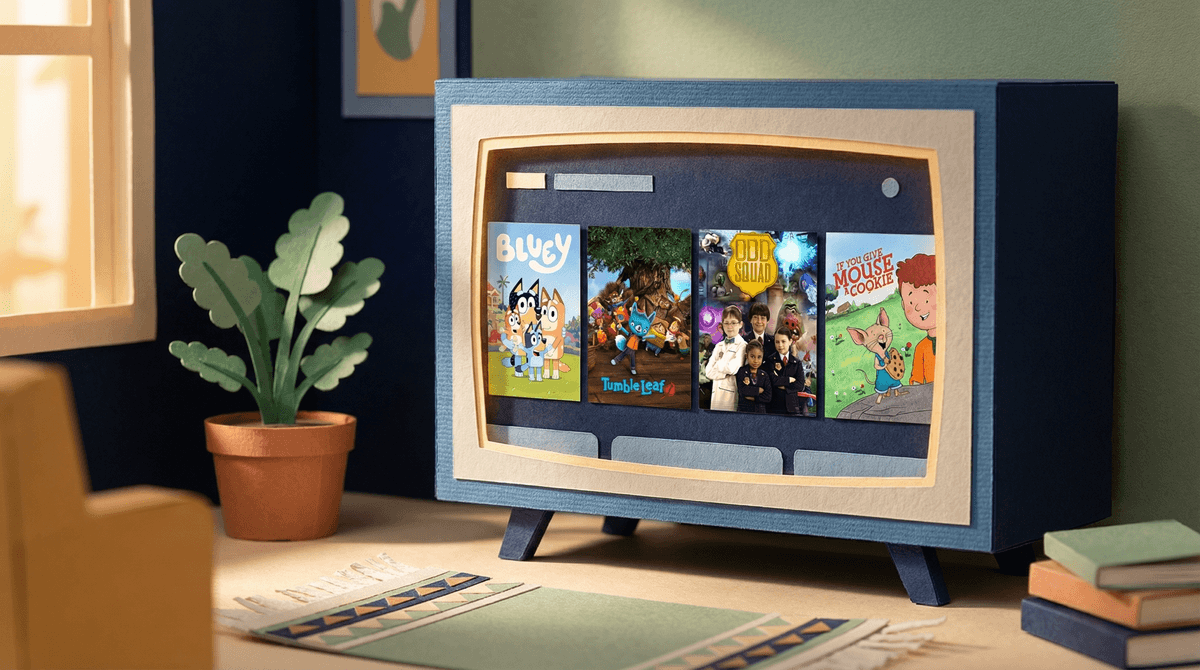
Amazon Prime Video is one of those streaming platforms that doesn't get quite as much attention as Netflix or Disney+, but honestly? It's kind of a hidden gem for quality kids' content. If you've already got Prime for the free shipping (let's be real, that's why most of us have it), you've got access to a surprisingly solid library of shows that range from educational powerhouses to genuinely entertaining series that won't make you want to leave the room.
The thing is, Prime Video's kids' section can feel a bit like a treasure hunt. The interface isn't as kid-friendly as some competitors, and there's definitely some questionable stuff mixed in with the gems. But once you know what to look for, there's some really great programming here—including several shows you literally can't watch anywhere else.
Bluey (Ages 2-8, but honestly all ages)
Look, if you haven't discovered Bluey yet, prepare to have your mind blown. This Australian import about a family of Blue Heeler dogs is legitimately one of the best pieces of children's media ever created. Full stop.
What makes it special: The episodes are only 7 minutes long, the humor works for both kids and adults (you'll actually laugh), and the parenting depicted is both aspirational and real. Dad plays with the kids in creative ways but also sometimes just wants to read the paper. Mom is patient but also has boundaries. The kids are imaginative and also occasionally annoying in the way real kids are.
Why it matters: Bluey models emotional intelligence, creative play, and family dynamics in a way that's never preachy. Kids absorb lessons about resilience, empathy, and problem-solving through play scenarios. Parents learn that good parenting doesn't mean perfect parenting.
Tumble Leaf (Ages 2-6)
This stop-motion animated series follows Fig the fox as he explores his island home and discovers basic science concepts through experimentation. It's visually gorgeous—like, genuinely artistic—and moves at a pace that won't overstimulate younger viewers.
The show is essentially about the scientific method presented as adventure. Fig finds something interesting, wonders about it, tests ideas, and learns. No flashy transitions, no annoying characters, just thoughtful exploration. It's the antidote to the hyper-stimulating content that dominates so much of kids' media.
If You Give a Mouse a Cookie (Ages 3-7)
Based on the beloved book series, this Amazon Original follows Mouse and his friends through various adventures. What's nice here is that it maintains the circular, cause-and-effect storytelling of the original books while expanding into longer narratives.
The animation is bright and engaging without being overwhelming, and the stories emphasize friendship, creativity, and problem-solving. It's comfort food TV—nothing groundbreaking, but reliably pleasant and genuinely age-appropriate for preschoolers.
Just Add Magic (Ages 8-12)
This live-action series about three friends who discover a magical cookbook is genuinely well-done tween programming. The production values are solid, the acting doesn't make you cringe, and the mysteries are engaging enough to hold kids' attention across multiple episodes.
What parents should know: The show deals with real friendship dynamics—jealousy, miscommunication, loyalty—alongside the magical elements. There are some mildly scary moments (magical consequences, mysterious antagonists), but nothing nightmare-inducing. It's a good bridge show for kids aging out of purely animated content but not ready for teen dramas.
Creative Galaxy (Ages 3-7)
Created by Angela Santomero (the genius behind Blue's Clues), this series follows Arty and his sidekick Epiphany as they solve problems using art and creativity. Each episode introduces real art concepts and techniques, then encourages kids to try them at home.
It's unabashedly educational, but in the best way—the kind of show that actually inspires kids to go make stuff rather than just sit there. The art projects featured are genuinely doable, not Pinterest-parent impossible.
Gortimer Gibbon's Life on Normal Street (Ages 8-12)
This live-action series is basically Stranger Things without the horror—suburban kids dealing with magical realism in their everyday lives. It's quirky, well-acted, and deals with real middle-school issues (friendship changes, family dynamics, identity) through a fantastical lens.
Fair warning: This one's definitely for the upper end of the age range. The themes get surprisingly deep—divorce, moving, growing apart from friends—but handled in an age-appropriate way. It's the kind of show that can spark really good conversations about the weird emotional territory of late elementary/early middle school.
Odd Squad (Ages 5-10)
If your kid likes math and spy movies, this PBS show (available on Prime) is basically designed in a lab for them. Young agents work for a government organization that solves problems caused by odd phenomena, using math and logic to save the day.
The humor is deadpan and clever, the math concepts are woven into actual plot rather than feeling like worksheets, and the diverse cast means most kids can see themselves as the agent solving problems. It's one of those rare educational shows that kids don't realize is educational.
Not everything in Prime's kids' section deserves your time. Some of the third-party content that gets lumped into the kids' category is... questionable. Low-budget animation with weird pacing, shows that are basically just toy commercials, content that's technically "for kids" but more brain-numbing than entertaining.
Red flags to watch for:
- Animation that looks like it was made on someone's laptop in 2003
- Shows where every episode is just unboxing or playing with toys
- Series that are clearly just extended ads for products
- Content with hyperactive pacing and constant noise
The good news? The shows listed above are all legitimately quality content. Stick with Amazon Originals and recognizable PBS/BBC imports, and you'll generally be in good shape.
Ages 2-5: Stick with Bluey, Tumble Leaf, If You Give a Mouse a Cookie, and Creative Galaxy. These shows move at an appropriate pace, don't overstimulate, and model positive behaviors.
Ages 6-8: All of the above, plus Odd Squad. This is the age where kids can start following more complex plots and enjoy shows that challenge them intellectually.
Ages 9-12: Just Add Magic and Gortimer Gibbon's Life on Normal Street are perfect for this age group. They deal with real pre-teen issues while still being genuinely age-appropriate (no early sexualization, no inappropriate language, no content that will give them nightmares).
Unlike some streaming platforms, Prime Video doesn't have the most intuitive parental controls, but here's what you can do:
Create a kids' profile: This filters content to age-appropriate options and removes the ability to make purchases. It's not perfect, but it's a necessary first step.
Use viewing restrictions: You can set a PIN for content above certain ratings. This prevents kids from accidentally (or "accidentally") wandering into teen or adult content.
Check the "Customers also watched" section: Prime's algorithm can be... weird. Sometimes it recommends wildly inappropriate content based on seemingly innocent viewing. Spot-check what's being suggested.
Download episodes for offline viewing: This is clutch for car trips or flights, but it also gives you control over exactly what's available when devices are offline.
Amazon Prime Video isn't going to win any awards for best kids' interface or most extensive children's library, but the quality of its original content—particularly Bluey, Tumble Leaf, and the live-action tween shows—makes it worth exploring beyond just the free shipping benefits.
The key is being intentional about what gets added to the watch list. Unlike platforms that are entirely kid-focused, Prime requires a bit more parental curation. But when you find the good stuff? It's really, really good.
Think of Prime Video as the streaming service that rewards effort. You have to dig a little, preview some things, and actively build your kids' watch list—but the payoff is content that's genuinely enriching without being preachy, entertaining without being overstimulating, and family-friendly without being boring.
Start with Bluey. Seriously, just start there. Watch a few episodes with your kids and see what good children's media can actually look like.
Build a curated watch list rather than letting kids browse freely. Prime's interface and algorithm aren't designed with kids in mind, so you'll want to do the heavy lifting upfront.
Use screen time intentionally. These shows are quality content, but they're still screen time. Consider how viewing fits into your family's overall media diet rather than just parking kids in front of "educational" content and calling it good.
And if you want to explore what else is out there across streaming platforms, check out our guides to the best shows on Netflix, Disney+ for families, and educational content that doesn't suck.