

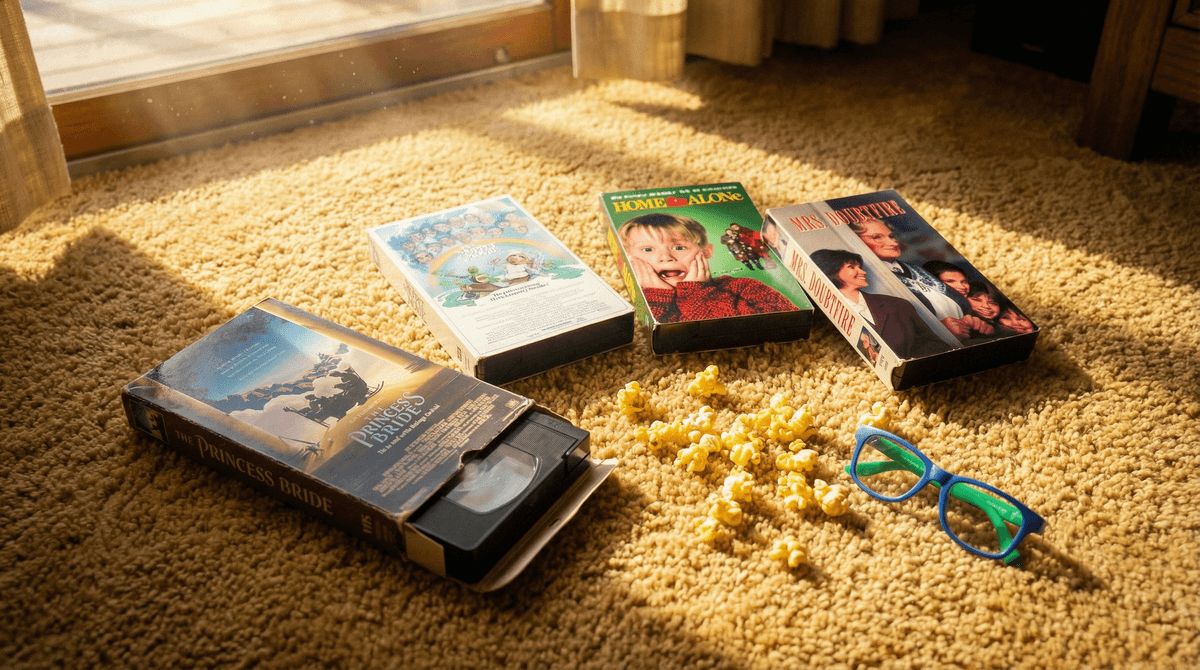
Look, we're talking about the comedies that came out before streaming, before YouTube, before kids could watch whatever they want whenever they want. These are the movies that played on cable TV on Saturday afternoons, the ones your parents quoted at dinner, the ones that somehow still land even though the fashion is questionable and nobody has a cell phone.
Classic comedies—roughly spanning the 1960s through the early 2000s—are having a moment right now, and not just because of nostalgia. They're actually a really solid antidote to the algorithm-driven, TikTok-paced content kids consume today. There's something about a well-crafted 90-minute story with actual character development and jokes that build on each other that feels almost revolutionary in 2026.
Plus, and this is the part that matters for family movie night: these movies give you something to talk about together. They're a shared cultural language that bridges generations. When your kid gets the reference to "I'll have what she's having" or understands why people say "inconceivable," you've given them a little piece of cultural literacy that actually connects them to the adults in their life.
Here's what's wild: kids are actually into these movies when you get them to sit down and watch. Not all of them, obviously—some haven't aged well at all—but the good ones still work.
Physical comedy is timeless. The pratfalls in Home Alone, the chaos of Mrs. Doubtfire, the absurdity of Airplane!—kids get it immediately. No cultural context needed.
The pacing is different, and that's actually good. These movies take time to set up jokes, build running gags, and let moments breathe. After years of 15-second TikToks, there's something almost meditative about watching a comedy that trusts you to pay attention. It's like strength training for attention spans.
The stakes feel real but not traumatic. Compare the tension in The Princess Bride to the existential dread of modern kids' content. Classic comedies knew how to create conflict without making it feel like the world was ending.
The MPAA ratings from the 80s and 90s are... let's just say they had different priorities. A PG movie from 1984 might have content that would get it a PG-13 today, and vice versa. So here's a more useful breakdown:
Ages 6-9: Start Here
- The Princess Bride - Some sword fighting, but it's all fairy-tale level
- Home Alone - Slapstick violence only, though Kevin's family is legitimately terrible to him
- Paddington and Paddington 2 - Okay these are from 2014/2017 but they're already classics and they're perfect
- The Muppet Movie - Zero notes, just joy
Ages 10-12: Getting Into the Good Stuff
- Groundhog Day - Some adult themes but nothing explicit, plus it's genuinely philosophical
- Mrs. Doubtfire - Divorce is a central theme, so know your kid
- Galaxy Quest - A few mild language moments but mostly just clever
- Ferris Bueller's Day Off - Your kid will 100% try to recreate this, just FYI
Ages 13+: The Classics That Require Context
- The Blues Brothers - Lots of smoking, some language, but the musical numbers are incredible
- Airplane! - Rapid-fire jokes, some of which have not aged well at all, but it's a masterclass in comedy writing
- When Harry Met Sally - The whole movie is about whether men and women can be friends, plus that deli scene
- The Big Lebowski - Wait until 15-16, honestly, but when they're ready it's perfect
Not every classic is worth revisiting. Some movies that were huge in their time have jokes that are just... yikes now. Casual homophobia, fat-shaming, racial stereotypes—they're in there. This doesn't mean you can't watch them, but it does mean you might need to pause and have a conversation about "this was considered funny in 1987, but here's why we don't talk like that anymore."
The "slow" pacing is actually the point. Your kid might say they're bored in the first 15 minutes. That's okay. These movies are teaching them that not everything needs to grab their attention every three seconds. Stick with it.
Physical media is your friend here. A lot of classic comedies rotate on and off streaming services. If you find one your family loves, honestly consider buying the DVD or digital copy. Building a family movie library is weirdly satisfying and means you're not at the mercy of licensing agreements.
Use these as conversation starters. After watching Groundhog Day, talk about what your kid would do if they had to relive the same day. After The Princess Bride, talk about the difference between real love and fairy tale love. These movies have layers.
Classic comedies aren't just nostalgia bait for parents—they're genuinely good movies that can give your family a shared language and some relief from the constant churn of algorithm-recommended content. They're not perfect, and you'll need to do some pre-screening for your particular kid, but the ones that work really work.
Start with something universally beloved like The Princess Bride or Paddington, see what lands, and build from there. And when your kid starts quoting lines at the dinner table, you'll know you've found a winner.
The goal isn't to force your childhood favorites on your kids—it's to show them that good storytelling and real humor aren't tied to special effects budgets or viral trends. Sometimes the best entertainment is just a well-written script, good actors, and jokes that build on each other for 90 minutes.
Not sure where to start? Get classic comedy recommendations based on your kid's age and interests . Or check out our guide to family movie night strategies that actually work.
And if your kid ends up loving these, you might want to explore alternatives to endless YouTube scrolling that include more intentional movie watching.