

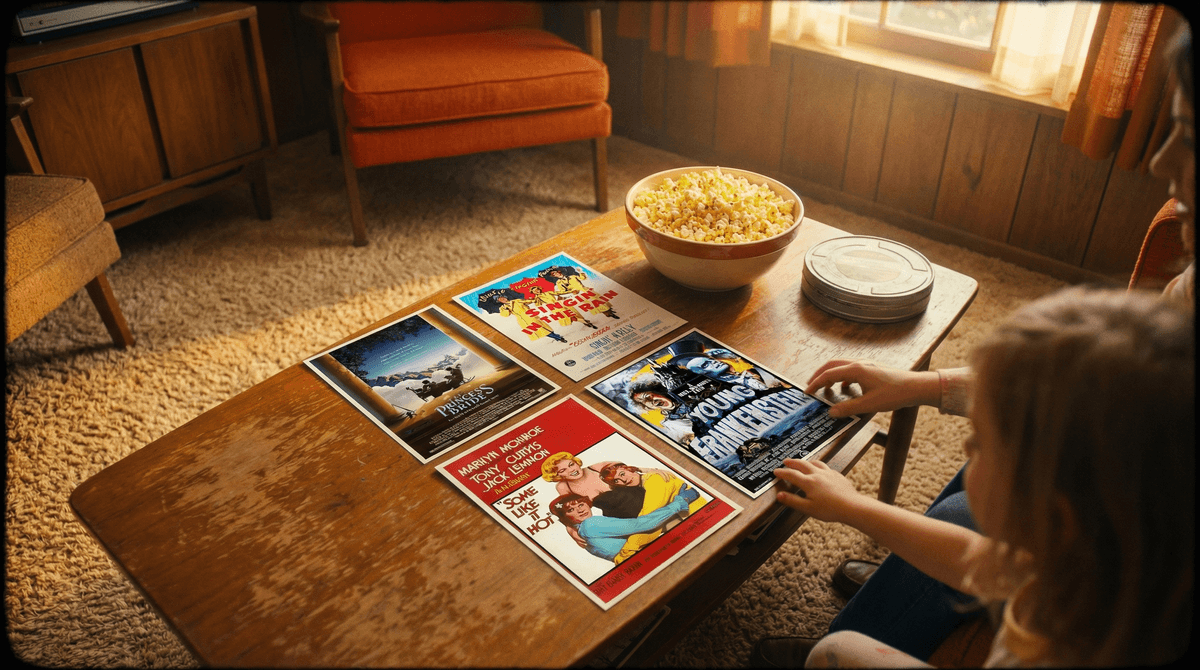
Look, we're talking about those films from the '30s through the '90s that somehow still land with kids today—the ones where your 10-year-old actually laughs at the same jokes you do, even if the special effects look like they were made with cardboard and hope. Classic comedies are the movies that proved humor doesn't need CGI explosions or toilet jokes (though some have plenty of physical comedy that's basically the same thing).
These are films that rely on timing, wit, physical comedy, and characters so memorable they've become part of our cultural vocabulary. And here's the thing: they're actually great for family movie nights because they give you something to talk about beyond "wasn't that funny when he fell down?"
The best classic comedies work because they're built on universal human experiences—embarrassment, miscommunication, people trying to be something they're not, and the chaos that ensues. Kids get it because they're living through their own versions of these situations at school every day.
Plus, there's something genuinely refreshing about watching comedy that doesn't rely on constant stimulation. These movies have pacing—they let jokes breathe, they build to moments, they trust the audience to keep up. For kids used to the rapid-fire editing of YouTube and TikTok, that can actually be a nice change of pace (even if they don't realize it at first).
And honestly? Some of these films are just funnier than what's coming out today. There, I said it.
Ages 6-9: Physical Comedy Gold
The Great Race (1965) - The pie fight scene alone is worth it. This slapstick masterpiece has Tony Curtis and Jack Lemmon in an around-the-world car race with enough visual gags to keep younger kids engaged. Yes, it's long (160 minutes), but you can break it up.
Singin' in the Rain (1952) - Don't let the "musical" label scare you off. The physical comedy is incredible, Gene Kelly's umbrella dance is iconic, and the "Make 'Em Laugh" sequence is basically a masterclass in slapstick. Plus, kids love seeing how movies were made in the old days.
Abbott and Costello Meet Frankenstein (1948) - Perfect for kids who like a little spooky with their funny. The comedy duo's timing is impeccable, and the actual Universal monsters show up, which is pretty cool.
Ages 10-13: Wit Meets Physical Comedy
Some Like It Hot (1959) - Yes, really. The premise (two musicians witness a mob hit and disguise themselves as women in an all-female band) is hilarious, and the jokes hold up. There's some mild innuendo that will sail over younger kids' heads but might spark good conversations with tweens about gender expectations and assumptions.
The Princess Bride (1987) - Okay, technically more fantasy-adventure, but it's one of the funniest movies ever made. "Inconceivable!" "As you wish!" The quotable lines, the sword fights, the absurdist humor—this is the perfect gateway to classic comedy for kids raised on Marvel movies.
Ferris Bueller's Day Off (1986) - Fourth wall breaks, wish fulfillment, and a protagonist who outsmarts every adult. Tweens love this because Ferris is who they wish they could be. Fair warning: it might inspire some creative excuses for missing school.
Airplane! (1980) - Rapid-fire jokes, visual gags, puns, and absurdist humor. Half the jokes will go over kids' heads, which means you can watch it again in a few years and they'll catch new stuff. Just be ready to explain some '70s references.
Ages 14+: The Smart Stuff
The Apartment (1960) - Billy Wilder's masterpiece balances comedy with real human emotion. It's about a guy who lends his apartment to executives for their affairs, which sounds dark, but it's handled with such wit and heart. Great for discussions about workplace ethics and standing up for what's right.
Dr. Strangelove (1964) - Stanley Kubrick's black comedy about nuclear war is absolutely hilarious and terrifying. Perfect for teens who are starting to understand political satire. Peter Sellers playing three different roles is a masterclass in comedy acting.
His Girl Friday (1940) - The dialogue moves at about 240 words per minute (seriously, they measured). It's a screwball comedy about a newspaper editor trying to win back his ex-wife/star reporter. The banter is so sharp you could cut yourself on it.
Young Frankenstein (1974) - Mel Brooks' parody of classic horror films is genuinely brilliant. Gene Wilder's performance is perfect, and the jokes work on multiple levels. Some mild innuendo, but nothing terrible.
Black and white isn't a dealbreaker. Kids might initially resist, but if the movie's funny, they forget about the color within 10 minutes. Frame it as "this is how movies looked when grandma was a kid" and move on.
Pacing is different. These movies take time to set up jokes. If your kid is used to constant stimulation, give them the first 20 minutes to adjust. If they're on their phone the whole time, maybe try a different movie or a different night.
Some references will need explanation. You might need to pause and explain who certain people were or what certain events mean. This is actually a feature, not a bug—it opens up conversations about history and culture.
Content warnings vary. Some classic comedies have dated elements—casual sexism, racial stereotypes, smoking everywhere. Use these as teaching moments. "This is how people talked in 1960, and here's why we don't anymore" is a valuable conversation.
Check ratings, but know they've changed. A PG movie from 1980 might have content that would get a PG-13 today. Common Sense Media has good breakdowns of specific content concerns for most classics.
Start with something they're already interested in. If they love The Lego Movie, try The Great Race for similar slapstick. If they're into Hamilton, Singin' in the Rain shows the evolution of entertainment.
Make it an event. Pop popcorn, turn off phones (yes, yours too), and commit to the experience. Let them know it's okay to ask questions or pause if something doesn't make sense.
Talk about it after. What jokes landed? What felt weird or old-fashioned? What surprised them? These movies are time capsules—use them to talk about how culture has changed.
Don't force it. If they're genuinely not into it after 30 minutes, try something else. Not every classic will click with every kid, and that's fine.
Classic comedies offer something rare in our current media landscape: humor that rewards attention and jokes that work across generations. They're not perfect—some have aged better than others—but the best ones are genuinely funnier and smarter than most of what's streaming right now.
Plus, there's something valuable about kids understanding cultural references beyond the last five years. When they get a Princess Bride quote or understand why someone's doing a Gene Kelly impression, they're connecting to a broader cultural conversation.
Start with one movie. See what happens. You might be surprised at what makes your kid laugh—and you might find yourself laughing at jokes you missed the first time around.
Want more movie recommendations? Check out our guides to best family movies by age or movies that are actually educational.