

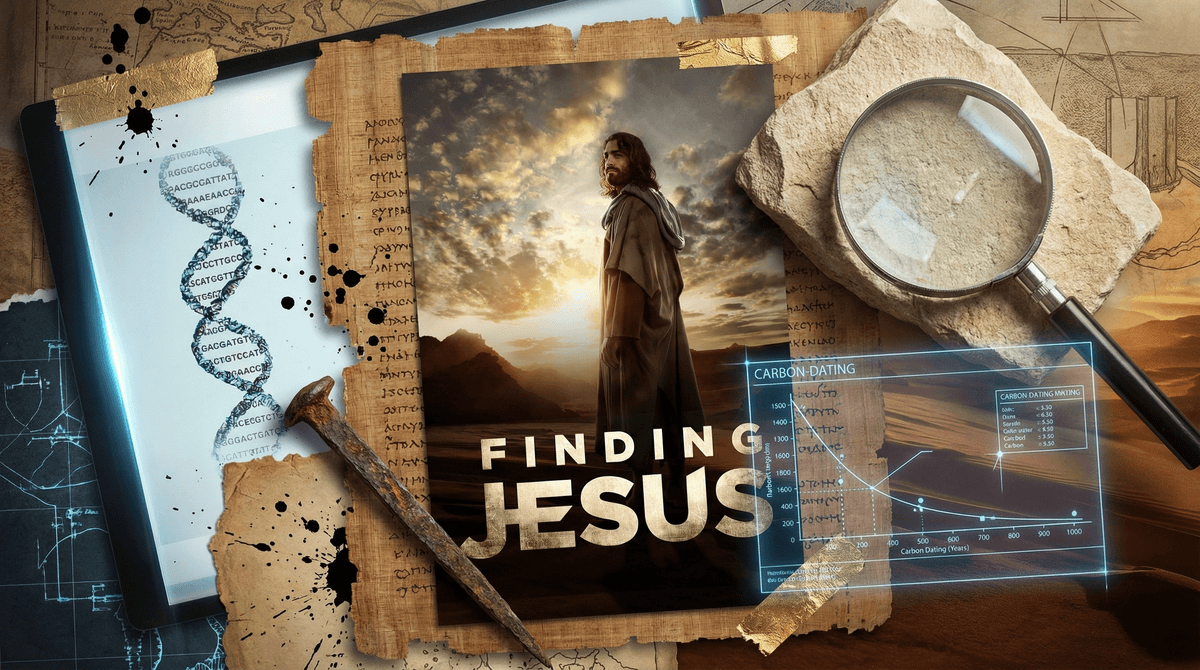
Finding Jesus: Faith, Fact, Forgery - A Parent's Guide to CNN's Archaeological Series
TL;DR: Finding Jesus: Faith, Fact, Forgery is a surprisingly watchable CNN documentary series that investigates biblical artifacts using forensic science and archaeology. It's genuinely educational, respectful to multiple viewpoints, and perfect for families navigating questions about faith, history, and critical thinking. Best for ages 10+, especially tweens and teens asking harder questions about religion and evidence.
Finding Jesus: Faith, Fact, Forgery is a six-episode CNN documentary series (with a second season) that takes a CSI-style approach to biblical archaeology. Each episode investigates a famous religious relic—the Shroud of Turin, the True Cross, John the Baptist's bones, Judas's Gospel—using carbon dating, DNA analysis, and historical detective work.
The show walks a fascinating tightrope: it's scientifically rigorous without being dismissive of faith, and it respects religious tradition without being credulous. Each episode presents evidence, interviews scholars from multiple perspectives, and lets viewers draw their own conclusions about whether these artifacts are authentic, forgeries, or something more complicated.
Think of it as the perfect middle ground between a Sunday school lesson and a history channel deep dive. It's narrated with that documentary gravitas we all know (you can practically hear the dramatic pauses), but the content is genuinely compelling.
Here's the thing about raising kids in 2026: they're growing up with access to infinite information and infinite skepticism. By middle school, most kids are encountering conflicting narratives about religion, history, and truth. They're seeing TikToks debunking myths, YouTube videos about conspiracy theories, and Reddit threads questioning everything from the moon landing to the existence of giraffes.
For families raising kids with religious faith—or just raising kids who are curious about religion—Finding Jesus offers something rare: a model for how to hold both faith and questions at the same time. It shows that investigating evidence doesn't mean abandoning belief, and that taking faith seriously doesn't mean ignoring science.
For secular families, it's an excellent introduction to the historical context of Christianity and the fascinating world of archaeology and forensic science applied to ancient artifacts.
Either way, it's a conversation starter about critical thinking, evidence, bias, and how we know what we know about the past.
The Content Is Surprisingly Balanced
The series doesn't have an agenda beyond "let's investigate these artifacts and see what we find." Some episodes conclude that relics are likely authentic (or at least very old), others reveal clear forgeries, and many land in the ambiguous middle. The show interviews both believers and skeptics, and treats both perspectives with respect.
This balance makes it useful for families across the religious spectrum. If you're raising kids in a faith tradition, the show doesn't mock or dismiss belief. If you're raising kids to think critically about claims, the show doesn't ask them to accept anything on faith alone.
It's Actually Educational
Your kids will learn about carbon dating, DNA analysis, historical linguistics, ancient manuscript preservation, and archaeological methods. They'll see how historians piece together evidence from multiple sources. They'll understand why dating ancient objects is complicated and why "proof" in history is different from proof in a lab.
The show also provides solid context about the historical Jesus, early Christianity, the Roman Empire, and the politics of the early church. For kids who've only encountered Bible stories in Sunday school or VeggieTales, this adds crucial historical grounding.
It Tackles Some Heavy Topics
Several episodes deal with violence, crucifixion, martyrdom, and persecution. The show doesn't dwell on gore, but it doesn't shy away from the brutal realities of Roman execution or early Christian persecution. This is why I'd recommend ages 10+ as a minimum—younger kids might find the content disturbing or confusing.
There's also discussion of religious conflict, forgery, and the politics of belief. One episode explores the Gospel of Judas and challenges traditional narratives about betrayal. Another investigates whether John the Baptist's bones were real, touching on beheading and political execution.
The Production Quality Is Solid
CNN put real money into this series. The reenactments are well-done (not cheesy), the graphics are clear, and the pacing keeps things moving. Each episode is about 45 minutes, which is long enough to dig deep but short enough to hold attention.
The tone is serious but not dry. It's the kind of documentary that works well as family viewing—engaging enough that everyone stays interested, substantive enough that it's worth the time.
Ages 10-12: Great for curious middle schoolers, especially those asking questions about faith or history. Watch together and be ready to pause for questions. Some kids this age might need reassurance that questioning doesn't mean abandoning faith, or that faith doesn't mean ignoring evidence.
Ages 13-15: Perfect sweet spot. Teens this age are often wrestling with bigger questions about belief, truth, and authority. The show models how to investigate claims critically while respecting different perspectives. It's also a good entry point for discussions about how we know what we know .
.
Ages 16+: Older teens can watch independently and will likely appreciate the nuance. The show's balanced approach makes it a good conversation starter about faith, science, and the complexity of historical evidence.
Co-Viewing Works Best
This isn't background TV—it's dense enough that you'll want to watch together, at least for the first episode or two. Pause when questions come up. Discuss what evidence seems convincing and what seems weak. Talk about why different experts interpret the same evidence differently.
Connect to Bigger Conversations
Use the show as a springboard for discussions about:
- Critical thinking: How do we evaluate claims? What counts as good evidence?
- Faith and doubt: Can you believe something and still question it?
- Historical methods: How do historians reconstruct the past with incomplete information?
- Bias: How do our beliefs shape what we see as convincing evidence?
Pair with Other Media
If your kids are into this kind of content, consider:
- Crash Course World History: John Green's YouTube series has excellent episodes on early Christianity and the Roman Empire
- The Story of Science: Books that explore how scientific methods developed
- Indiana Jones movies: For a much less serious take on archaeology (but honestly, still fun)
- Cosmos: For more on scientific investigation and evidence
Be Ready for Hard Questions
Watching this might prompt your kids to ask:
- "Do you believe the Shroud of Turin is real?"
- "How do we know the Bible is true?"
- "What if Jesus wasn't actually resurrected?"
- "Why do people fake religious artifacts?"
These are good questions. They're the questions thoughtful people ask. The show doesn't answer them definitively, and you don't have to either. Sometimes the best response is "That's a really good question. What do you think?" or "Different people answer that differently. Here's what I think and why..."
Finding Jesus: Faith, Fact, Forgery is that rare piece of media that respects both faith and skepticism, both tradition and evidence. It's educational without being preachy, engaging without being sensational, and balanced without being wishy-washy.
For families raising kids who ask hard questions—whether those kids are deeply religious, thoroughly secular, or somewhere in between—this series offers a model for how to investigate, think critically, and hold space for uncertainty. It shows that you can take both faith and evidence seriously, and that questioning isn't the opposite of believing.
Plus, it's just genuinely interesting. Who doesn't want to know if that bone fragment really belonged to John the Baptist, or whether the Shroud of Turin is a medieval forgery or something stranger?
Worth watching: Absolutely, especially for families with kids ages 10+
Watch together: Yes, at least initially
Conversation starter: 100%
Brain rot: Not even close
- Start with Episode 1 (The Shroud of Turin) to see if it's a good fit for your family
- Check out documentaries about archaeology and history for more in this vein
- Explore how to talk to kids about faith and doubt
- Consider other shows that model critical thinking for different age ranges
The series is available on CNN's streaming platforms and often pops up on other streaming services. It's worth tracking down, especially if you're looking for something that treats both your kids' intelligence and your family's values with respect.