

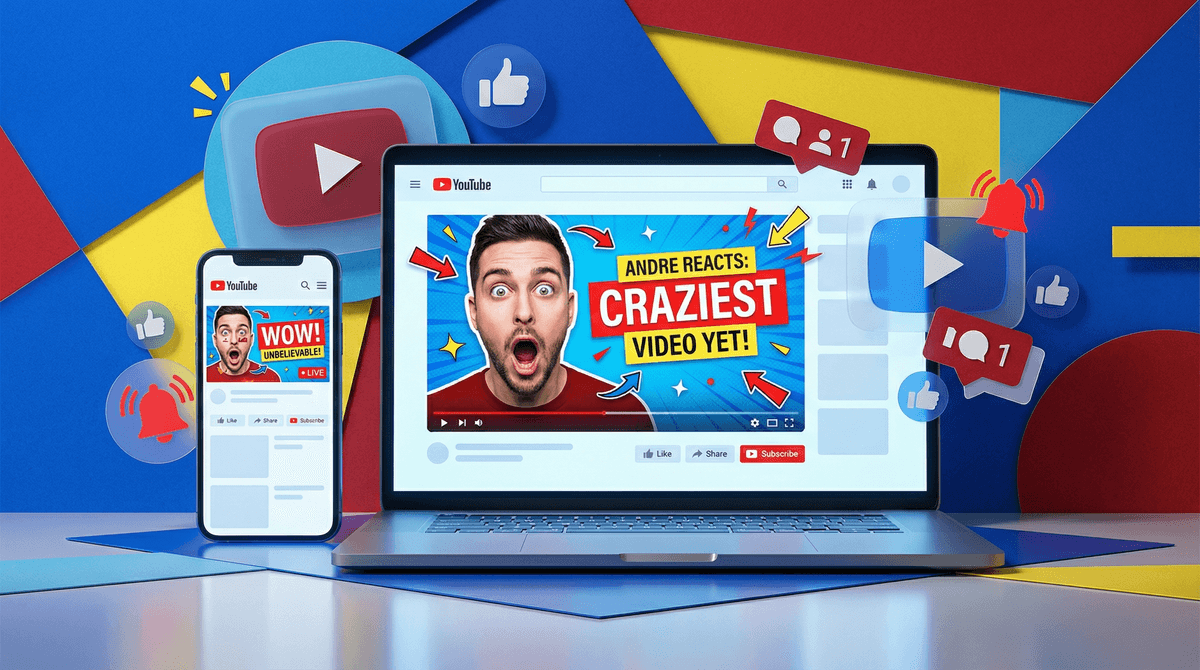
The Craziest Moments When Watching Andre: What Parents Should Know
TL;DR: Your kid is watching compilation videos of some guy named Andre having "crazy moments" and you're wondering what the hell this is. These are typically reaction/compilation channels that remix content from other creators, often featuring exaggerated reactions, clickbait titles, and sometimes questionable content mixed in. While not inherently harmful, these channels are the digital equivalent of empty calories—lots of stimulation, zero nutrition. Here's what you need to know.
"The Craziest Moments When Watching Andre" is part of a whole genre of YouTube content that's basically content about content. These are compilation videos that take clips from other creators (in this case, someone named Andre), add dramatic music, throw in some text overlays, and package it as "CRAZIEST MOMENTS" or "MOST SHOCKING REACTIONS."
Think of it like this: instead of watching a cooking show, your kid is watching a compilation of someone watching cooking shows and reacting. It's reaction content remixed into compilation content, and yes, it's as meta and weird as it sounds.
The specific "Andre" in question could be any number of creators—there are gaming channels, reaction channels, prank channels, and challenge channels all featuring people named Andre. Without more context, we're likely talking about compilation channels that aggregate "crazy" or "funny" moments from a larger creator's catalog.
It's pre-digested entertainment. Instead of watching a full 20-minute video, kids get the "best parts" in rapid-fire succession. It's like the difference between eating a meal and just having the dessert course—quick hits of dopamine without any of the boring setup.
The algorithm loves it. These compilation videos are designed to maximize watch time and engagement. They're packaged with thumbnail images of shocked faces, all-caps titles, and the promise of "YOU WON'T BELIEVE WHAT HAPPENS." Kids click, the algorithm rewards it, and suddenly your child's entire feed is compilations of compilations.
Zero barrier to entry. You don't need context, backstory, or investment. Just jump in and watch someone react to something. It's the ultimate passive viewing experience.
Social currency. If other kids are talking about "that crazy Andre moment," your kid can watch a 10-minute compilation and be caught up on weeks of content. It's efficient social media literacy, if we're being generous.
Here's where I'm not pulling punches: this content is largely garbage. Not harmful garbage necessarily, but the digital equivalent of eating Cheetos for dinner. Sure, it won't poison you, but you're not exactly thriving.
The quality control issue: Compilation channels often aggregate content without much curation. That means a video titled "Funniest Andre Moments" might include clips that range from genuinely funny to borderline inappropriate, with zero context about what's actually happening or why it matters.
The attention span concern: These videos train kids to expect constant stimulation without any narrative arc, character development, or meaningful payoff. It's like training your brain to only enjoy the chorus of songs and skip everything else.
The creativity void: Your kid isn't watching someone create something—they're watching someone watch someone else create something, all packaged by a third party. It's three degrees removed from actual creative work.
The recommendation rabbit hole: Once your kid watches one compilation video, YouTube's algorithm will serve up hundreds more. Before you know it, they've spent two hours watching "Top 10 Craziest Moments" from creators they don't even follow or care about.
Age matters here. For younger kids (under 10), these compilation channels are particularly problematic because they often mix content from creators aimed at different age groups. A compilation might include clips from a family-friendly gaming channel alongside clips from a channel that regularly features mature language or themes.
Check the source. If your kid is watching these compilations, take five minutes to figure out who "Andre" actually is and watch some of his original content. Is he a Minecraft creator making building tutorials? A reaction channel reviewing movies? A prank channel doing questionable stunts? The original creator's content will tell you a lot about whether the compilations are worth your kid's time.
Watch for the clickbait cycle. If your kid is constantly talking about "crazy" or "insane" moments but can't actually tell you anything substantive about what they watched, that's a red flag that they're stuck in the compilation content loop.
Consider the opportunity cost. Every hour spent watching compilation videos is an hour not spent watching Bluey, reading Percy Jackson, or playing Stardew Valley. It's not that compilation content is evil—it's that it's taking up space that could be filled with something actually enriching.
Instead of banning this content outright (which will likely backfire), try this approach:
Start with curiosity: "I noticed you've been watching a lot of these 'crazy moments' videos. What do you like about them?"
Acknowledge the appeal: "I get it—they're fast-paced and you don't have to commit to a whole long video. That makes sense."
Introduce the concept of media nutrition: "But here's the thing—these videos are kind of like candy. They're fine sometimes, but if that's all you're consuming, your brain doesn't get what it needs to actually grow and learn interesting things."
Set some boundaries together: "What if we made a rule that for every compilation video you watch, you also watch or do something that teaches you something new? Like if you watch 20 minutes of compilations, you also spend 20 minutes on Crash Course or Kurzgesagt or playing a game that actually challenges you?"
Offer better alternatives: This is where you need to do some work. If your kid likes reaction content, introduce them to YouTubers who actually add value with their reactions. If they like gaming content, point them toward creators who explain game design or speedrunning techniques, not just scream at the screen.
If your kid is drawn to this type of content, here are some alternatives that scratch the same itch but actually deliver something worthwhile:
For gaming content: Game Maker's Toolkit does analysis of game design that's engaging and educational. Polygon's video content often includes funny moments but with actual context and storytelling.
For reaction content: React channel (the Fine Brothers' operation) at least has some structure and often includes educational or cultural content alongside the reactions.
For fast-paced entertainment: Dude Perfect delivers high-energy content with impressive skill demonstrations. Mark Rober makes science videos that are genuinely exciting and teach real concepts.
For compilations that don't rot brains: FailArmy is essentially harmless slapstick, and Dodo compilations of animal rescues at least inspire empathy.
Ages 6-9: Honestly, these kids shouldn't be watching compilation content at all. They're too young to distinguish between appropriate and inappropriate clips, and they don't have the media literacy to understand what they're consuming. Stick with PBS Kids content or curated YouTube Kids channels.
Ages 10-12: This is when kids start seeking out this type of content. Set clear boundaries: maybe 30 minutes of "free choice" YouTube per day, with the understanding that you'll periodically check their watch history. Use YouTube's restricted mode and regularly audit their subscriptions.
Ages 13+: Teens can handle more autonomy, but that doesn't mean unlimited compilation content. Have conversations about media literacy and help them understand why these videos are designed to be addictive. Encourage them to follow actual creators they care about rather than compilation channels that aggregate everyone's content.
"The Craziest Moments When Watching Andre" and similar compilation content isn't going to ruin your kid's brain, but it's not doing them any favors either. It's the definition of passive consumption—no critical thinking required, no skills developed, no meaningful engagement.
The real danger isn't the content itself—it's the opportunity cost and the habit formation. Kids who get used to constant stimulation without substance will struggle when they need to focus on something that requires sustained attention, like reading a book or solving a complex problem.
Your job isn't to be the fun police, but to be the person who helps your kid develop a more sophisticated media diet. That means acknowledging that yes, sometimes brainless entertainment is fine, but also insisting that it can't be the only thing on the menu.
-
Watch some of these videos yourself. You can't have an informed conversation if you don't know what you're talking about.
-
Check your kid's YouTube watch history. Go to their account, click on "History," and see how much of their viewing is compilation content versus other types of videos.
-
Set up YouTube parental controls if you haven't already. At minimum, turn on restricted mode and disable autoplay.
-
Have the media nutrition conversation. Use the talking points above to help your kid understand why variety matters in their content consumption.
-
Offer alternatives. Don't just take away—replace with better options that still feel entertaining. Check out our guide to YouTube channels that are actually worth watching.
-
Model better habits yourself. If you're doom-scrolling TikTok compilations while telling your kid to watch educational content, they'll see right through that.
The goal isn't perfection—it's intentionality. Help your kid understand what they're consuming and why, and you'll be teaching them media literacy skills that will serve them long after Andre's "craziest moments" have been forgotten.