

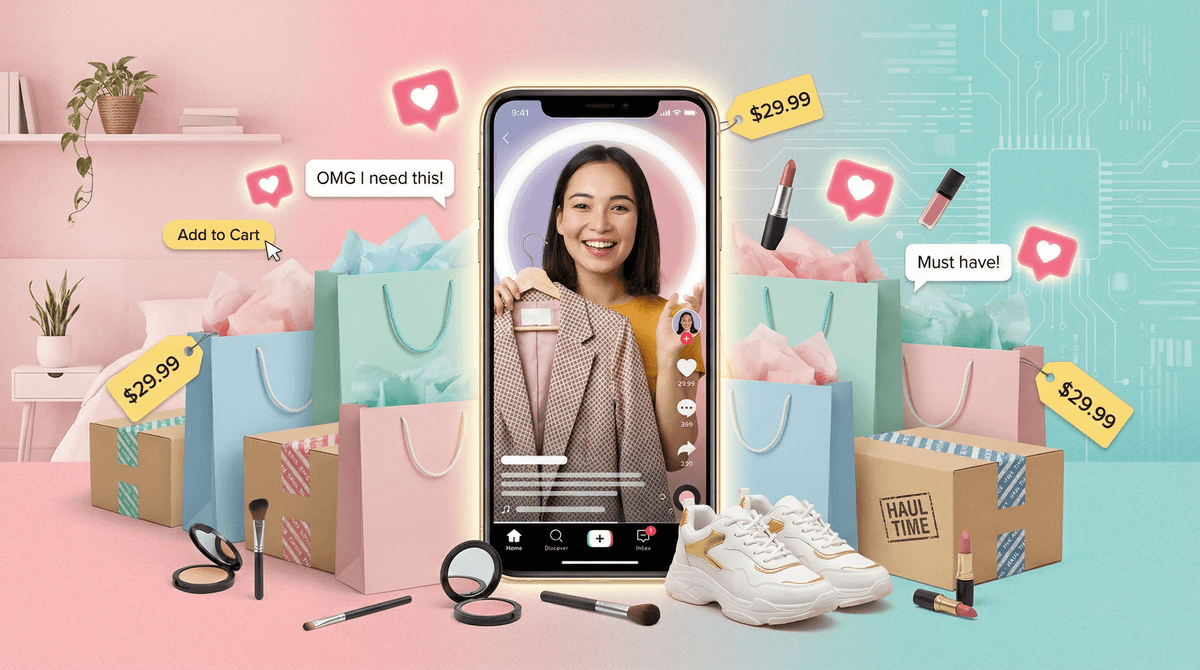
What Are Haul Videos and Why Your Teen Can't Stop Watching Them
TL;DR: Haul videos are YouTube/TikTok content where creators show off their recent shopping purchases—think massive Amazon boxes, Sephora bags, and fashion finds. Your teen is watching because these videos tap into aspiration, community, and the satisfying dopamine hit of vicarious shopping. The concern? They're essentially 15-minute commercials disguised as entertainment, and they're normalizing overconsumption and creating serious spending pressure on young viewers.
Haul videos are exactly what they sound like: someone sits down with their recent shopping "haul" and shows you everything they bought. The creator pulls items out one by one, talks about why they bought each thing, tries on clothes, tests makeup, or unboxes tech—all while maintaining an upbeat, friend-telling-you-about-their-day vibe.
They started on YouTube in the late 2000s (fashion and beauty hauls were the OG genre), but they've exploded on TikTok and Instagram in recent years. Now they cover everything: clothing, makeup, home decor, books, stationery, snacks from Target, Amazon finds, Shein mega-orders, you name it.
The format has evolved too. Some are aspirational luxury hauls (think designer bags and $200 skincare). Others are "relatable" hauls from affordable stores. There are thrift hauls, back-to-school hauls, seasonal hauls, and the particularly wild genre of "PR hauls" where influencers show off free products brands sent them.
It's aspirational window shopping without leaving the couch. Your teen gets to experience the thrill of shopping—the anticipation, the reveal, the "ooh that's cute"—without spending money or even leaving their room. It's like flipping through a catalog, but with personality and parasocial relationships built in.
The creators feel like friends. The best haul creators have mastered the art of feeling like your teen's cool older sister or fun aunt. They're chatty, they share opinions, they admit when something didn't work out. It creates a sense of intimacy and trust that makes the content feel less like advertising and more like hanging out.
There's a satisfying, almost ASMR quality to it. The unboxing, the crinkling of tissue paper, the reveal of new items, the try-on montages set to trending music—it's all very satisfying to watch. It hits the same pleasure centers as unboxing videos and organization content.
It's educational (sort of). Teens genuinely use haul videos as research before buying things themselves. They want to see how that viral Amazon dress looks on a real person, whether that mascara actually works, if those jeans are worth the hype. It's crowdsourced product testing.
FOMO is real. When everyone's watching the same haul creators and talking about the same products, not having those items can feel isolating. The comment sections are full of "I need this!" and "adding to cart!" and it creates a sense that everyone else is buying these things.
Here's where we need to be clear-eyed: haul videos are marketing. Even when creators aren't being paid directly (though many are), they're still promoting consumption and specific products. And unlike traditional commercials, there's no clear boundary between entertainment and advertisement.
The spending pressure is intense. When your teen watches their favorite creator haul $500 worth of clothes from Zara, or show off a massive Sephora order, it normalizes that level of spending. The message becomes: this is what people do, this is normal, this is how much stuff you should have.
Fast fashion is the backbone of most hauls. Shein, Temu, AliExpress, Fashion Nova—these ultra-cheap, ultra-fast fashion brands are haul video staples. Creators order 50+ items at once because they're cheap enough to be disposable. The environmental and ethical implications are massive, but they're rarely discussed in the videos.
Affiliate links = financial incentive. Most haul creators include affiliate links in their video descriptions. When viewers click through and buy, the creator gets a commission. This isn't inherently bad, but it means creators have a financial incentive to make you want to buy things, which colors the "honesty" of their reviews.
The "PR haul" problem. When influencers show off boxes of free products sent by brands, it creates a skewed reality where stuff just appears magically. Your teen doesn't see the transactional relationship; they just see their favorite person getting cool free things and think "I want that too."
Ages 8-11: Kids this age are starting to discover YouTube and may stumble onto haul videos, especially toy hauls or craft supply hauls. The concern here is less about spending pressure (they're not shopping independently yet) and more about normalizing materialism and creating "I want" culture. If they're watching, watch with them and talk about how the videos are made to make people want to buy things.
Ages 12-14: This is when haul videos really start to land. Middle schoolers are developing their own style, becoming aware of brands, and feeling peer pressure around stuff. They're also starting to have some spending money (allowance, gift cards, maybe babysitting income). The risk is they'll start requesting specific items or feeling bad about what they don't have. Talk about advertising literacy and set clear boundaries around spending.
Ages 15-18: Teens this age may have part-time jobs and more financial independence, which makes the spending pressure even more real. They're also more likely to actually make purchases based on haul videos. The conversations here need to be about budgeting, understanding fast fashion, recognizing marketing tactics, and thinking critically about consumption. Some teens also start creating their own haul content, which opens up a whole other conversation about being an influencer.
- Constant requests for new stuff: If your teen is suddenly asking for specific products they saw in videos, or feeling like they "need" things they never mentioned before
- Comparing their stuff to creators' stuff: "Why don't I have as many clothes as [creator]?" or feeling bad about their wardrobe/room/belongings
- Impulse buying: Making purchases immediately after watching haul videos without thinking it through
- Spending their own money impulsively: If they have a debit card or access to money, watch for patterns of buying things featured in hauls
- Creating haul content themselves: Not inherently bad, but worth discussing the implications of promoting products and consumption to their peers
Not all haul videos are created equal. There's a big difference between a creator who does thoughtful, occasional hauls with sustainable brands and talks about cost-per-wear, versus someone doing weekly fast fashion mega-hauls. If your teen is going to watch this content, help them find creators who are at least somewhat conscious about consumption.
The algorithm feeds the obsession. Once your teen watches one haul video, the algorithm will serve up dozens more. TikTok and YouTube want to keep them watching, so they'll keep recommending similar content. This can create a bubble where overconsumption feels totally normal.
They're learning about money—just maybe not the lessons you want. Haul videos do teach teens about products, prices, and shopping. But they're not teaching budgeting, delayed gratification, or thoughtful purchasing. Those lessons have to come from you.
Some creators are more transparent than others. Look for creators who clearly disclose sponsorships, talk honestly about what didn't work, and discuss the actual cost of their hauls (not just "it was so cheap!"). Those are slightly better role models in this space.
Watch together (at least once). Ask your teen to show you their favorite haul creators. Watch a video or two with them. Ask questions: "Why do you like this person?" "Do you want to buy any of this stuff?" "How do you think they afford all this?" Don't come in with judgment—come in curious.
Talk about the business model. Explain how affiliate links work, what sponsorships are, why brands send free products to influencers. Help them see the financial incentives behind the content. This isn't about making them cynical; it's about media literacy.
Discuss values around stuff. What does your family believe about consumption, sustainability, and materialism? This is a great opportunity to talk about those values explicitly. You don't have to be anti-consumption, but you can talk about thoughtful consumption versus mindless accumulation.
Set spending boundaries. If your teen has spending money, help them create a budget. Maybe they get to buy one thing from their wishlist per month, or they need to save for two weeks before making a purchase. Whatever works for your family, make it clear and consistent.
Introduce alternatives. If they love the satisfaction of watching haul videos, can you redirect that energy? Maybe they'd enjoy organizing videos, thrift flips, or content about sustainable fashion. There's still the visual satisfaction without the consumption pressure.
Acknowledge the FOMO. Don't dismiss their feelings if they're feeling left out or inadequate because they don't have the stuff they see in videos. Those feelings are real. But help them recognize where those feelings come from (marketing designed to make them feel that way) and develop resilience against them.
If your teen loves haul videos, here are some adjacent content types that might scratch the same itch with less problematic messaging:
- Thrift hauls and secondhand shopping videos: Still the satisfaction of seeing new-to-them items, but with a sustainability angle
- "Shop my closet" or capsule wardrobe content: Creators showing how to style items they already own in new ways
- Book hauls: Generally less problematic since books are meant to be kept and reread (though BookTok has its own overconsumption issues)
- Craft supply hauls with project follow-through: If they're actually going to use the supplies, it's more purposeful
- Budget-focused content: Creators who do challenges like "$50 outfit challenge" or "styling affordable finds"
Haul videos aren't going anywhere. They're too satisfying to watch, too effective at driving sales, and too embedded in teen culture to disappear. Your job isn't to ban them entirely (though you certainly can set limits on screen time and shopping content if that's your call). Your job is to help your teen develop the critical thinking skills to watch them without being manipulated by them.
The goal is raising a kid who can watch a haul video and think "that's cute" without immediately adding it to cart. Who can enjoy the content for what it is—entertainment and aspiration—without letting it dictate their self-worth or their spending. Who understands that the creator is running a business, not just sharing their life out of the goodness of their heart.
This is part of the larger project of raising financially literate kids who can navigate a world designed to make them spend money at every turn. Haul videos are just one piece of that puzzle, but they're a particularly seductive one.
- Ask your teen about their favorite creators and actually watch some content together
- Check their recent purchases (if they have spending money) and look for patterns related to videos they're watching
- Have the "this is advertising" conversation sooner rather than later
- Set clear family boundaries around spending, screen time for shopping content, or whatever feels right for your family
- Model thoughtful consumption yourself—they're watching how you shop and spend too
And if you want to dig deeper into related topics, check out our guides on fast fashion and teens, social media and self-esteem, or teaching financial literacy.