

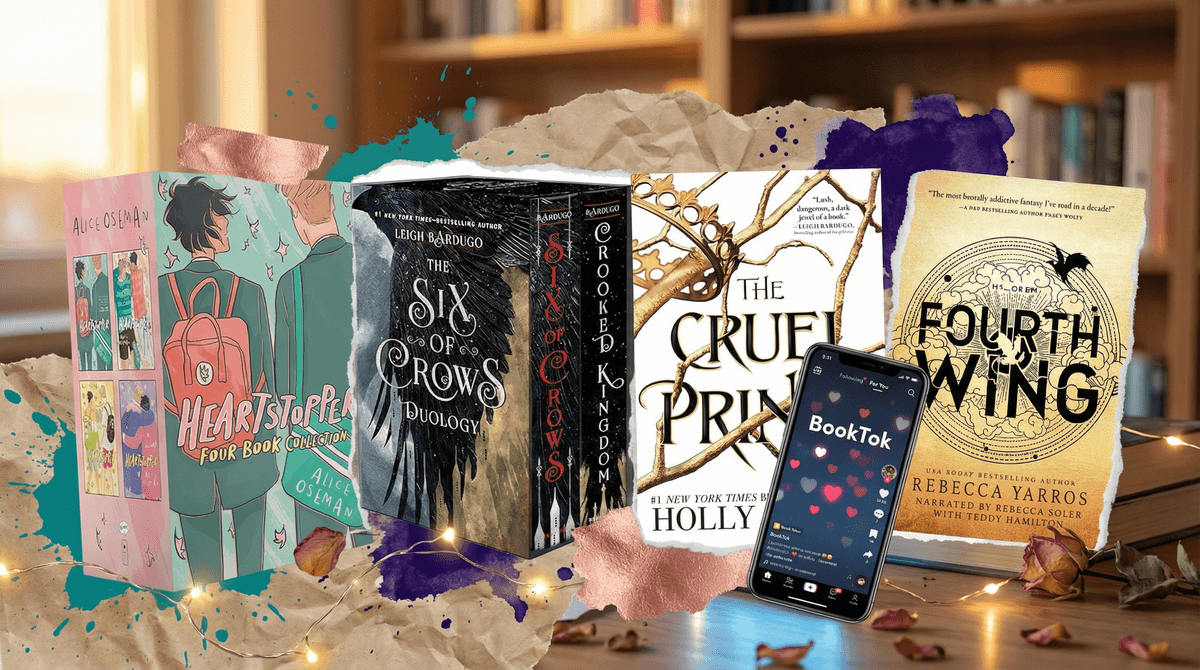
BookTok: A Parent's Guide to the Viral Reading Revolution
Hey there, fellow parent. If you've overheard your tween dramatically sighing about a 'slow-burn romance' or your teen obsessively scrolling for the next 'enemies-to-lovers' rec, welcome to the world of BookTok. As a 30-something mom who's juggled screen time battles while trying to get my own kids to crack open a book, I get it—this stuff can feel like another digital whirlwind. But here's the good news: BookTok isn't just mindless scrolling; it's a genuine spark for literacy in a screen-saturated world. In this guide, we'll break it down without the judgment, so you can chat about it with your kids like that cool pickup-line friend at school.
We'll cover what it is, why it's blowing up, the upsides and watch-outs, and practical ways to weave it into your family's reading routine. Let's dive in.
BookTok is basically TikTok's cozy corner for book lovers. It's not a separate app—it's a community within TikTok, fueled by the hashtag #BookTok, which has racked up over 100 billion views as of 2024 (yep, billion with a B). Started around 2020 during the pandemic lockdowns, it exploded as people sought escapist vibes from home. Fast-forward to now, and it's a vibrant ecosystem where users—mostly teens and young adults, but increasingly kids as young as 10—share quick, creative videos about books.
Think fairy lights, aesthetic shelves, and passionate rants or squeals over plot twists. Content ranges from book reviews (like a 15-second breakdown of why The Cruel Prince is a must-read) to reading vlogs (someone cozying up with a hot cocoa and a thriller), character edits set to trending music (imagine brooding vampires dancing to Olivia Rodrigo), and even DIY crafts inspired by book worlds. It's all bite-sized, visually addictive, and super shareable.
For context, TikTok itself is used by about 60% of U.S. kids ages 10-19, according to recent Common Sense Media reports. And within that, BookTok has democratized reading recommendations. No more relying solely on school lists or bestseller aisles; kids discover hidden gems through peers. Popular genres? Young adult (YA) fantasy, romance, horror, and contemporary stories tackling mental health, identity, and diversity. Books like A Court of Thorns and Roses (ACOTAR) or Heartstopper have seen sales skyrocket—Heartstopper alone jumped from niche graphic novel to Netflix sensation partly thanks to BookTok buzz.
But it's not all highbrow lit. You'll find memes about 'book hangovers' (that post-binge slump) or debates on whether audiobooks 'count' as reading. It's raw, relatable, and feels like eavesdropping on a global sleepover.
A Quick History and Evolution
BookTok kicked off with creators like @booksnbaebies (a romance superfan) posting unfiltered reviews. By 2022, publishers were scrambling—sales of YA books rose 45% year-over-year, per Nielsen BookScan data, crediting social media. Now in 2026, it's matured with more diverse voices: BIPOC creators hyping #OwnVoices stories, LGBTQ+ book clubs, and even anti-colonial lit discussions. But trends shift fast—right now, 'romantasy' (romance + fantasy) is huge, thanks to viral series like Fourth Wing.
If your kid's into it, they might say things like 'This book's giving major Ohio vibes' (weird but intriguing) or beg for a Kindle to join the 'TBR' (to-be-read) pile. It's slang-heavy, but that's the fun part—decoding it together builds bonds.
Let's be real: in a world of Fortnite lobbies and Roblox tycoons, getting kids excited about reading feels like a win. BookTok flips the script on 'boring books' by making literature feel like pop culture. Why the obsession?
First, it's social and visual. Kids aren't just reading alone; they're part of a tribe. A 2023 Pew Research survey found that 70% of teens discover hobbies via social media, and BookTok turns solitary reading into a shared adventure. Your 12-year-old might duet a video recommending The Summer I Turned Pretty, sparking a friend group chat about crushes and beach reads.
Second, accessibility. Videos are short—under 60 seconds—so it's low-commitment entry. This hooks reluctant readers. Studies from the National Literacy Trust show UK teens influenced by BookTok read 14% more than non-users. In the U.S., similar trends: a Scholastic report notes 55% of kids ages 6-12 say social media helps them find books, up from pre-pandemic levels.
Third, emotional resonance. BookTok thrives on feels—videos capture the heart-flutter of a first kiss or the chills of a ghost story. For ages 13-17, when identity exploration peaks, it's a safe space to process big emotions through fiction. And diversity? Huge. Creators spotlight books with queer reps like Cemetery Boys or neurodiverse leads in A Kind of Spark, mirroring kids' real lives.
But why does this matter for us parents? Reading builds empathy, vocab, and focus—key for academic success and mental health. The American Academy of Pediatrics links regular reading to better sleep and lower anxiety. Yet, screen time is a double-edged sword: while BookTok promotes books, it's still TikTok, with its endless scroll. A 2024 CDC report flags that average daily screen time for 12-15-year-olds hits 8.5 hours, so channeling it toward positive content like this could be a game-changer.
Humorously, it's absurd how a platform known for dances now sells more books than some bookstores. But hey, if it gets my kid off YouTube pranks and into Six of Crows, I'm here for it.
BookTok sounds dreamy, but TikTok's 13+ age gate means younger kids often sneak peeks via family accounts or web versions. Here's how to tailor it by age, drawing from child development experts like those at the APA.
Ages 8-12: Dipping a Toe In
At this stage, curiosity rules, but attention spans are short. BookTok can introduce fun, simple reads like graphic novels (Dog Man series) or middle-grade adventures (Percy Jackson). Benefits: Builds pre-teen reading habits without overwhelm.
Safety Watch-Outs: Content can veer mature—spoilers for romance tropes or mild horror. Plus, TikTok's algorithm pushes viral stuff, so a kid search for 'kid books' might lead to YA drama. Privacy risks: No direct messaging for under-13s officially, but shared devices mean accidental shares.
Actionable Tips: Co-view with them. Use TikTok's 'Restricted Mode' to filter mature content. Set device limits via Screen Time (iOS) or Family Link (Android)—aim for 30-45 minutes daily. Recommend kid-friendly creators like @abookolive for whimsical reviews.
Ages 13-15: Full Immersion with Guardrails
Teens here crave independence, and BookTok feeds that with peer recs on identity-themed books (The Hate U Give). It's great for empathy-building; a 2023 study in Journal of Adolescent Health links diverse reading to reduced bias.
Concerns: Mature themes—sex, violence, mental health triggers in books like Thirteen Reasons Why. Consumerism: Videos often link to Amazon hauls, pressuring buys. Cyberbullying in comments or FOMO from 'everyone's reading this' trends. Data from NetSafe shows 25% of 13-15-year-olds encounter harmful content on short-video apps.
Guidance: Discuss ratings—use Common Sense Media for book + app reviews. Monitor via shared accounts, but foster trust: 'What book are you hyped for?' Enable privacy settings: Private accounts, no location sharing. Balance with offline reading challenges, like a family book club.
Ages 16+: Deeper Dives and Autonomy
Older teens treat BookTok like a cultural hub, debating lit theory or fan theories. It supports college-prep skills like critical analysis.
Risks: Deeper dives into adult content (e.g., spicy romance). Addiction potential—TikTok's dopamine hits can cut into study time. A 2024 WHO report notes social media links to sleep issues in 16+.
Tips: Encourage curation—follow trusted lists from librarians. Talk algorithms: 'Why do you think this video popped up?' Promote apps like Goodreads for tracking without endless scrolling.
Overall, no one-size-fits-all. If co-parenting, align on rules; cultural differences might mean varying comfort with romance themes. Sibling dynamics? Older kids influencing younger ones is common—use it to model healthy habits.
Beyond basics, know the ecosystem. BookTok influences publishing—indie authors go viral, leading to more inclusive stories. But it's commercial: Influencers get free ARCs (advance copies), blurring ads and recs. FTC guidelines require #ad disclosures, but kids miss them.
Stats to ground you: 40% of Gen Z credit TikTok for reading boosts (Barnes & Noble survey). Yet, only 30% of parents discuss social media's role in hobbies (Pew). That's where you come in.
Conversation Starters: Keep it casual, like texting a friend.
- 'Saw you watching BookTok—what's the hype about Divine Rivals?'
- 'That video made me laugh—does it spoil the ending?'
- 'How does scrolling for books feel different from other apps?'
Address concerns gently: 'I love that you're finding new stories, but let's chat about books with heavy stuff.' Share your reads to normalize—'I just finished a thriller; want to swap recs?'
For reluctant readers, tie it to interests: Gaming kid? Suggest Ready Player One. Sports fan? The Crossover. It's about connection, not control.
Parenting philosophies vary—free-range folks might let it run wild, while structured ones set 'reading sprints' (20 mins device-free post-TikTok). No judgment; find your groove. If screens strain family time, try 'tech-free dinners'—research shows it boosts bonds.
Humor helps: 'BookTok's turning me into a YA expert—next, I'll be shipping fictional couples!'
BookTok is a net positive: It's reigniting reading in kids who might otherwise doom-scroll memes. In a digital age where literacy rates hover at 79% for U.S. 8th graders (NAEP data), anything boosting engagement matters. Sure, there are pitfalls—mature content, time sinks, consumerism—but with guidance, it fosters creativity, community, and critical thinking.
It's not brain rot; it's a bridge from screens to stories. Embrace the absurdity (who knew thirst traps for fictional pirates would sell books?), but stay vigilant. Your kid's not 'behind' if they're into it— they're navigating culture like pros.
-
Explore Together: Download TikTok (or use web) and search #BookTokWithParents. Follow 5-10 creators for a feel.
-
Set Boundaries: Use built-in tools—daily limits, content filters. Track via apps like Qustodio for peace of mind.
-
Build Habits: Start a home library or join Libby (free ebooks via libraries). Challenge: Read one BookTok rec monthly.
-
Seek Resources: Check Brightly.com for kid-lit lists or the ALA's BookTok guide. For deeper dives, Irreversible Damage by Abigail Shrier discusses YA trends (with a critical eye).
-
Chat Openly: Schedule weekly 'digital debriefs'—what's cool, what's not. If concerns arise (e.g., anxiety from FOMO), consult a pediatrician.
Parenting digital worlds is messy, but you're doing great. If BookTok lights a reading fire, fan it. Questions? DM me like we're swapping playground gossip.
(Word count: 1,728)