

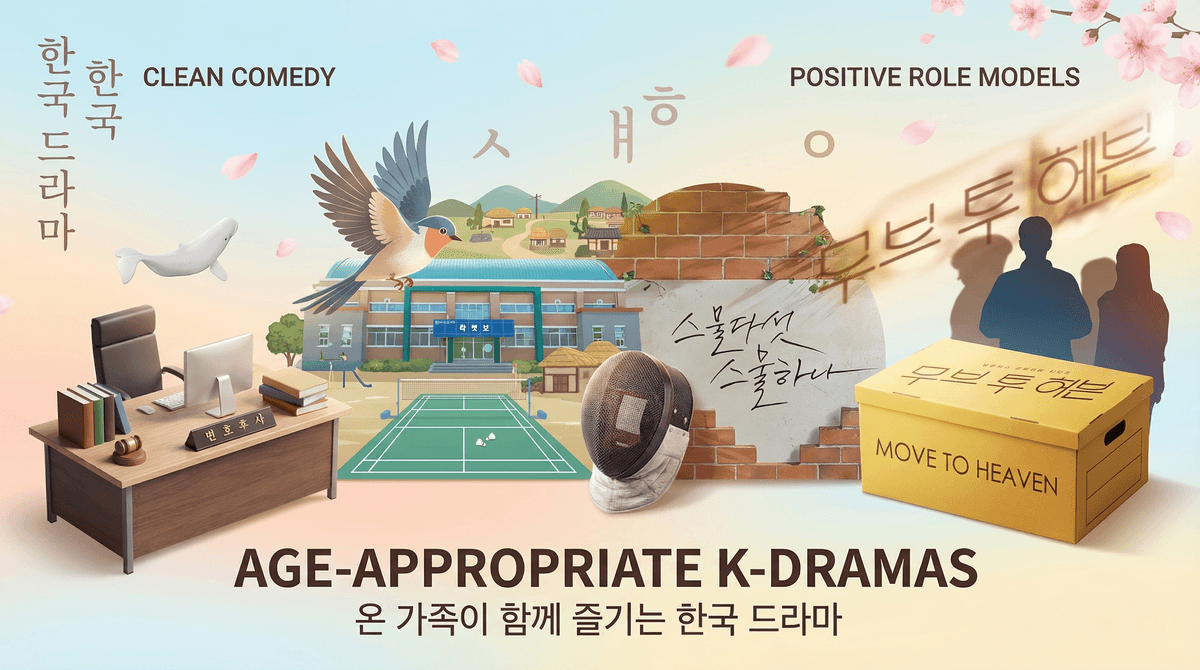
The Best K-Dramas for 11-12 Year Olds: Clean Comedy, School Life & Positive Role Models
Korean dramas have exploded in popularity with tweens, but most K-dramas are made for adults. The good news? There's a growing collection of genuinely age-appropriate shows that capture what makes K-dramas special—compelling characters, emotional storytelling, beautiful production—without the romance-heavy plots or mature themes. Here are the best picks:
Top Picks:
- Extraordinary Attorney Woo - Heartwarming legal drama with an autistic protagonist
- Racket Boys - Sports underdog story set in a rural badminton team
- Move to Heaven - Emotional but appropriate story about trauma cleaners
- Twenty-Five Twenty-One - Coming-of-age fencing drama (with some mature themes to discuss)
Screenwise Parents
See allIf your 11-12 year old is suddenly obsessed with Korean shows, you're not alone. K-dramas offer something that a lot of Western content doesn't: emotional depth without cynicism. Characters cry, apologize, work through feelings, and show vulnerability in ways that American shows often mock or avoid.
For tweens navigating middle school social dynamics, watching characters model emotional intelligence is genuinely valuable. Plus, K-dramas tend to have clear narrative arcs (most are 16 episodes and done), satisfying endings, and production quality that makes everything feel cinematic.
The challenge? Most popular K-dramas are made for adults. The shows dominating Netflix's top 10—Squid Game, The Glory, Sweet Home—are absolutely not appropriate for this age group. They're violent, dark, and deal with heavy adult themes.
But there ARE genuinely great options that work for 11-12 year olds. Let's break them down.
This is the golden standard for tween-appropriate K-dramas. The show follows Woo Young-woo, a brilliant attorney with autism, as she navigates her first job at a law firm. Each episode features a new case, and the show handles disability representation with genuine care and nuance.
Why it works for 11-12 year olds:
- The protagonist is in her 20s but the show feels emotionally appropriate
- Cases involve ethical dilemmas that spark great conversations (environmental issues, corporate corruption, family conflicts)
- Romance is present but sweet and secondary to the story
- Celebrates being different and standing up for what's right
- The whale animations and visual storytelling are genuinely charming
Parent note: There's one episode involving a case about adult content that you might want to preview or skip (Episode 7). Otherwise, this is remarkably clean.
If your kid loved Cobra Kai or sports underdog stories, this is the K-drama equivalent—but way more wholesome. It follows a middle school badminton team in a rural village as they work to become competitive.
Why it works:
- Protagonists are actually middle schoolers, so it's directly relatable
- Classic sports story structure: practice, setbacks, growth, teamwork
- Intergenerational relationships between kids, parents, and grandparents
- Beautiful cinematography of rural Korea
- Minimal romance, maximum heart
The catch: It's a bit slower-paced than American shows. If your kid needs constant action, this might not hook them. But if they can handle Bluey-level emotional storytelling, they'll love it.
This one requires a bit more emotional maturity, but for the right 11-12 year old, it's incredibly powerful. The show follows a young man with Asperger's and his ex-con uncle who run a trauma cleaning service—they clean up after people die and try to honor their stories.
Why it works:
- Each episode is essentially a self-contained story about a person's life
- Deals with death and grief in a thoughtful, age-appropriate way
- Strong themes about empathy, second chances, and seeing people's humanity
- The relationship between the two main characters is beautifully developed
- Only 10 episodes, so it's not a huge commitment
Parent heads-up: This show will make your kid cry. It's sad but cathartic. If they're ready for conversations about death, loss, and how we honor people's lives, this is exceptional. If they're still anxious about these topics, save it for 13+.
This coming-of-age drama set during the 1998 Asian financial crisis follows a high school fencer and her relationships during a turbulent time. It's beautifully made and emotionally resonant, but there are some things to know.
The good:
- Strong female protagonist who's driven and passionate about her sport
- Historical context about Korean economic history
- Themes about pursuing dreams despite obstacles
- The friendship dynamics are really well done
The caveats:
- The romance is more central than the other shows listed
- Some mature themes around economic hardship and family stress
- The ending is bittersweet (not a typical happy ending), which might frustrate younger viewers
- Better for mature 12-year-olds than young 11-year-olds
Part of the long-running "School" series, this one focuses on students at an arts high school and deals with academic pressure, friendship, and finding your path.
The good:
- Actually features high school students as protagonists
- Addresses real issues Korean teens face (academic pressure, bullying, family expectations)
- Diverse friend group with different dreams and challenges
The caveats:
- Some bullying storylines that might be intense
- Academic pressure themes could be triggering for anxious kids
- Romance subplots are more prominent
- Better for kids who can handle Never Have I Ever than those who are still watching The Baby-Sitters Club
Let's address the K-dramas your kid has probably heard about:
Squid Game: Absolutely not. It's rated TV-MA for extremely good reasons. Graphic violence, disturbing themes, not appropriate for tweens despite the playground game aesthetic.
Business Proposal: This is a rom-com that's relatively clean, but it's really made for adults. The entire plot revolves around workplace romance and fake dating. Fine for 14+, but too romance-focused for most 11-12 year olds.
Alchemy of Souls: Fantasy action series that's visually stunning but has mature themes, violence, and complex romantic entanglements. Save it for high school.
Hometown Cha-Cha-Cha: Sweet romantic comedy about a dentist who moves to a seaside village. It's wholesome but entirely about adult romance. Better for you than for your tween.
For 11-year-olds: Stick with Extraordinary Attorney Woo and Racket Boys. These have protagonists they can look up to without content that's over their heads.
For mature 12-year-olds: Add Move to Heaven and Twenty-Five Twenty-One if they're ready for more emotional depth and complex themes.
Co-watching recommendation: K-dramas are actually great for co-watching with tweens. The episodes are longer (60-70 minutes typically), so you can make it a weekend thing. Plus, the cultural differences often spark interesting conversations about how different societies handle emotions, relationships, education, and family dynamics.
The subtitle situation: Most K-dramas require reading subtitles unless you speak Korean. This is actually a feature, not a bug—it keeps kids more engaged and less likely to be scrolling on their phones. But if your kid struggles with reading or has learning differences that make subtitle-reading challenging, this might be frustrating.
Cultural context matters: K-dramas reflect Korean cultural values around respect for elders, academic achievement, family obligation, and emotional expression. These differences can lead to great conversations. Why do characters bow to each other? Why is age hierarchy such a big deal? Why do people take their shoes off indoors? Learn more about Korean cultural context in media .
.
The romance question: Even in the cleaner K-dramas, romance is often present. Korean shows tend to handle romance more conservatively than American content—less physical intimacy, more emotional connection—but it's still there. If you're trying to avoid romance entirely, Racket Boys is your best bet.
Episode length: K-drama episodes are typically 60-70 minutes, much longer than American shows. This means they're more of a commitment. The upside? Most series are 16 episodes and done, with complete story arcs and satisfying endings. No cliffhangers waiting for season 2.
K-dramas can be genuinely wonderful for 11-12 year olds—if you choose carefully. The shows on this list offer compelling storytelling, emotional intelligence, positive role models, and cultural enrichment without the mature content that dominates most popular K-dramas.
Start with Extraordinary Attorney Woo if you want something universally appropriate and engaging. Add Racket Boys if your kid loves sports stories. Consider Move to Heaven if they're ready for deeper emotional content.
And honestly? These shows are good enough that you might find yourself more invested than your kid. That's the magic of well-made K-dramas—they work on multiple levels and respect their audience's emotional intelligence.
Just please, for the love of all that is holy, keep them away from Squid Game until they're at least 16. I don't care how many of their friends have seen it.
Want to explore more age-appropriate international content? Check out our guides on anime for tweens and international shows on Netflix.
Curious about what else kids this age are watching? Our community data on screen time and media habits for 11-12 year olds can help you understand what's typical.
Need help setting boundaries around binge-watching? We've got you covered with strategies for managing streaming habits with tweens.