

Look, we've all been there. It's a rainy Saturday, you need 90 minutes of peace, and you're scrolling through streaming services wondering which animal movie won't make you want to claw your eyes out by the third viewing (because let's be real, there will be a third viewing).
The good news? There are genuinely excellent children's movies centered on animals that don't just entertain—they actually spark meaningful conversations about empathy, responsibility, loss, and what it means to care for another living being. The not-so-good news? There are also approximately 47 talking dog movies that are basically the same plot with different breeds.
This guide cuts through the noise to highlight animal-centered films that actually hold up, organized by what they do well and what age ranges they work for.
There's something about animal protagonists that gets through to kids in ways human characters sometimes can't. A dog's loyalty, a lion's courage, a pig's determination—these stories let kids explore big emotions and moral questions through characters that feel both safe and relatable.
Plus, and this is the practical part: animal movies often lead to the best post-movie conversations. "Would you save Charlotte if you were Wilbur?" hits different than "what did you think of the CGI?" It's a natural entry point for talking about friendship, death, environmental responsibility, and how we treat creatures who depend on us.
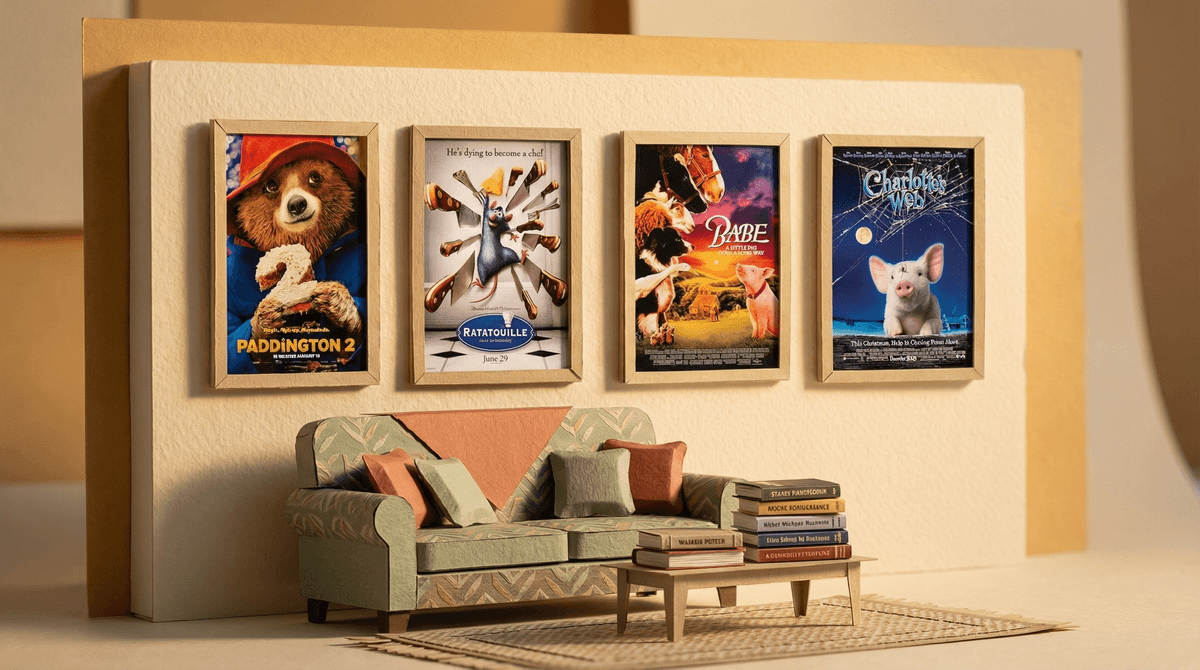
Charlotte's Web (2006) — Ages 5+
Yes, the 2006 version with Dakota Fanning. This one doesn't shy away from death, which is exactly why it's valuable. Charlotte dies. It's sad. Kids need to sit with that sadness. The movie handles it beautifully, showing that love and friendship matter even when they end. Fair warning: you will cry. Your kids might cry. That's the point.
Babe (1995) — Ages 4+
"That'll do, pig" is still one of the most emotionally devastating lines in cinema. This movie about a pig who wants to be a sheepdog is genuinely funny, surprisingly subversive (it's basically about breaking gender roles and species expectations), and the practical effects hold up way better than you'd expect. Also, it will definitely make your kids ask why we eat some animals and not others. Be ready for that conversation.
The Lion King (1994) — Ages 5+
You know this one. Circle of life, dead dad, evil uncle, return of the king. It's Shakespeare with lions. The 2019 remake looks incredible but somehow has less emotional impact—the original's stylized animation actually makes the emotions hit harder. Also, Mufasa's death scene is still traumatic for adults, so maybe prep younger kids or be ready to hit pause for processing.
Paddington (2014) and Paddington 2 (2017) — Ages 4+
These movies are shockingly good. Like, "adults will genuinely enjoy them" good. They're about kindness, belonging, and what it means to be a refugee (yes, really—Paddington is literally an immigrant). The second one is somehow even better than the first. Hugh Grant is delightfully villainous. Zero notes. Watch them both.
Zootopia (2016) — Ages 6+
This is basically a movie about systemic prejudice and implicit bias wrapped in a buddy-cop comedy with anthropomorphic animals. It's clever enough for adults (the DMV sloth scene is chef's kiss) and works on multiple levels for kids. Great conversation starter about stereotypes, assumptions, and how we treat people (or animals) who are different from us.
Ratatouille (2007) — Ages 6+
A rat who wants to be a chef. It shouldn't work but it absolutely does. This is Pixar at its peak—gorgeous animation, sophisticated humor, and a surprisingly deep message about artistry, criticism, and following your passion even when everyone says you can't. Also, it will make your kids interested in cooking, which is either a blessing or a curse depending on your kitchen tolerance.
Hachi: A Dog's Tale (2009) — Ages 8+
This is the "I dare you not to cry" movie. Based on the true story of a Japanese Akita who waited for his deceased owner at a train station every day for nine years. It's beautiful. It's devastating. Richard Gere is in it. You will sob. Your kids will sob. You'll talk about loyalty and grief and unconditional love. Bring tissues.
Free Willy (1993) — Ages 7+
The movie that made every '90s kid want to free every animal from every zoo. It's dated in some ways, but the core message about captivity, freedom, and doing the right thing even when it's hard still resonates. Good entry point for conversations about marine parks and animal welfare.
Isle of Dogs (2018) — Ages 10+
Wes Anderson's stop-motion masterpiece about dogs exiled to a trash island. It's visually stunning, politically pointed (it's about authoritarianism and propaganda), and darker than typical kids' fare. Not for younger kids, but tweens and teens will appreciate the sophistication. Great for discussing government corruption, media manipulation, and standing up to injustice.
Finding Nemo (2003) — Ages 4+
Everyone knows this one, but it's worth highlighting what it does well: overprotective parenting, disability representation (Nemo's "lucky fin"), and letting kids take risks. Marlin's entire arc is learning to let go. If you're a helicopter parent (no judgment), this movie might hit uncomfortably close to home. That's good.
Spirit: Stallion of the Cimarron (2002) — Ages 6+
A horse movie about colonization and freedom that doesn't talk down to kids. The horse doesn't talk (except in narration), which makes it feel more respectful to the animal. Beautiful animation, surprisingly mature themes about captivity and the destruction of indigenous lands. The soundtrack by Bryan Adams slaps, no notes.
Most direct-to-streaming talking dog movies — You know the ones. Formulaic plots, cheap animation, dogs with celebrity voices making pop culture references. They're not harmful, just... forgettable. Your kids will watch them and immediately forget them. If you're going to invest screen time, invest in something with staying power.
The live-action remakes of animated classics — With rare exceptions (The Jungle Book 2016 is actually good), these tend to be soulless cash grabs that look impressive but lack the heart of the originals. Your kids might beg for them because they're "new," but the originals are almost always better.
Ages 3-5: Stick with gentler stories like Paddington, Finding Nemo, or Babe. Be aware that any animal death or danger will be emotionally intense at this age.
Ages 6-9: They can handle more complexity. Zootopia, Ratatouille, and Charlotte's Web work well here. Great age for processing themes of loss and prejudice.
Ages 10+: They're ready for more sophisticated storytelling. Isle of Dogs, Hachi, and even some animal documentaries become options. They can engage with political themes and moral complexity.
The pet conversation is coming. Almost every animal movie will trigger "can we get a dog/cat/pig/whale?" Be ready with your answer. If you're open to it, these movies can be great prep for discussing the actual responsibility of pet ownership. If you're not, well, good luck.
Death is a feature, not a bug. Many of the best animal movies deal with death—Charlotte, Mufasa, even the fish in Finding Nemo's opening. This is actually valuable. These stories give kids a safe space to process grief and loss. Don't skip them because they're sad; lean into the conversation they create.
These movies age with your kids. The Lion King hits different when you're 5 versus 10 versus 15. A five-year-old sees a sad lion story. A ten-year-old sees themes of responsibility and legacy. A fifteen-year-old sees Hamlet with better songs. Rewatching these as your kids grow creates new conversation opportunities.
The best children's movies with animals do more than entertain—they teach empathy, responsibility, and how to care for beings who depend on us. They're conversation starters about death, difference, captivity, and what it means to be kind.
Start with the classics that match your kid's age and emotional readiness. Watch together when possible. Pause for questions. Talk about what they noticed. These movies are tools, not just time-killers.
And yes, you will probably end up watching Paddington 2 seventeen times. But honestly? There are worse fates.
Looking for more screen-time wins? Check out the best movies for family movie night or explore age-appropriate Netflix shows that aren't brain rot.
Want to balance screen time with other activities? Screenwise can help you understand your family's digital habits in context with your community and create a plan that actually works for your household.