

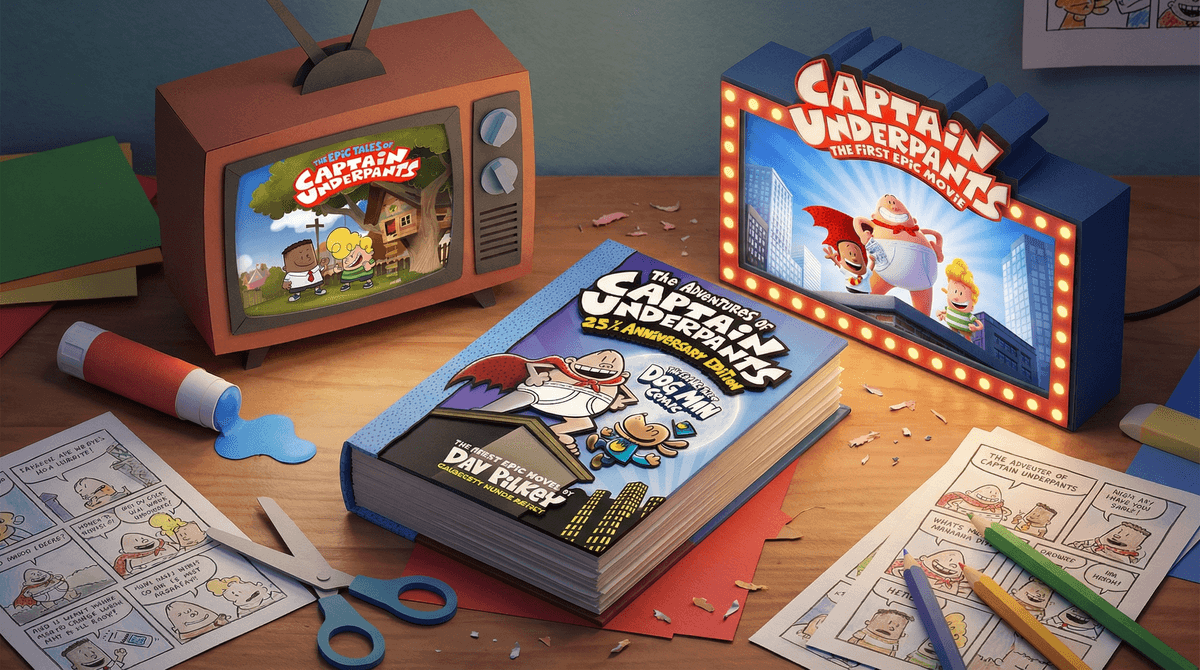
The Adventures of Captain Underpants is the first book in Dav Pilkey's wildly popular series about two fourth-graders, George and Harold, who hypnotize their grumpy principal into becoming a superhero who fights crime in his underwear. First published in 1997, the series has sold over 80 million copies worldwide and spawned 12 main books, multiple spin-offs, a DreamWorks movie, and a Netflix series.
The books are famous for their potty humor, comic-book-style illustrations, flip-o-rama animation pages, and intentional misspellings. They're also famous for being one of the most challenged and banned books in American libraries for the past two decades.
Here's the thing though: these books have probably done more to turn reluctant readers into actual readers than most of the "approved" chapter books gathering dust on elementary school shelves.
Let's be honest about what we're dealing with here. Captain Underpants features:
- A superhero who runs around in tighty-whities
- Villains named Professor Poopypants and the Turbo Toilet 2000
- Jokes about wedgies, toilets, and bodily functions
- Kids who pull pranks and break rules
- Deliberate misspellings and "bad" grammar in the comics-within-the-book that George and Harold create
The books have been challenged for "offensive language," "unsuited to age group," and "encouraging disruptive behavior." Some parents genuinely worry that the potty humor and rule-breaking will corrupt their kids or make them disrespectful.
But here's what kids actually love: they feel like these books were written for them, not for adults. The humor speaks directly to 7-10 year olds' sense of what's hilarious. The flip-o-rama pages make them active participants. The comic book format feels accessible. And George and Harold are creative, loyal friends who use their imagination to solve problems—they just happen to do it with a lot of bathroom jokes.
Here's the conversation worth having: How do we balance content concerns with reading motivation?
Teachers and librarians will tell you they've seen Captain Underpants work magic with kids who claimed to "hate reading." The books are genuinely funny, fast-paced, and illustrated enough that struggling readers don't feel overwhelmed. The chapters are short. The vocabulary is accessible. And crucially, kids want to keep reading them.
For reluctant readers ages 7-10, especially boys (though plenty of girls love them too), these books can be the gateway drug to reading for pleasure. Kids who start with Captain Underpants often move on to Dog Man (Pilkey's newer series), then Diary of a Wimpy Kid, and eventually to other chapter books and graphic novels.
Ages 6-7 (1st-2nd grade): The humor will land, but some kids might not be ready for chapter books yet. The reading level is officially 2nd-5th grade. If your kid is an early reader, they'll probably love it. If they're still building confidence, you might read it together or wait a year.
Ages 7-10 (2nd-5th grade): The sweet spot. This is peak Captain Underpants age. The humor matches their developmental stage (yes, potty humor is actually developmentally normal for this age). The reading level is appropriate, and the content resonates.
Ages 10+: Most kids naturally age out of Captain Underpants around 4th-5th grade. If your middle schooler is still reading them, they're probably either reading them to younger siblings or genuinely still enjoying them—both are fine.
Don't worry about:
- Potty humor corrupting your child. They already think farts are hilarious. The book didn't teach them that.
- Bad spelling. Kids understand that George and Harold's comics have "mistakes" because they're kid-made. Research shows this doesn't impact spelling development.
- Disrespect for authority. The principal is mean and unreasonable in the books. Kids can distinguish between fiction and reality, and between justified resistance to unfairness and general disrespect.
Do think about:
- Your family's humor boundaries. If potty humor genuinely goes against your family values, that's valid. But be prepared that your kid will encounter it anyway at school.
- Reading together if you're concerned. The best way to know what's in these books is to read them with your kid. They're quick reads (under 200 pages with lots of illustrations) and honestly pretty funny.
- The bigger picture. Is your child reading? Are they enjoying it? Are they asking for the next book? Those are wins worth celebrating, even if the content isn't what you'd choose.
Here's something that gets lost in the potty humor debate: George and Harold are creators. They write and illustrate their own comic books. They use creativity to solve problems. They're entrepreneurs (they sell their comics). They're collaborators who support each other's ideas.
The books actually model creative partnership and the joy of making things. Many kids who read Captain Underpants start creating their own comics, writing their own stories, or making their own flip-o-rama animations. That's not nothing.
The Adventures of Captain Underpants isn't going to win literary awards, and it's not trying to. It's trying to make kids laugh and want to turn the page. For many kids, especially reluctant readers, it succeeds wildly.
The potty humor is real, and if that's a hard boundary for your family, that's completely valid. But if you're on the fence, consider reading the first book yourself (it takes maybe an hour) and then making a decision. You might be surprised to find it's actually pretty clever, and your kid's enthusiasm for reading might be worth the occasional "poopypants" reference at dinner.
The real question isn't whether Captain Underpants is "good literature"—it's whether it helps your specific kid develop a reading habit. For millions of kids, it has. And that's worth something, even if it comes wrapped in tighty-whities.
- Read it yourself first if you're unsure. The first book is short and will give you a clear sense of the humor and content.
- Check out Dog Man if your kid loves Captain Underpants—it's Pilkey's newer series with similar humor but graphic novel format.
- Talk about what makes something funny with your kid. Captain Underpants can be a great entry point for conversations about humor, creativity, and why different people find different things funny.
- Explore other options for reluctant readers if Captain Underpants isn't the right fit for your family.