

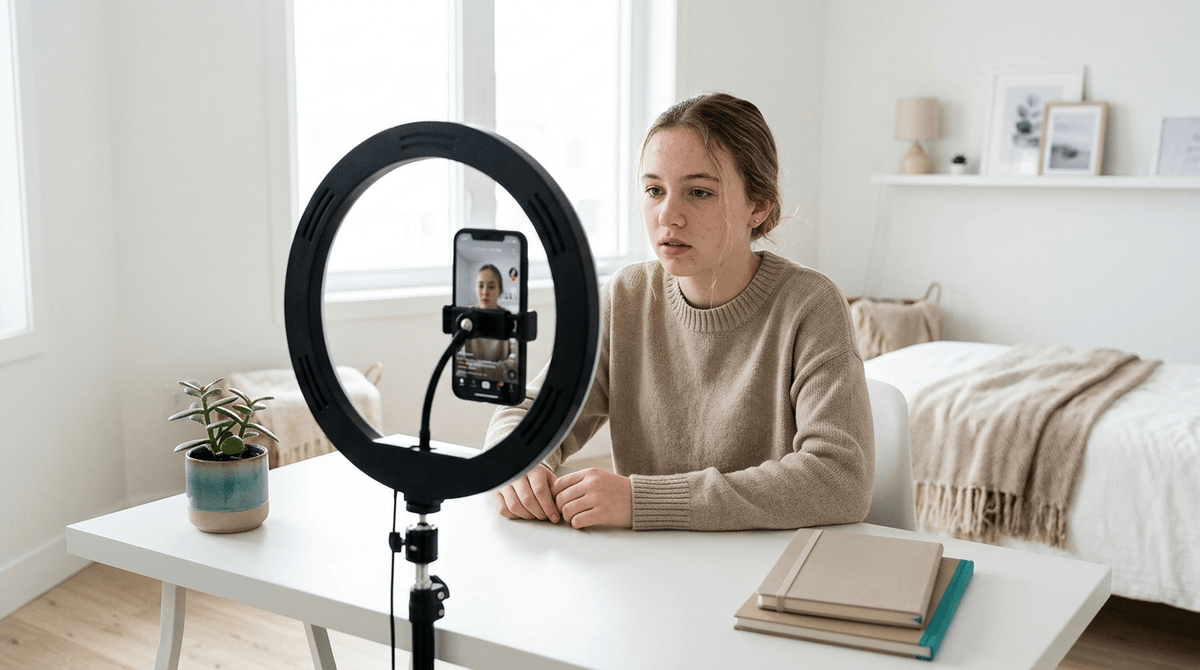
High-intensity use of short-video apps like TikTok and Reels correlates with increased anxiety and sleep disruption, regardless of whether a teen is actively posting content or just scrolling through their feed. Total time spent in the "loop" is a more significant risk factor for mental health than the specific way a child interacts with the platform.
The total volume of time a teen spends on short-video platforms matters far more than whether they are "active" creators or "passive" viewers. High-intensity users across the board face higher risks for depression and loneliness, while those who limit their engagement to low levels generally maintain better mental health.
Parents are often told that "active" social media use—making videos, commenting, or interacting—is healthier than "passive" scrolling. This study upends that conventional wisdom for the short-video era. It suggests that the "active vs. passive" distinction is a myth when it comes to platforms like TikTok.
For a parent, this means you shouldn't feel more comfortable just because your child is "being creative" by filming dances or skits. If the total hours are high, the psychological risks—specifically anxiety, stress, and attention issues—remain elevated. Monitoring the clock is more effective than monitoring the camera.
Researchers wanted to understand why short-form video feels different from traditional social media. The "infinite scroll" and algorithmic precision of these apps create a unique engagement pattern that is harder to break than standard photo-sharing or texting.
By using "latent profile analysis," the authors looked for hidden patterns in how 2,300+ students used these apps. They weren't just looking at hours spent, but at the emotional investment and the specific behaviors (posting vs. watching) to see if one group was "safer" than the others. They found that for the most vulnerable kids, the platform isn't a tool for connection; it's an all-consuming environment.
The data suggests that the "silent majority" of teens are actually doing fine, but a small minority is at significant risk.
- Most teens are low-risk. About 66% of students are low-intensity users who report the best mental health outcomes and the highest sleep quality.
- The "high-overall" group is the most vulnerable. About 1 in 13 teens are deeply invested in both posting and scrolling. This group reported the highest levels of depression, stress, and attention problems.
- Active creators aren't "safer" than scrollers. Teens who primarily post videos (about 14% of the group) and those who primarily watch (about 12%) showed nearly identical levels of psychological risk and loneliness.
- Sleep is the universal victim. Across every high-use profile, poor sleep quality was a consistent hallmark.
The "active vs. passive" debate usually assumes that "active" use builds community and self-esteem. However, in the context of short videos, being an "active" creator often means obsessing over views, likes, and the "perfect" edit. This creates a different kind of stress that mirrors the "passive" user’s FOMO (fear of missing out).
The platform's design—rapid-fire content and constant dopamine hits—seems to override the potential benefits of digital creativity. If a child is constantly checking their phone to see if their latest post has gone viral, they are just as tethered to the algorithm as the child who is mindlessly scrolling.
This study is correlational, meaning it cannot prove that TikTok causes anxiety—it may be that anxious or lonely teens are simply more likely to spend hours on these apps as a coping mechanism.
The data also comes from a specific population of junior and senior high school students in China. While the psychological drivers of social media use are often universal, cultural factors regarding school pressure and social norms could influence these results. Additionally, the study relies on self-reported data, which can sometimes be less accurate than objective screen-time tracking.
- If your teen is a "high-overall" user (posting and scrolling frequently), prioritize a hard daily time limit over "content" monitoring. Their mental health risk is tied to the total immersion, not just what they are seeing.
- If you have been encouraging your child to "be a creator" as a way to make screen time healthier, re-evaluate. Unless that creation happens within strict time boundaries, it may be adding to their stress rather than relieving it.
- If your teen is struggling with poor sleep or "brain fog," implement a "no short-video" rule 60 minutes before bed. Because sleep disruption was a universal finding for high-use groups, this is the most immediate lever a parent can pull.
- If your child is a low-intensity user (checking in occasionally), you can likely breathe a sigh of relief. Occasional use did not show a strong link to mental health declines in this population.
Intensity is the enemy of adolescent mental health on short-video platforms. It does not matter if your child is the star of the video or just a face in the audience; if they are spending significant portions of their day in the loop, their sleep and stress levels will likely pay the price.
Chao M, Wang Y, Gu L (2026). Patterns of Short Video Use and Mental Health Among Adolescents: A Latent Profile Analysis. The Psychiatric quarterly. doi:10.1007/s11126-026-10292-5 — pubmed.ncbi.nlm.nih.gov