

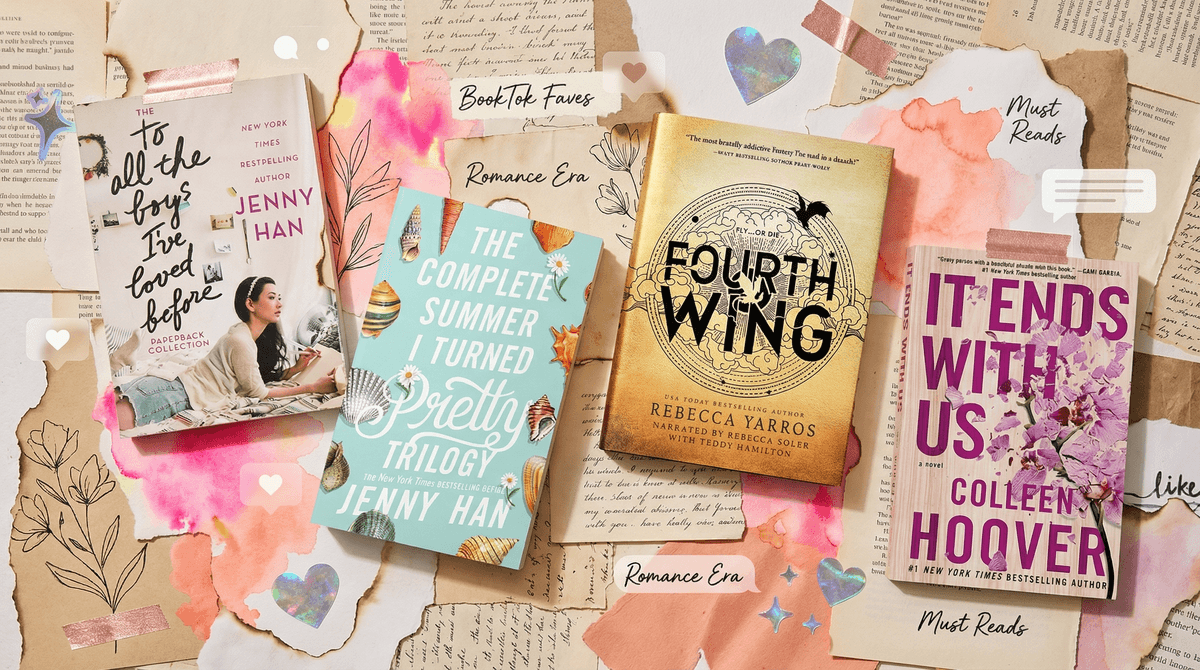
Teen romance novels—or YA (Young Adult) romance—are love stories written specifically for readers ages 12-18. They've always been popular, but right now we're in a full-blown golden age thanks to BookTok (the book side of TikTok), where teens are devouring and discussing romance novels at unprecedented levels.
These aren't your millennial parent's Twilight days anymore. Today's YA romance spans every genre: contemporary slice-of-life, fantasy worlds, historical fiction, sci-fi, LGBTQ+ stories, diverse cultural perspectives, and everything in between. Some are sweet first-kiss stories. Others are... decidedly not.
The big shift? "Spicy" content has migrated from adult romance into YA, and the line between Young Adult and New Adult (ages 18-25) has gotten blurry. Books marketed to teens can now include explicit sexual content that would've been firmly in the adult section a decade ago.
Let's be real: teens are wired to be interested in romance and relationships. These books let them explore those feelings in a safe, controlled way—through characters rather than real-life trial and error.
BookTok has transformed reading into a social experience. Teens aren't just reading alone in their rooms; they're participating in a massive online book club with millions of other readers. They're getting recommendations from creators they trust, participating in trending challenges, and bonding over shared fictional crushes.
Popular series like A Court of Thorns and Roses (ACOTAR), The Summer I Turned Pretty, and anything by Colleen Hoover dominate teen reading lists. The appeal? Emotional intensity, escapism, representation, and yes—the spicy scenes that get hyped up on social media.
Here's where it gets complicated. BookTok uses rating systems like:
- "Clean" - no sexual content beyond kissing
- "Mild spice" - fade-to-black or implied intimacy
- "Medium spice" - some explicit scenes
- "Extra spicy" - frequent, detailed sexual content
The issue? These ratings are user-generated and inconsistent. One person's "mild" is another's "whoa, that was graphic." And books with "spicy" content are often the most hyped, creating social pressure to read them to be part of the conversation.
Some books shelved as YA contain content that's essentially adult erotica—detailed sex scenes, kink, mature power dynamics—but they're being read by 13-year-olds because TikTok said they were good. Fourth Wing and later books in the ACOTAR series are prime examples: marketed to older teens but containing very explicit content.
This isn't about being a prude. It's about developmental appropriateness. A 13-year-old and a 17-year-old are in very different places emotionally and cognitively. Content that might be fine for an older teen can be confusing or overwhelming for a younger reader still forming their understanding of relationships and intimacy.
Ages 12-13: Stick with clearly labeled YA that's genuinely for younger teens. Look for contemporary realistic fiction, sweet romance, first-relationship stories. Authors like Jenny Han (To All the Boys I've Loved Before), Rainbow Rowell, and Nicola Yoon write beautiful romance without explicit content.
Ages 14-15: More emotional complexity is fine, but still be cautious about sexual content. Books can tackle harder topics (mental health, identity, social issues) while keeping physical intimacy age-appropriate. This is where parent-teen communication becomes crucial.
Ages 16-18: Older teens can handle more mature content, but it's still worth knowing what they're reading. Books with explicit scenes aren't automatically harmful, but context matters—is the relationship healthy? Is consent clear? Are they ready for that content?
Don't rely on the "YA" label alone. Check Common Sense Media, read parent reviews, or better yet—skim the book yourself. Look for content warnings (many authors now include them).
BookTok recommendations aren't age-stratified. A 14-year-old and a 19-year-old might both be on BookTok, but they shouldn't be reading the same books. If your teen is getting all their recommendations from TikTok, have a conversation about evaluating content .
.
The Colleen Hoover phenomenon: Her books (It Ends With Us, Ugly Love) are wildly popular with teens but deal with heavy topics like domestic violence, toxic relationships, and contain explicit content. They're not bad books, but they're written for adults and require maturity to process.
Reading "spicy" books isn't the end of the world. Teens are curious about sex—this is normal and healthy. Books are actually one of the safer ways to explore those feelings. But there's a difference between age-appropriate curiosity and content that's just too much too soon.
Look for healthy relationship models. Not all romance novels are created equal. Some normalize jealousy, possessiveness, or unhealthy power dynamics as "romantic." Others show communication, consent, and mutual respect. Guide your teen toward the latter.
Don't shame. If you discover your teen is reading something you think is too mature, approach it as a conversation, not a punishment. "I noticed you're reading [book]. What do you think of it?" goes a lot further than "You're too young for this!"
Ask what they're reading. Make it a regular, casual conversation. Show genuine interest. You might be surprised what they're willing to share if you're not judgmental.
Discuss the difference between fiction and reality. Romance novels are fantasy—they're not instruction manuals for relationships. Talk about what healthy relationships actually look like versus what makes for dramatic fiction.
Set boundaries that make sense for your family. Maybe you want to preview books with explicit content before your 13-year-old reads them. Maybe your 16-year-old has earned your trust to self-select. There's no one-size-fits-all answer.
Teen romance novels aren't inherently good or bad—it depends on the specific book, the reader's age and maturity, and the context. The current BookTok-driven landscape means teens have access to more books than ever, which is wonderful, but also means less gatekeeping around age-appropriateness.
Your job isn't to control every word your teen reads (good luck with that anyway). It's to stay informed, keep communication open, and help them develop critical thinking skills about the content they consume.
Reading is still one of the best things teens can do with their time. Even romance novels—yes, even the spicy ones—are building literacy, empathy, and emotional intelligence. Just make sure the content matches where your kid actually is developmentally, not where BookTok thinks they should be.
- Ask your teen what they're currently reading and what they want to read next
- Check out age-appropriate YA romance recommendations
- If you're concerned about a specific book, read a detailed review or the first few chapters yourself
- Talk to your teen about consent and healthy relationships using their books as a starting point
- Consider reading a YA romance yourself—it's actually a great conversation starter