

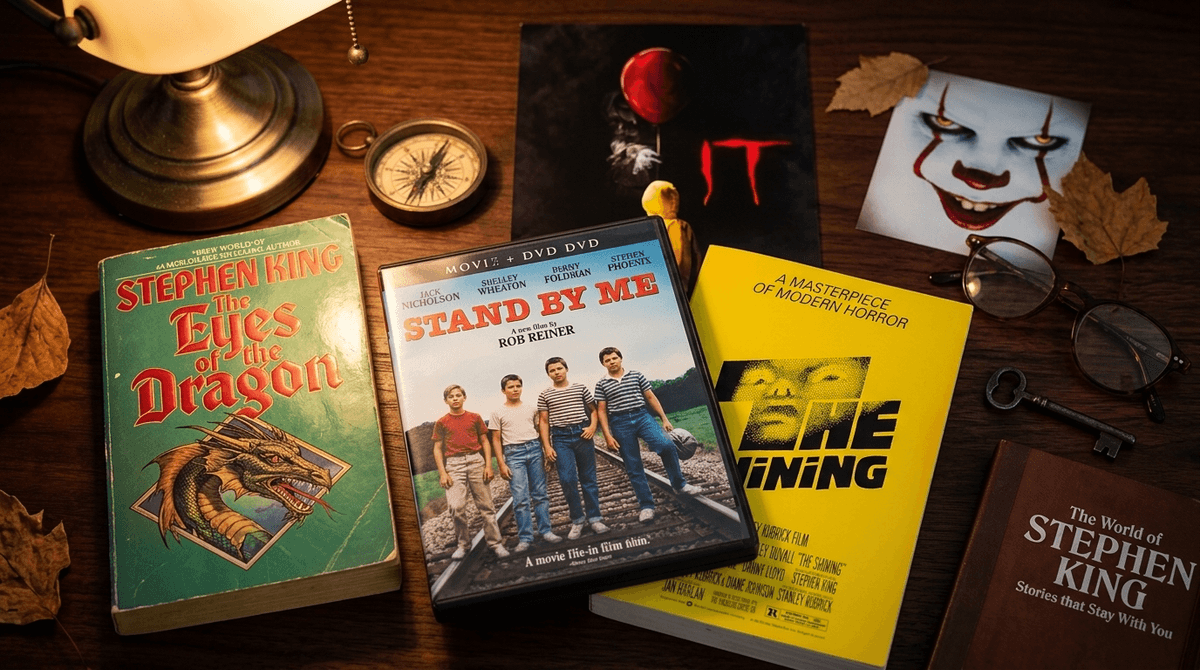
Stephen King is the undisputed heavyweight champion of American horror, but for a parent in 2026, he’s also a logistical hurdle. With the Welcome to Derry series currently dominating the cultural conversation and Pennywise’s face plastered on every other bus stop, your kid is going to ask about King. The answer isn't a simple "yes" or "no"—it’s about knowing which version of King you’re handing them. He’s written everything from a classic high-fantasy fairy tale to some of the most visceral, trauma-heavy literature of the 20th century. If you want to build a horror on-ramp that doesn't lead straight to a sleep-regression nightmare, you have to be tactical about the bibliography.
TL;DR
Stephen King is a rite of passage, but skip the sewer clown for now. Start with The Eyes of the Dragon for a fantasy entry point or The Girl Who Loved Tom Gordon for a manageable survival thriller. For the full roadmap of what hits and what misses, check out our best books for kids list.
Most people forget that King wrote a straight-up fantasy novel for his own kids. If you’re looking for the absolute safest entry point that still carries the "Stephen King" brand name, start here.
This is King playing in the Lord of the Rings sandbox. It’s got a prince, a dragon, a kingdom in peril, and a genuinely creepy villain in Flagg (who pops up in King's other, much darker books). It’s written in a classic "once upon a time" style that feels approachable for a sharp 10-year-old. There’s no gore, no modern profanity, just a great story about a kid trying to escape a high tower.
This is a survival story, not a monster story (mostly). A 9-year-old girl gets lost in the woods and has to survive the elements while hallucinating her favorite baseball player. It’s tense, it’s scary in a "don't wander off the trail" kind of way, and it lacks the heavy-duty trauma of his more famous works. It’s a great litmus test: if they can handle the psychological tension here, they might be ready for the big leagues.
Think of this as a gateway drug. It’s short, it’s illustrated by the legendary Bernie Wrightson, and it follows a simple structure (one werewolf attack per month for a year). It’s pulpy, fast-paced, and feels more like a classic monster movie than a deep dive into the human psyche.
King is at his best when he’s writing about the specific, sweaty, terrifying experience of being a kid. These are the books that will actually stick with them because they feel "real," even when the supernatural stuff kicks in.
Found in the collection Different Seasons, this is the novella that became the movie Stand By Me. It’s a masterpiece of "the summer everything changed." Yes, there’s a dead body, and yes, the kids swear like sailors, but it’s a foundational text for a reason. It’s about friendship and the end of childhood. If your kid is starting to outgrow Diary of a Wimpy Kid, this is the "grown-up" version of that transition.
Published under his Richard Bachman pseudonym, this is the original "deadly game" story. If your kid loved The Hunger Games, they’ll see where the DNA came from here. 100 boys walk; if they slow down, they get shot. It’s bleak, it’s philosophical, and it’s a massive hit with middle schoolers who are starting to question authority and the fairness of the world.
Once they’ve cleared the survival stories and the fantasy, they’ll want the "real" horror. These are the ones where King earns his reputation.
This is the ultimate middle school revenge story. It’s short, told through "found" documents and news clippings, and deals with bullying in a way that still feels raw today. The "horror" is as much about social isolation as it is about telekinesis. It’s a great one to read together because the conversations about school dynamics and "the monster in the hallway" are built-in.
If they think vampires are sparkly or romantic, hand them this. It’s a slow-burn invasion story that turns a small town into a graveyard. It’s genuinely scary, but it follows the rules of classic horror. There’s a clear line between good and evil, and a kid (Mark Petrie) is one of the heroes, which gives younger readers an anchor.
Be careful with this one—not because of the ghosts, but because of the domestic themes. The Shining is about a father losing his mind and becoming a threat to his family. That’s a much deeper, more primal fear than a clown in a sewer. It’s a brilliant book, but save it for when your kid can handle the idea that the "monster" can sometimes be the person who’s supposed to protect you.
With Welcome to Derry likely being the most-watched thing on Max right now, your kid is going to want to read IT.
Here is the straight talk: The book is a 1,100-page beast that contains some of the most controversial and graphic scenes King ever wrote.
While the 2017 It (the movie) and the new series focus on the "Losers Club" camaraderie and the jumpscares, the book goes into some very dark corners regarding trauma, racism, and a specific "sewer scene" that even King later admitted was a mistake. If they’re dying to know the story, let them watch the movies or the series first. The book is for high schoolers who can handle the sheer weight and the more problematic elements of King’s 1980s output.
If your kid is diving into the "King-verse," they’re developing a taste for atmosphere and pacing. King isn't just about the "boo!" moments; he’s a master of the slow build.
Conversation to start: Ask them, "What makes the character more scared—the thing they can see, or the thing they're imagining?" King's best work happens in the gaps between what’s described.
Pro-tip for reluctant readers: King's short story collections, like Night Shift or Skeleton Crew, are perfect for kids who don't want to commit to a 600-page novel. Stories like "The Raft" or "The Monkey" are bite-sized nightmares that deliver the goods in 20 minutes.
Q: What age is Stephen King appropriate for? There’s no magic number, but 12 is usually the "on-ramp" age. Start with his fantasy or survival stories like The Eyes of the Dragon before moving into the supernatural horror. By 14, most of his classic bibliography is fair game for intentional readers.
Q: Is there a lot of "adult content" in Stephen King books? Yes. King writes about real life, which includes heavy profanity, graphic violence, and sexual themes. He doesn't sugarcoat the way people talk or act. If you’re concerned, stick to his newer "Hard Case Crime" books or his fantasy work, which tends to be leaner and less graphic.
Q: Which Stephen King book should my kid read first? The Girl Who Loved Tom Gordon is the best "modern" entry point. It’s short, focused, and relatable. If they want something that feels more like a classic quest, go with The Eyes of the Dragon.
Q: Are the movies scarier than the books? Usually, the movies rely on jumpscares, while the books rely on psychological dread. A kid who can’t handle the visual gore of It (the movie) might still enjoy the book because their imagination will self-censor the parts that are too much for them.
Stephen King is the gold standard for a reason. He doesn't talk down to his readers, and he treats the fears of childhood with total respect. If you guide the "on-boarding" process, King won't just be the guy who gave them nightmares—he'll be the author who taught them how to be brave in the face of them.
- For more age-appropriate scares, see our best movies for kids list.
- If your kid is more into gaming than reading, check out our best games for kids list for some atmospheric (but not traumatizing) titles.
- Get a personalized horror reading list for your kid
