

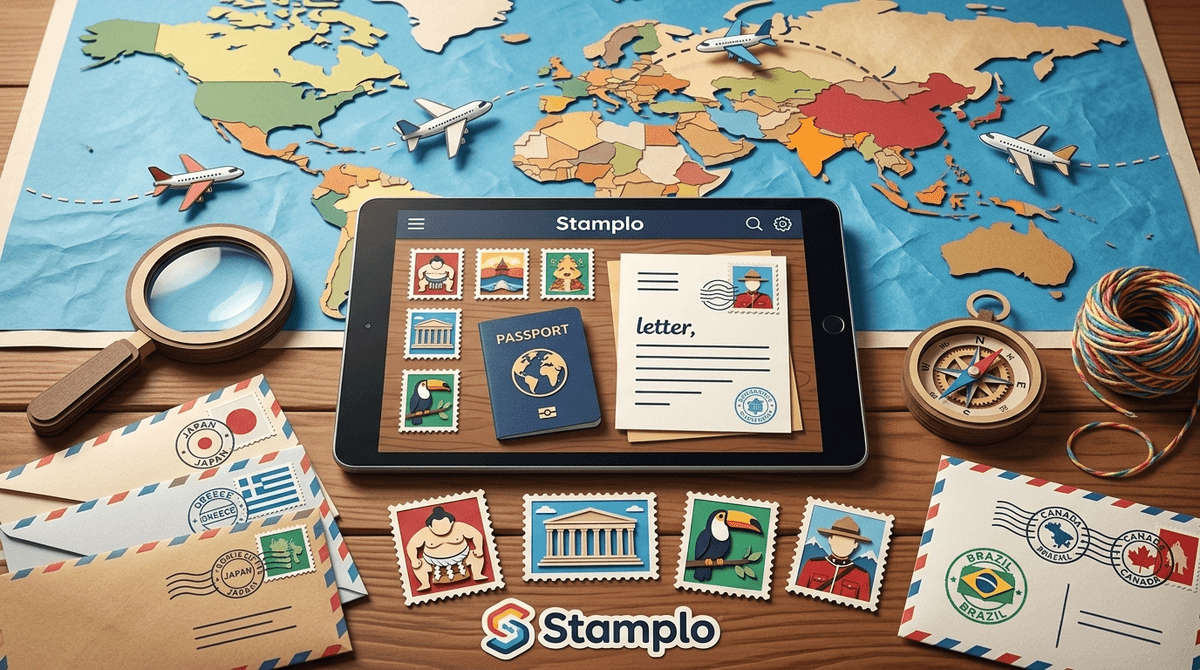
Stamplo is a free pen-pal app for kids 7–14 where you, the parent, approve every new connection and every letter before it moves — on both sides. Your kid writes a letter, you okay it, the other kid's parent okays it, then it sends. They call it the Four-Eyes Check. There's no feed, no notifications engineered to pull kids back, and no instant replies: letters land on a delay of at least 12 hours, more like real post than a group chat. If you've wanted to let a younger kid have a real online friendship without handing them a chat app, this is the closest thing going. The catch: it only works if you're willing to be the post office.
It's penpals, rebuilt for kids and run through their parents. Every adult verifies their identity before a child can send a first letter, so there are no anonymous accounts and no strangers wandering in — only verified families. Kids find penpals one of two ways: a parent-controlled Friend Finder that shows other verified families filtered by country, age, and hobbies (first name and interests only, never an address), or a private invite code you swap with a family you already know — the holiday friend, the cousin abroad, the kid who moved away. You can turn the Friend Finder off entirely and run it as a closed, invite-only network.
It's live in more than 60 countries, which is the actual draw: a kid in Ohio writing a kid in Japan, trading collectible country stamps each time a letter arrives. Letters can carry photos, but only if you've switched that on per child.
Nothing reaches your kid that two parents haven't read first.
A new penpal request runs through three gates: you review the other family's short bio (their kid's first name, age, hobbies, and how long they've been members), the other parent reviews yours, and only if both of you agree does your child get to accept or decline. Rejections stay private — the kids never see a "no."
Then every letter, in both directions, gets the same treatment: your child writes it, you approve it, the other parent approves it, and it delivers after a delay. That delay is the design, not a bug. A kid raised on Snapchat expects a reply in seconds; Stamplo makes them wait at least half a day. It's the same rhythm as when our parents stamped and posted our mail — the friendship is real, the gratification is slow.
This is the part worth sitting with. Most "safe" kids' apps are safe because of filters and reports — software guessing at what's bad. Stamplo is safe because a human who loves the kid reads everything. That's a stronger guarantee, and it's a bigger ask.
The sweet spot is a 7–10-year-old who's curious about the world and not yet on a phone. At that age the slowness reads as magic: a letter from a stranger in another country, with a stamp, is a genuine event. It's also a low-stakes way to practice writing to a real audience — they'll spell-check themselves when an actual kid in Greece is going to read it.
Older kids, 12–14, are a harder sell. If they already have group chats, a letter that takes 12 hours each way can feel like a downgrade, and the parent-reads-everything model lands differently for a teenager who wants some privacy. It can still work — especially as a deliberate counterweight to instant everything — but go in with eyes open about the friction.
The real cost of Stamplo is your attention. You are the post office, and the post office doesn't get to take a week off.
- You're the bottleneck, by design. Every letter waits for you. Get busy, travel, miss a few days, and the letters pile up while your kid wonders why their friend went quiet. Build it into a rhythm — "we read Stamplo letters at Sunday breakfast" — so approvals don't become a chore you resent.
- Identity verification is a real step. You'll verify who you are before your kid can send anything. That's exactly why the network is safe, and it's also a hurdle some parents balk at. It's the price of "no strangers," and it's worth it.
- Penpal friendships fizzle — that's normal. Some connections go quiet after three letters. That's not a Stamplo failure; it's how penpals have always worked. Tell your kid up front that some penpals stick and some don't, so a dropped thread doesn't feel like rejection.
- It's letters only, and it's slow. No live chat, no calls. If your kid wants instant back-and-forth, this isn't that, and shouldn't pretend to be.
Do the first few rounds with them, not for them. Sit together for the first couple of letters — help them figure out what to ask a kid on the other side of the planet ("What do you eat for breakfast? What's school like? What's the weirdest snack where you live?"). You're not censoring; you're teaching them how to be interesting to a stranger, which is a real skill.
Then name what you're doing and why. Tell them the wait is the point: "Most apps are built to make you check them every five minutes. This one makes you wait — because a friendship you have to be patient for is worth more than a notification." That conversation, about choosing slow on purpose in a world built for instant, outlasts the app itself.
And use the controls deliberately. Start with the Friend Finder off and one invite-code penpal you already trust if you want to ease in; open up global discovery once your kid gets the rhythm. Keep photos off until you've got a reason to turn them on.
Is Stamplo safe for a 7- or 8-year-old?
Yes — it's one of the few kids' platforms where safety isn't outsourced to a filter. Every adult is identity-verified, there are no strangers or open feeds, and you personally approve every connection and every letter before your child sees it. The trade-off is that the safety depends on you doing that reviewing.
How much does Stamplo cost?
It's free for families. No subscription, no ads, no algorithm selling your kid's attention.
What's the catch with a free, ad-free kids' app?
The cost is your time, not your money or your data. The model only works if a parent is reading and approving letters, so the "price" is the attention you commit, not a hidden upsell.
Can my child talk to strangers on it?
Not without you. A new penpal requires both parents to approve before the kids can connect, and you see the other family's bio first. You can also disable discovery entirely and run it as a private, invite-code-only network.
Why does a reply take so long?
By design. Letters deliver on a delay of at least 12 hours, and each one is read by two parents along the way. The slowness is the feature — it's the antidote to the instant-gratification loop most apps are built around.
If you've been hunting for a way to give a 7–10-year-old a real online friendship before they're anywhere near a phone, Stamplo is the rare app that's built the right way: parent-verified, parent-approved, deliberately slow, and free. It asks something real of you — you have to actually read the letters — but that's the same deal as stamping and posting your kid's mail used to be, and it's a deal worth taking.
Want help deciding what else fits your kid right now — by age, by worry, by where they are with screens? Take the family survey and we'll tailor the rest.