

Look, I get it. You're not trying to raise a kid who only watches PBS documentaries about photosynthesis (though honestly, those slap). You just want to know that when your 7-9 year old is watching a show or playing a game, they're getting something out of it beyond zombie eyes and the ability to recite every line from a show you've never actually sat down to watch.
Developmentally positive media for this age range does a few key things: it builds executive function skills (planning, problem-solving, emotional regulation), encourages creativity and critical thinking, models healthy relationships and emotional intelligence, and ideally sparks curiosity about the world. The sweet spot? Content that's engaging enough that your kid actually wants to consume it, but meaty enough that it's doing some heavy lifting for their growing brain.
The 7-9 year old brain is in this fascinating phase where they're moving from magical thinking to more logical reasoning, developing empathy in new ways, and starting to understand more complex narratives. They can handle longer story arcs, moral complexity, and are hungry for content that makes them feel capable and smart.
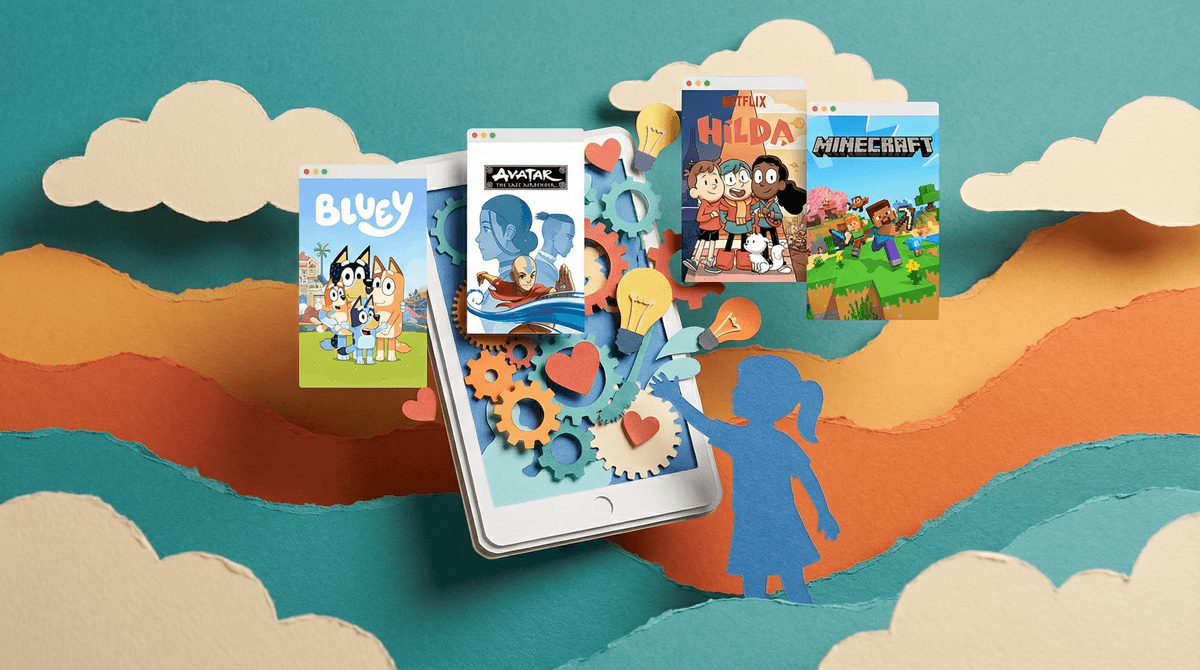
Yes, everyone recommends it. Yes, it will make you cry. But here's why it's genuinely developmental gold: Bluey models creative play, emotional regulation, and family problem-solving in 7-minute episodes. Your kid is literally watching how to turn disappointment into imaginative play, how siblings can work through conflict, and how parents mess up and repair. Ages 7-9 might think they're "too old" for it, but the emotional lessons are perfectly pitched for this age.
This is your answer when your kid is obsessed with animals but you can't handle another nature documentary. The Kratt brothers combine real zoology with adventure storytelling, and kids at this age are developing the scientific thinking skills to actually understand concepts like adaptation, habitats, and ecosystems. Bonus: it's not annoying to have on in the background.
The gold standard for this age range. Complex characters, moral dilemmas, emotional intelligence, cultural respect, and a serialized story that rewards attention. Kids this age are ready for longer narrative arcs, and ATLA delivers on every developmental front: friendship dynamics, dealing with loss, understanding different perspectives, and the reality that people aren't simply "good" or "bad." Fair warning: once you start, you're committed to all three seasons.
If your kid likes spy stuff but you want them learning math, this PBS show is shockingly good. It teaches mathematical reasoning and problem-solving through genuinely funny storylines. The humor works for kids and adults, and it's building the kind of logical thinking skills that actually matter.
This Netflix series is perfect for the 7-9 set who are ready for slightly spooky but not scary content. Hilda models curiosity, bravery, friendship, and creative problem-solving while navigating a world of magical creatures. The emotional intelligence here is top-tier—characters make mistakes, feel complex emotions, and work through them.
Beyond the earworm songs (sorry about "We Don't Talk About Bruno" living rent-free in your head), Encanto tackles family expectations, self-worth, and intergenerational trauma in ways that 7-9 year olds can grasp. It's spawned a thousand therapy sessions and family conversations about pressure and belonging.
Hilarious, visually creative, and genuinely explores family connection in the digital age without being preachy. Your kid will laugh at the robot apocalypse; you'll appreciate the surprisingly nuanced take on screen time and family dynamics. Plus it celebrates creativity and weirdness in the best way.
These movies are perfect for this age because they model kindness, optimism, and seeing the good in people without being saccharine. Paddington messes up, faces consequences, and persists. The humor works on multiple levels, and honestly, they're just really well-made films.
For kids on the older end of this range (8-9), this Pixar film handles big emotions, family expectations, friendship drama, and early puberty with humor and heart. It's a great conversation starter about how bodies and emotions change.
Yes, it's everywhere. Yes, your kid probably already plays it. But Minecraft in creative or survival mode genuinely builds spatial reasoning, planning, resource management, and creative problem-solving. The key is steering them toward building projects, redstone engineering, or collaborative servers rather than just watching YouTube videos about it. Ages 7-9 are perfect for learning the basics and starting to tackle more complex builds.
This Nintendo Switch game teaches delayed gratification, planning, design thinking, and basic economics in the gentlest possible way. Your kid is essentially learning project management while decorating a virtual island. It's also genuinely calming—no combat, no time pressure, just creative expression and goal-setting.
Hear me out: racing games build hand-eye coordination, spatial awareness, and—crucially for this age—learning to lose gracefully. Mario Kart is accessible enough for 7 year olds but has enough depth for 9 year olds. The real developmental win? Family play that's actually fun for everyone and teaches turn-taking and sportsmanship.
For kids on the older end (8-9) who are ready for more complex gameplay, this builds problem-solving, exploration, pattern recognition, and persistence. The open-world design rewards curiosity and experimentation. Fair warning: it's challenging, so expect some frustration, but that's part of the developmental benefit—learning to persist through difficulty.
If you need something explicitly educational, this game makes math practice actually engaging through RPG-style gameplay. Kids are solving real math problems to progress, but it feels like playing a game. It adapts to their level, so it grows with them through this age range.
Screen time quality matters more than quantity for this age group. An hour of Avatar: The Last Airbender followed by a conversation about the episode is developmentally different than an hour of random YouTube autoplay.
That said, not every minute needs to be optimized. Sometimes your kid just needs to decompress with something light, and that's okay. The goal is a media diet that's mostly nourishing, with room for the equivalent of screen time snacks.
Co-viewing and co-playing are game-changers at this age. Your 7-9 year old is developing more sophisticated thinking, and your questions and observations help them process what they're seeing. "Why do you think Aang is avoiding learning firebending?" or "How did you figure out that puzzle?" turns passive consumption into active learning.
Watch out for the YouTube rabbit hole. Even with good intentions, kids this age can start watching Minecraft tutorials and end up on content that's... not great. YouTube Kids is safer but limited; regular YouTube needs supervision. Consider learning more about YouTube safety for this age .
.
The best developmentally positive media for 7-9 year olds is content that respects their growing intelligence, models emotional skills, encourages creativity, and gives them something to think about beyond the screen.
Your kid doesn't need to only consume educational content—that's a recipe for them sneaking the iPad to watch whatever their friends are watching. But building a foundation where quality content is the norm (and enjoyable!) sets them up well as they head toward the tween years when peer influence gets stronger.
Start with one new show or game from this list that matches your kid's interests. Watch the first episode together or play the first level as a family. See what sparks conversation.
Audit what's currently in rotation. You don't need to ban anything (unless it's genuinely problematic), but think about whether you can shift the balance toward content that's doing more developmental heavy lifting.
Talk to your kid about what makes media "good." At 7-9, they can start developing their own critical thinking about content. Ask what they like about their favorite shows or games and why. You're building media literacy skills that will serve them for years.
Remember: you're not aiming for perfection. You're aiming for intentionality. Some screen time will be brain candy, and that's fine. The goal is making sure enough of it is actually feeding their growing brain.
Want to explore more about balancing screen time for this age? Check out our guide on screen time by age or Get screen time guidance for your specific age group.