

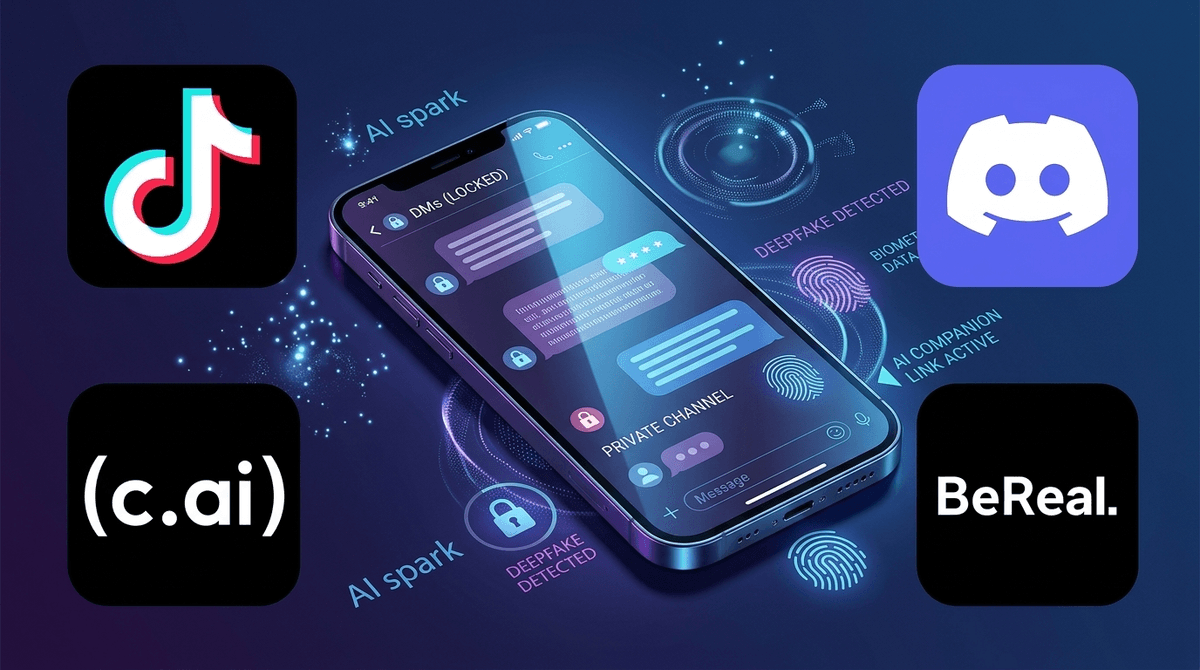
TL;DR: The social media landscape for teens in 2026 has moved away from the "public square" (posting to a grid) and into "dark social"—private DMs, group chats, and AI-driven walled gardens. The biggest risks aren’t just "stranger danger" anymore; they are AI-generated deepfakes and the rise of parasocial relationships with AI chatbots.
Quick Recommendations for 2026:
- Best for Creative Expression: Pinterest
- Best for Movie Buffs: Letterboxd
- Best for Close Friends: BeReal
- Avoid (The Brain Rot King): Skibidi Toilet (and its endless AI-generated clones)
- Proceed with Caution: Character.ai and Snapchat (due to "My AI" and disappearing DMs)
If you feel like you finally mastered Instagram just in time for your teen to stop using it, you’re not alone. The "grid" is dead. In 2026, teens aren't performing for the public as much as they used to. Instead, social media has become a series of private rooms.
The shift to "dark social"—platforms like Discord, WhatsApp, and Telegram—means that most teen interaction is happening where parents, and even the platforms' own moderation algorithms, can't easily see it.
Why the change? Because the public internet has become "Ohio" (slang for weird, cringe, or chaotic). Between the flood of AI-generated junk and the pressure of being "canceled," teens are retreating to group chats where they can be themselves—or at least, a version of themselves that doesn't live on a permanent public record.
The biggest trend of the last year isn't a new video app; it’s AI companions. Apps like Character.ai allow teens to chat with AI versions of celebrities, fictional characters, or even "therapists."
For some kids, it’s a harmless way to roleplay or practice conversation. For others, it’s a "digital bestie" that is always available, never judges, and never sleeps. This is where we see the "parasocial" shift. If your teen is spending three hours a day talking to a bot that mimics a boyfriend or a favorite anime character, they aren't learning the messy, difficult skills of real-world conflict resolution.

We need to talk about deepfakes. In 2026, the tech to swap a face onto a video or clone a voice is available to anyone with a smartphone. This has moved beyond political misinformation and into the hallways of middle and high schools.
"Digital bullying" now includes AI-generated images or audio clips. It’s not just about what your teen posts; it’s about what others can do with their likeness. This is why privacy settings on Instagram and TikTok aren't just about hiding from "creeps"—they're about protecting your teen's biometric data from being scraped and reused.
Learn more about protecting your teen's digital identity
Let’s be real: TikTok is still the sun that everything else orbits. But by 2026, the "For You Page" is so hyper-optimized that it can feel like a sedative. Teens call the low-quality, repetitive content "brain rot." If you see them watching endless loops of Skibidi Toilet or "Sigma" edits, they are firmly in the brain-rot zone.
- The Verdict: Fine in moderation, but the "Live" features are increasingly predatory and full of gambling-adjacent mechanics.
Surprisingly, BeReal has survived the "trend" phase and become a staple for intentional teens. It’s low-stakes. You take a photo once a day. No filters, no followers-count obsession.
- The Verdict: One of the healthiest options for staying connected without the dopamine-loop of a feed.
This is the "basement" of the internet. It’s where they play Minecraft or Roblox while talking to friends.
- The Verdict: Great for community, but dangerous if they join public servers. Keep them on private, friend-only servers.
Pinterest is the unsung hero of digital wellness. It’s about interests, not influence. Teens use it for "vision boards" and "aesthetic" inspiration.
- The Verdict: Highly recommended. It’s one of the few places on the internet that actually encourages offline hobbies like crochet, room decor, or drawing.
You don't need to use the slang, but you should understand it. When a teen says something is "so Ohio," they are acknowledging that the internet has become a weird, nonsensical place. When they talk about Skibidi Toilet, they are referencing a specific brand of surrealist humor that defines Gen Alpha and younger Gen Z.
Understanding this helps you realize that a lot of what looks like "addiction" is actually just a search for belonging in a very loud, very digital world. They aren't just "on their phones"—they are navigating a complex social hierarchy that just happens to be mediated by glass and silicon.
- The "Nude" AI Problem: There are now dozens of "undressing" apps. If your teen is on Discord or Telegram, they will see ads for these. Talk about this before it happens.
- Sextortion 2.0: Scammers are using AI to sound like teenagers to lure kids into sending compromising photos, then blackmailing them. This is the #1 safety concern for teen boys right now.
- The Dopamine Debt: If your teen is "doomscrolling" YouTube Shorts for two hours, their brain is literally exhausted. Expect irritability when they put the phone down. It’s not "attitude"; it’s a dopamine crash.
Check out our guide on sextortion and digital safety
Instead of asking "What are you doing on your phone?", try these:
- "Is the algorithm serving you anything good today, or is it all brain rot?" (Shows you understand the quality of content varies).
- "I heard about those AI chatbots like Character.ai—do people at school actually talk to those, or is it just a meme?" (Invites them to explain the culture to you).
- "If someone sent you a weird AI-generated photo of yourself, would you know how to report it?" (Focuses on technical literacy and safety rather than punishment).
Social media in 2026 is less about the "Social" and more about the "Media." It’s a broadcast system and a private chat room rolled into one. Your teen doesn't need a lecture on why "social media is bad"—they know it is. They feel the anxiety of it every day.
What they need is a parent who understands that Discord is their telephone, Pinterest is their magazine, and Character.ai is a weird, experimental mirror.
Next Steps:
- Check the DMs: Ask your teen which group chats they spend the most time in. You don't need to read them, but you should know who is in them.
- Audit the AI: Check if they have Snapchat or Character.ai and ask them what they think about the AI features.
- Set "Analog" Windows: Because everything is in the DMs now, the "ping" of a notification is constant. Create tech-free zones where the DMs can't reach them.