

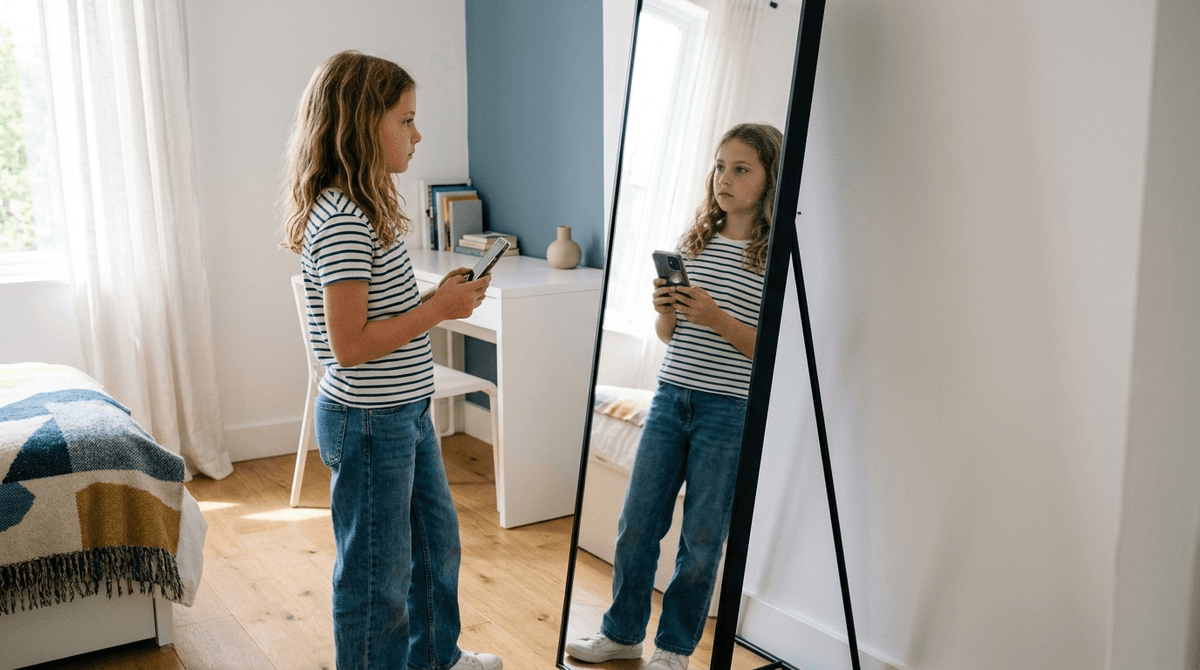
Children who use social media before age 12 are significantly more likely to develop body image issues and disordered eating habits in the following years.
Social media use in children under 12 predicts poorer body image and disordered eating behaviors. This relationship is directional: digital habits typically precede the development of body dissatisfaction, suggesting that the platforms themselves are a primary driver of the risk.
This research shifts the timeline for when parents need to be vigilant about body image and eating habits. While eating disorders are traditionally associated with the teenage years, the psychological seeds are being planted in elementary and middle school through early screen habits. Because the media use often occurs before the symptoms appear, parents have a clear window to intervene by delaying access or changing how kids engage with visual content.
Researchers wanted to determine if the "Instagram effect"—the well-documented link between social media and body shame in teens—was already taking hold in younger children. Most studies focus on 16-year-olds, but with the average age of first smartphone ownership dropping, there was a gap in understanding how 9-to-11-year-olds handle the visual pressures of social platforms. By looking specifically at longitudinal data—studies that track the same children over several years—they aimed to see if the technology causes the problem or if kids with existing issues simply use more technology.
Social media use serves as a reliable warning sign for future eating struggles in young children. In five out of the six longitudinal studies reviewed, higher social media or screen time predicted negative body outcomes.
- Specific risks identified include binge eating, an increased fear of weight gain, and "compensatory behaviors" like restrictive dieting or obsessive exercise.
- The link is one-way: While social media use predicted later body issues, children who already had body image concerns did not necessarily increase their social media use.
- It is not yet universal: One of the six studies found no significant effect, suggesting that while the trend is strong, other factors like personality or family environment still play a role.
The "under 12" window is a developmental danger zone because the preadolescent brain is hyper-tuned to social status but lacks the cognitive maturity to process digital manipulation. When a 10-year-old sees a filtered or "perfect" image, they often lack the executive function to recognize it as artificial. Because the data shows the tech use happens before the body dissatisfaction, we cannot simply blame a child’s "natural sensitivity" or "pre-existing anxiety"—the platforms appear to be creating the vulnerability where it didn't previously exist.
The evidence base for this age group is currently narrow. This review relied on only six longitudinal studies, and three of those were based on the exact same dataset, which limits the diversity of the findings. Furthermore, many of the studies did not clearly distinguish between "social media" and "general screen time," making it difficult to know if a child watching a movie on a tablet faces the same risk as a child scrolling through a TikTok feed. The confidence in these findings is currently low because the field is still in its infancy.
- If your child is under age 12, delay creating personal social media accounts to bypass the highest-risk window for developing early body dissatisfaction.
- If you notice a sudden change in exercise intensity or food restriction following a period of high screen use, investigate the "compensatory" link rather than treating the diet as an isolated health choice.
- If your child is already on these platforms, start proactive conversations about AI filters and digital manipulation now, rather than waiting for them to express a desire to change their appearance.
- If you are choosing between types of digital entertainment, prioritize passive media like movies or TV shows over interactive social feeds, as the comparative nature of social platforms is the primary driver of risk.
Early social media use is not just a distraction; it is a precursor to how children perceive their physical selves. Delaying access until after age 12 provides a necessary developmental buffer, protecting children during a phase when they are most vulnerable to peer comparison and digital distortion.
Haywood S, Paraskeva N, Schneider J (2026). Body image, disordered eating, and social media use among children and preadolescents: A scoping review of longitudinal studies. Body image. doi:10.1016/j.bodyim.2026.102109 — pubmed.ncbi.nlm.nih.gov