

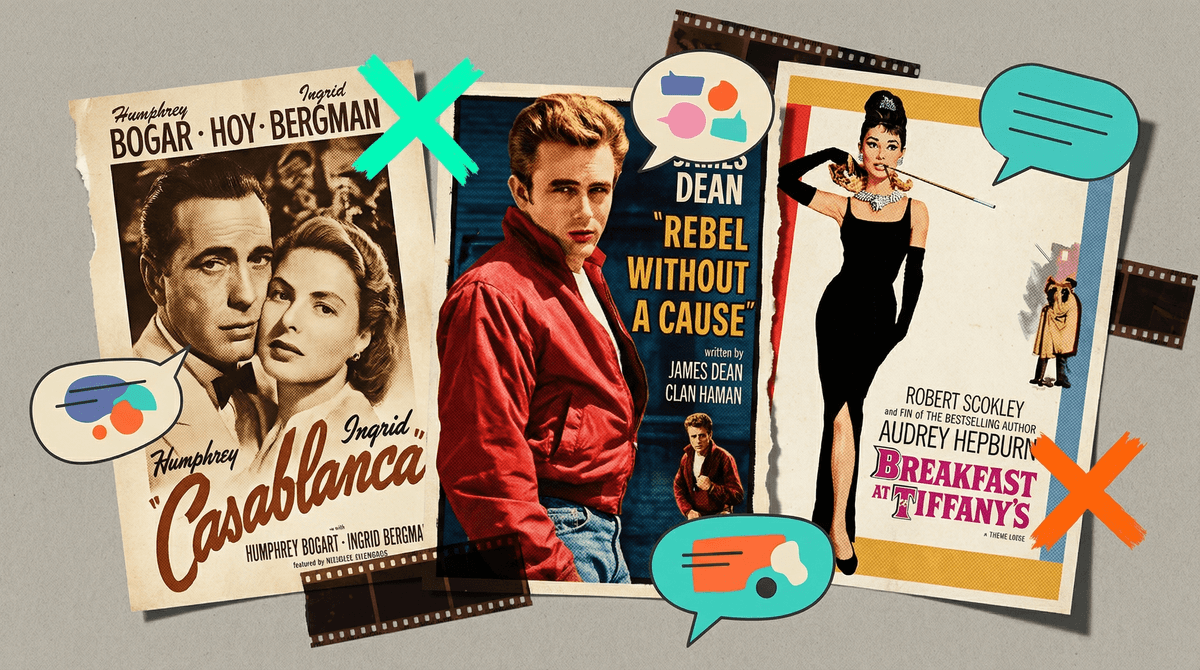
So your kid is watching Casablanca or Breakfast at Tiffany's or some classic James Bond film, and suddenly every single character is chain-smoking through every scene like it's an Olympic sport. Humphrey Bogart looks impossibly cool with that cigarette. Audrey Hepburn makes it seem elegant. Even the "good guys" are constantly lighting up.
And you're sitting there thinking: "Wait, didn't we just spend years telling them smoking is terrible? How do I explain this?"
This is one of those weird parenting moments where old media collides with modern values, and honestly? It's actually a pretty great teaching opportunity. Not in a preachy way, but in a "here's how the world changes and why that matters" way.
Here's the thing: kids are smart enough to notice the disconnect. They've seen the anti-smoking campaigns. They know smoking causes cancer. But then they watch these classic films where smoking is portrayed as sophisticated, rebellious, romantic, or just... normal. And the cognitive dissonance is real.
The concern isn't that your kid will watch Rebel Without a Cause and immediately start smoking. It's more subtle than that. It's about understanding how media shapes perception, how cultural norms change, and how something that was once glamorized can become widely recognized as harmful.
Also, let's be real: these films are often genuinely great. We're not going to stop showing kids The Wizard of Oz or Singin' in the Rain just because there's some smoking in them. But we can use these moments to have bigger conversations.
Between the 1930s and 1960s, smoking in movies wasn't just common—it was strategic. Tobacco companies literally paid for product placement. Actors had contracts that required them to smoke specific brands. Directors used cigarettes as visual shorthand for everything from stress to sexuality.
Some wild facts your kids might find interesting:
- In the 1950s, cigarette companies sponsored TV shows and had actors promote cigarettes during commercial breaks
- Some movie studios had tobacco companies on set providing free cigarettes to actors
- Smoking was used to get around censorship rules—you couldn't show certain things, but you could have characters smoke to imply tension, desire, or rebellion
By the 1990s, this started changing dramatically. The tobacco industry's internal documents became public, showing they'd knowingly marketed to kids and lied about health risks. Movies started cutting back on smoking scenes, especially in films aimed at younger audiences.
Ages 6-9: Keep it simple and factual "Back when this movie was made, people didn't know smoking was so bad for you. Now we know it causes serious health problems, so you don't see it as much in new movies."
Ages 10-13: Add context about media influence "Notice how they make smoking look cool in this film? That was partly on purpose—tobacco companies actually paid to have cigarettes in movies. It's kind of like how you see ads for games or snacks today, except way more dangerous. What do you think about companies paying to make unhealthy things look good?"
Ages 14+: Go deeper into cultural criticism "This is interesting from a historical perspective—you're literally watching propaganda that we now recognize as propaganda. How do you think future generations will look back at the stuff we're exposed to now? What are we glamorizing today that might seem obviously harmful in 30 years?"
Don't skip the classics because of smoking. Seriously. These films have value—artistic, historical, cultural. Casablanca is still one of the greatest films ever made, cigarettes and all.
Use it as a media literacy moment. This is a perfect opportunity to talk about:
- How media reflects the values of its time
- How corporations influence what we see on screen
- How scientific understanding evolves
- How "normal" can change dramatically over time
Context matters more than content. A kid watching Grease with a parent who can point out "yeah, that's definitely a product of 1978" is getting a totally different experience than a kid watching alone and absorbing it uncritically.
Modern films aren't immune. While smoking has decreased in movies overall, it's still used strategically. Sometimes it's period-appropriate. Sometimes it's lazy character development. Sometimes it's still trying to look cool. Talk to your kids about what they notice .
.
This isn't just about smoking. It's about helping kids understand that:
-
Media isn't neutral. Everything on screen reflects choices someone made—what to show, how to show it, why to show it.
-
"Everyone does it" isn't a reason. Just because something is normalized doesn't make it good or safe.
-
We can appreciate art while critiquing it. You can love Breakfast at Tiffany's and also acknowledge its problematic elements (and there are several beyond just the smoking).
-
They'll encounter this pattern forever. Today it's smoking in old movies. Tomorrow it's how we portrayed gender roles, or environmental issues, or technology use, or a dozen other things.
While we're here, smoking isn't the only thing that's aged poorly in classic films:
- Gender roles: Women existing solely to support male characters, needing to be "rescued," giving up careers for marriage
- Racial stereotypes: Some truly cringe-worthy portrayals that were considered acceptable at the time
- Drinking and driving: Treated super casually in many older films
- Workplace behavior: What we now call harassment was played for laughs
- Mental health: Often mocked or dramatically misrepresented
Same principle applies: watch together, talk about it, use it as a teaching moment.
When your kid notices all the smoking in old movies, that's actually awesome. It means they're thinking critically. It means they're noticing things that don't match what they know to be true.
Your job isn't to shield them from these films or to apologize for them. It's to help them develop the critical thinking skills to understand context, recognize influence, and appreciate art while also questioning it.
Also? It's kind of fascinating to watch these films through a modern lens. You'll notice stuff you never caught before. Your kids will point out things that seem wild to them. It becomes this weird time-travel experience where you're not just watching a movie—you're examining a cultural artifact.
And honestly, that's way more valuable than just watching the movie uncritically.
For your next classic film night:
- Choose something genuinely good that happens to have smoking (not something where smoking is the whole plot)
- Watch together if possible, especially for younger kids
- Ask open-ended questions: "What do you notice about how people act in this movie compared to now?"
- Share your own observations: "I never thought about this when I was younger, but now I notice..."
- Connect it to modern media literacy: "What do you think movies today show that might seem weird in 50 years?"
Want to dig deeper? Explore other conversations about media literacy and changing cultural norms or check out age-appropriate classic films that are worth watching despite their dated elements.
The goal isn't perfection. It's conversation. And sometimes the most imperfect media creates the best conversations.